
I recently wrote a post about my top five remedies for fevers on the School of Evolutionary Herbalism blog, and since then, people have been asking about herbal dosing for infections. This is a very important topic because infections are a common situation that herbalists deal with. However, herbalists are often confused about how much formula to give, how often to dose, how long it will take to see results, how to know if it’s working, and when to stop. The answers to these questions depend on many factors, such as the condition and its severity, the person’s constitution, and the herbs they’re taking.
I often hear practitioners say that when it comes to infections, people “try herbs” and then go to the doctor for antibiotics. When I work with clients, and this scenario happens, I ask questions such as, “Which herbs were you taking? How long did you take them? What were you doing before you ended up going to the doctor?” It’s important for you, as the herbalist, to understand these dynamics and how people think, as it will help you communicate more effectively with your clients in the future.
Why Herbal Dosing Isn’t Like Taking Antibiotics
As herbalists who use plants as our medicines, we need to recognize that this is a very different world from the allopathic and pharmaceutical world. Herbs simply do not work like antibiotics, so part of our job is to educate people and manage their expectations. We can’t simply overlay the modern medical paradigm onto herbalism and expect the same results. Herbalism is a completely different paradigm.
When you’re working with clients, you’ll need to be very specific in your instructions and make sure they don’t treat the herbal formula you gave them like an antibiotic. With antibiotics, people can simply take a pill once or twice a day and start feeling better quickly. In contrast, herbs generally take a few days and require a very specific dosing strategy that we’ll get into later in this post.
What Herbs to Use for Acute Infections
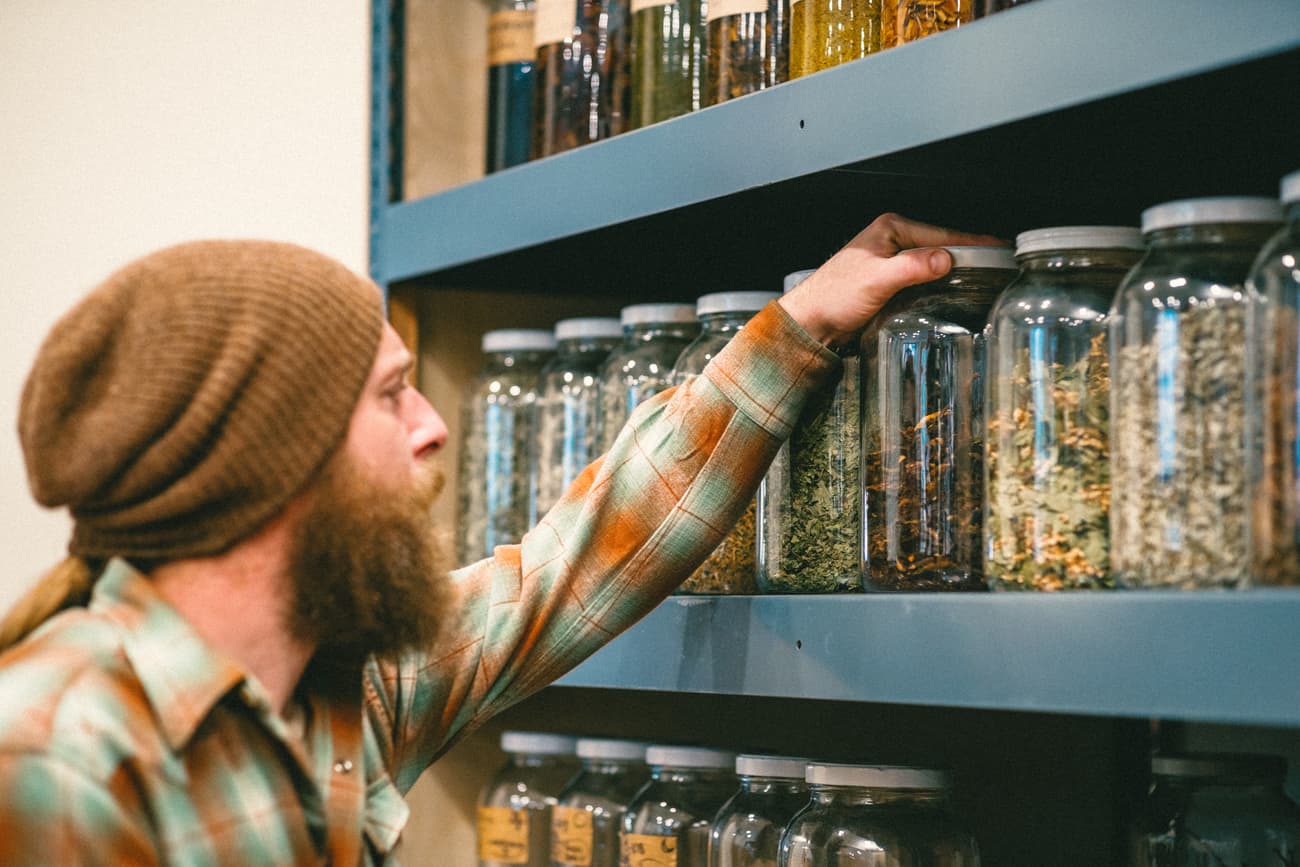
Let’s start by looking at the types of herbs to use and a general approach to treating infections with those herbs. When you’re addressing an acute infection, such as a respiratory, digestive, urinary tract, or topical infection, you’ll be working with specific classes of herbal remedies, as follows:
1. Immune Stimulants
Give remedies that support the immune system’s vital, intelligent response to the pathogen.
2. Organ System Remedies
Give indicated organ system remedies. If a person has a respiratory tract infection, give them an expectorant. If a person has a urinary tract infection, you’ll probably give diuretics to flush things out. If a person has a digestive infection, you’ll give them bitter tonics and carminatives.
3. Organ-Specific Antimicrobials
Give an organ-system-specific antimicrobial remedy. “Antimicrobial” is an umbrella term for any microscopic organism that causes an infection, such as bacteria, viruses, or parasites. It isn’t necessary to parse out whether an illness is bacterial or viral. As herbalists, if we’re working with a person who isn’t seeing a doctor, we may not be able to determine whether it’s influenza, COVID, RSV, or a parasitic or bacterial infection. Many antimicrobial herbs will address all of these.
I break down the term “antiviral” in other posts, so I won’t do that here. But briefly, I don’t think the term antiviral is useful on its own, because it is specific to the virus the herb has been studied against. Viruses are morphologically very different from one another, so there is no such thing as a broad-spectrum antiviral herb or drug. There are, however, broad-spectrum antibiotics, because this is possible with bacteria.
4. Diaphoretics for Fever
If a fever is present, give diaphoretic herbs. Typically, I’ll give a tincture formula that includes many of the properties I’m talking about in this list, and then a separate diaphoretic tea, because hot teas are the best form of administration for diaphoretics.
5. Lymphagogues
If a person has lymphatic swelling, give them lymphagogues. There may be swollen lymph nodes in the neck, inguinal area, or under the arms.
6. Topicals
Finally, if there is a skin issue, give topical herbs in the form of a wash, infused oil, salve, fomentation, etc. Topicals also help treat the sinuses. Topically is currently my main method of treating sinus infections. You can also administer topical preparations to the respiratory tract via inhalation or directly to the throat, as with a throat spray.
Why Tissue State Energetics Matter for Infections
In addition to the classes of remedies we just discussed, I want to emphasize the importance of organ-system specificity and tissue state energetics in your choice of herbs. If you have a hot, burning urinary tract infection and you give someone a hot, irritating herb, such as Buchu or Juniper, that will make the situation much worse.
If someone has a really hot, irritable cough, and you give them Osha and Oregano, those herbs will really irritate the respiratory tract. The energetics of the herbs you give must be antipathetic to the tissue state in the indicated organ system.
Of course, of the classes of herbs mentioned above, you’ll simply choose what is relevant and leave the rest.
The 4 Most Common Mistakes When Herbal Dosing for Infections
Mistake #1: Not Taking a Large Enough Dose
How much of a particular herbal formula should someone be taking to address an infection? In treating an acute infection, a person must have sufficient amounts of the right herbs for the treatment to be effective. Generally speaking, one dropperful is not enough, and this is not a situation in which drop dosages will work. There may be masterful herbalists out there who can pinpoint the exact remedy for a person, their constitution, and the acute situation, and they can find that one targeted remedy and boom! It corrects things almost magically. However, most of us must formulate. Humans are complex, and their conditions are complex, so a formula, rather than a single herb, is often needed.
What I Learned from Strategies that Didn’t Work
In my experience, an infection is an acute situation that requires a higher dose than you might use to address longer-term issues. Many years ago, I used to give people five-drop doses for some situations. However, when it came to treating infections, that strategy simply did not work. It wasn’t until I began giving people much larger doses that I saw results. Some infections are very serious, so being more aggressive with our therapeutics can be beneficial.
An Archetypal View of Infection
It may be shocking to hear, but in my opinion, there are times when thinking like an allopath can be helpful. We can simultaneously think in terms of killing the pathogen and correcting the tissue state, supporting the vital force, and supporting the body’s inherent mechanisms for protecting itself. For example, you can use diaphoretics for a fever, lymphagogues to move the lymph, and herbs to support the immune system. All of this is relevant, but when you have an invading pathogen in your body, the herbs are like your soldiers, and you are going to war, in a way.
Looking at infections archetypally, in medical astrology, for example, infections are governed by Mars. Infection is an invasion, and the physiological processes that ensue: inflammation, heat, fever, and the functioning of the immune system, are all ruled by Mars. Mars is the planet of war, classically, so when you are using herbs to treat an infection, you are waging war against an invader that doesn’t belong in your body. It’s necessary to be aggressive unless you want to remain sick for a long time.
How Much Herbal Formula Should You Take?
For an acute infection, I suggest 3 to 5 mL of a formula for each dose. That might seem really high, but it is what I’ve found to work and it’s what I recommend.
Mistake #2: Not Dosing Frequently Enough
The second mistake I see people make when herbal dosing for infections is not taking the formula frequently enough. When it comes to an herbal protocol or regimen, there are two main factors: dosage and frequency. You have to include both when you’re administering a formula to someone. Even taking a formula three times a day is not usually sufficient for an acute infection. We need to be aggressive with our dosage and frequency strategy. Herbs are not nearly as powerful as antibiotics. You can take a single dose of an antibiotic as a pill and start to feel better within a day if it’s the right antibiotic. Herbs don’t work that way. Usually, you can’t take just one dose of an herb and feel like, “Ah, I already feel better.” Perhaps if you’re coughing a lot and you calm the cough down, it will sometimes make you feel better quickly. Sometimes, if you’re having intense burning when you urinate and you start taking the right herbs, that symptom starts to subside after a few doses. But usually, for the whole infection to resolve, you need consistency over several days.
However, herbs can do so much more than antibiotics, because antibiotics are a myopic approach—they simply kill the pathogen. Whereas, herbs stimulate immunity, cleanse the lymphatics, blood, and extracellular fluid, open the channels of elimination, provide expectorant and diuretic effects, and provide soothing, cooling, moistening, and demulcent effects. Herbs can do a wider range of things, but they aren’t quite as powerful in terms of killing the pathogen. The plants can support our body’s vital, intelligent responses in ways that most drugs cannot. Because herbs have lower antimicrobial potency than antibiotics and require time to build up in the system to be effective, they need to be dosed more frequently.
How Often Should You Take Herbs for an Infection?
I recommend dosing herbal remedies every 2 to 3 hours during the day until bedtime, and then having another dose ready in case you wake up during the night. You can pre-mix your formula with a little water and place it on your bedside table or bathroom counter to take in the middle of the night.
If 5 mL every three hours seems like a lot of herbs, let’s do the math to give you a clearer picture of how much formula you’ll need. Let’s say you’re awake for 12 hours. If you take a dose every three hours, that’s four doses total during waking hours. Four times 5 mL is 20 mL of your formula. That’s 2/3 of a 1-ounce bottle each day. If you’re awake for 18 hours, you’ll take six doses in a day. Multiply that by 5 mL, and that’s 30 mL (a full 1-ounce bottle). That’s a lot of herbs!
If you prefer to stretch out the dosing, aim to get at least four to five doses in during the day. It’s important to have active herbs in your system consistently throughout the day. If you were to take two dropperfuls in the morning, and then wait five to seven hours until lunchtime, and then take another dose, those herbs would have worn off well before that lunchtime dose. Perhaps you take an afternoon dose and then go another nine hours until a bedtime dose. Those herbs were active for a few hours, and then there was a long stretch where they weren’t doing anything. It’s important to have those herbs stimulating your immune system and giving their antimicrobial effects throughout the day. So, in terms of frequency, one dropperful every two hours is better than 5 mL three times a day, because in the first scenario, you have herbs active within your system the entire day, even if the amount is a bit less than the ideal.
Mistake #3: Not Waiting Long Enough
The third mistake people make when herbal dosing for infections is not waiting long enough for the herbs to work. It takes time for the herbs to build up within the system. When people get sick, they feel awful, so they take some herbs, perhaps a dropperful three times a day, and then the next day, perhaps they feel a bit worse, and they get worried. At this point, people tend to think the formula isn’t working, and they get worried. So they go to the doctor and end up getting antibiotics.
In that scenario, the person probably didn’t take large enough doses, nor did they dose frequently enough. They also didn’t allow the herbs enough time to take effect.
You can’t always expect to start feeling better even after one full day. A good rule of thumb for treating infections is to give at least two and ideally three full days of treatment. When I give someone a formula for an acute infection, I calculate the amount they should take in each dose, how often they should take it, and make sure I give them enough for all of that, plus a little buffer. If a person takes 3 to 5 mL every three or four hours, a 2-ounce bottle will last two to three days.
When Should You See a Doctor for an Infection
If a person takes a 2-ounce bottle over the course of two or three days, that’s a great start. If by day three or four, they don’t start seeing some improvement, or if they start feeling significantly worse, then it might be time to see a doctor.
This is particularly true of urinary tract infections. If someone has a UTI, it probably burns when they urinate, and they may have pain in the lower urinary tract. It makes sense that they’ll feel it in the bladder and urethra. But if, all of a sudden, they start having pain in the flanks or lower back and have a fever, that lower urinary tract infection may be creeping higher and heading to the kidneys. That can be very serious. To be clear, it can still be treated with herbs, but you must know what you’re doing and monitor things very closely. Dr. Erik Yarnell, one of my professors at Bastyr University, is a kidney specialist. He has written textbooks on nephrology, kidney therapeutics, pathology, and herbal therapeutics for the urinary tract. He says that you can treat a kidney infection with herbs, but you cannot mess around. This is not a time to try a few drops of some herbs.
I was working with a client who had a urinary tract infection that was beginning to move higher, so I spoke with Dr. Yarnell and asked him to review my formula. We tweaked it to increase the dose and frequency, but otherwise, it was a pretty good formula. He told me that if someone has a kidney infection, you can treat it pretty aggressively with herbs, and it should clear up, but it is risky.
Another area of caution is if a fever is very high. If a fever peaks at 104 or 105 and stays there for a number of days, the safest bet is to see a doctor and get checked out.
The important point is that you need two or three days to get a clear idea of whether you’re on the right track, and just because a person doesn’t feel better in one to two days doesn’t mean the herbs aren’t working. It means the herbs haven’t had enough time to do their job. Most infections should start to improve within a few days. If the infection isn’t serious, for example, in the case of a lingering cough with no fever, you can continue to treat it with the indicated herbs. If you’ve gotten through the most intense part, it’s usually just a matter of continuing, correcting the underlying tissue state, and making sure things keep progressing properly.
However, there are more serious infections, such as dengue fever, chikungunya, and West Nile virus infection. These can be addressed with herbs, but you must keep a close eye on them, make sure they don’t reach a dangerous point, and use common sense. Know the scope of your practice, know your comfort level, and stay within it.
Mistake #4: Stopping Too Soon
The fourth and final mistake people make is stopping their herbs too soon after seeing improvement. If you’ve ever gotten antibiotics from a doctor, they always say, “Here’s your prescription of antibiotics. Take all of it. Even if you start feeling better.” Many doctors have seen patients feel better and stop taking their antibiotics, only for the infection to return. This issue applies to both prescription antibiotics and herbal infection formulas, and it’s a big problem. Sometimes it’s not the herbalist’s mistake, but you need to be aware of that as the herbalist and communicate that to your clients. “Hey, here’s your formula. Don’t stop once you start feeling better. Take it until it’s done.” Or you can say, “Once you start feeling better, let’s talk and reassess your symptoms.” Maybe you gave them a 2-ounce bottle that lasted three days. Call them on day three, check in, see how they’re doing, and give them a follow-up formula that will get them through the convalescence period.
Let’s say you’re giving adequate doses, dosing frequently enough, and giving it enough time. And then perhaps on day three, the person wakes up and thinks, “Oh, I’m starting to feel better. My fever is gone, my cough has calmed down. I’m good now,” and they stop taking the herbs. What happens? They wake up on the fourth day and think, “Uh oh, I’m feeling really bad again.” This is a big mistake.
Once a person feels better, they should continue taking the formula for the same number of days they’ve been sick. Let’s say they wake up on Monday feeling like garbage. They start herbs on Monday and continue through Wednesday. That’s three days. Then, they wake up on Thursday and feel better. So they’d been sick for three days, and then there was the turning point when they said, “I’m starting to feel better.” I recommend continuing to take the herbs for three more days. Illness has been going on for three days, so give it at least three more days to complete the process, and perhaps a bit longer.
Many illnesses linger for a long time, such as COVID. One thing that might happen at the turning point is that the formula may need to change. Maybe the fever is gone, so diaphoretics are no longer needed. Maybe the wet cough is now dry. That was a common issue with COVID. You may need to switch to a different formula. You may have an acute-phase formula and a convalescence formula, which are specific herbs to continue strengthening the immune system, correct tissue state imbalances, and flush out dead immune cells. A war has been raging in the body, with dead immune cells, bacteria, and viral particles, along with metabolic waste products. This is why people often feel sluggish during recovery.
It is important to keep going at this point because if a person stops taking the herbs on day four, there may be residual pathogens that can start rapidly reproducing again. That is often what’s happening when people have started to feel better and then feel worse again. Then they may take some herbs that one day, kill the pathogens again, and feel better. Then they stop the herbs, and then they have another bad day. Now they’re bouncing back and forth. The trick to avoiding this is to keep up with the herbs. Keep doing the sinus spray or herbal neti pot. Keep up with the urinary disinfectant teas or the immune-stimulant, lymphagogue, expectorant formula. Keep doing the topical fomentations, washes, or infused oil. Whatever it is, don’t stop just because you start feeling better. The body’s inner state might still be imbalanced, and the herbs are still necessary.
What I Learned From Herbal Dosing Mistakes
I learned a lot through my experience of treating a range of infections over the years and making a range of mistakes. This is why they call it practicing! We say that doctors “practice” medicine, and as herbalists, we practice herbalism. Practice can be complicated, and every person is different, so you’re always learning. You never know it all.

Supportive Strategies During Infection
There are many other factors to consider when working with infections. If you’re dealing with respiratory tract infections, consider the home’s air quality. I’m a big fan of fumigation, which is smudging with resins or aromatic herbs or diffusing volatile oils. Open up the windows and refresh the air. This is really important for respiratory route infections.
When someone has a fever, change the bed sheets regularly. It refreshes and makes everything feel much better. Drink lots of water, obviously, and teas and perhaps some broth. Take basic supplements to support the immune system, such as vitamin C, vitamin A, vitamin E, vitamin D, and zinc.
Eat clean, simple foods. There’s a reason chicken noodle soup is a universal food for people to eat when they’re sick: it’s relatively easy to digest. Put garlic in everything. Avoid sugars and stimulants such as coffee and black tea, though the headache might make you feel a little bit worse on day one or two.
If you have a fever, fast. Just drink fluids during a fever and don’t try to eat until that fever has subsided. Rest as much as you possibly can.
Once you start feeling better, take a walk outside, get some fresh air, and move your body. This will really help get the lymphatics moving and aid elimination. Once you start feeling better, keep taking your herbs for a while to make sure everything is stabilized.
Once the illness is pretty much over, follow a convalescent protocol using immune amphoterics. These are herbs that strengthen the system’s vitality and core immunity. You can work with respiratory trophorestoratives. You can work with digestive herbs to re-regulate your digestive system, get your body back on track, and strengthen the whole system.
A Note of Encouragement
Some of the pathogens these days are exhausting. They can wipe you out and make you more susceptible to future infection. It is important to rejuvenate and strengthen your system. I hope you found this article useful, and I encourage you to incorporate some of these practices into your work with herbs and with the people you serve. Just make sure you’re being safe! If an illness worsens or your client has a high fever, they should see a doctor.
Give the herbs a chance to work their magic, and I think you’ll see results. You’ll see things resolve more quickly, and ultimately you’ll have happier clients, which is good for you, too, because it boosts your confidence.
The Vitalist Herbalist Mini Course
Something very exciting is happening on June 15, 2026! We’re opening our FREE Vitalist Herbalism Mini Course.
This is our most in-depth FREE workshop series, which covers the fundamentals you need to be an effective, practicing herbalist. Go beyond this deep dive on dosing for infections and learn the skills you need to be a successful herbalist. Whether you’re working with family and friends, your greater community, or in a clinical practice, the free Vitalist Herbalism Minicourse can help you take your herbal skills to the next level.
The waitlist is OPEN NOW, so sign up and be first in line to get the FREE workshop when it opens on June 15, 2026.
FAQ: Herbal Dosing for Infections
How much herbal formula should I take during an acute infection?
Acute infections generally require higher dosing than many people expect. At the School of Evolutionary Herbalism, we commonly suggest approximately 3–5 milliliters of tincture formula per dose during acute infections. The specific amount depends on the person, the herbs, and the severity of the condition.
How often should herbs be taken during an acute infection?
For acute infections, herbs are often taken much more frequently than in chronic protocols. A common strategy is dosing every 2–3 hours during the day, or every 3–4 hours in less aggressive situations.
Why do herbs need to be taken so frequently?
Herbs typically do not work the same way pharmaceutical antibiotics do. Their effects often need to build over time in the body. More consistent dosing helps maintain antimicrobial effects, immune stimulation, and support for elimination pathways throughout the day.
Why might it seem like the herbs “aren’t working”?
Often, herbal remedies seem like they aren’t working because of four very common mistakes we see at the School of Evolutionary Herbalism:
- Not taking a large enough dose of herbs
- Not taking herbs frequently enough
- Not giving the herbs enough time to work
- Stopping too early
Many protocols for treating infections with herbs fail, but it’s not because the herbs themselves are ineffective.
How long should I give herbs before expecting improvement?
Generally, an acute infection protocol needs at least 2–3 full days before evaluating whether it is working, assuming the herbs are being dosed adequately and frequently enough.
When should I stop taking herbs during an infection?
Continue herbs after symptoms improve rather than stopping immediately. A general guideline is to continue taking herbs for roughly the same number of days you were sick after improvement begins.
Why do symptoms sometimes return after stopping herbs?
Stopping herbs too early may allow residual pathogens to begin reproducing again, which can lead to symptoms returning or “bouncing back.”
Should the herbal formula change during recovery?
Herbal formulas may change during recovery. It makes sense to have an “acute phase” formula for the active infection and then shifting into a “convalescence formula” during recovery, especially if symptoms change over time.
Are low-dose herbal strategies appropriate for acute infections?
Very low-dose herbal strategies are often insufficient for acute infections, particularly in more serious or rapidly progressing situations.
What kinds of herbs are commonly used during acute infections?
Several categories of herbs are commonly used in infection protocols, including:
- Immune stimulants
- Organ-system specific remedies
- Antimicrobial herbs
- Diaphoretics
- Lymphagogues
- Topical remedies
Why is organ-system specificity important?
Choosing herbs appropriate for the affected organ system, such as expectorants for respiratory infections or diuretics for urinary tract infections, ensures their effectiveness.
Why are tissue state energetics important in infection treatment?
Herbs should match the tissue state. For example, very hot and irritating herbs may aggravate already hot, inflamed tissues.
When should someone seek medical care?
Seek medical evaluation if symptoms significantly worsen, if dangerously high fevers persist, or if signs of more serious infections appear, such as kidney involvement during a urinary tract infection.
What supportive practices can help during acute infections?
There are many practices that can support herbal remedies when treating acute infections, such as:
- Hydration
- Rest
- Simple, easy-to-digest foods
- Avoiding sugar and stimulants
- Supporting fresh air circulation
- Fumigation or aromatic herbs
- Gentle movement during recovery
What is convalescence and why does it matter for herbalists?
“Convalescence” refers to the recovery period after the acute phase of illness. Continue supportive herbs and rebuilding vitality after infection to help prevent lingering weakness or reinfection.