
What Is Fire Cider?
As the name suggests, fire cider is a vinegar extract of everyday herbs you probably have in your kitchen right now — and that’s one of its best features! This is a home herbalist-friendly preparation, so you don’t need any fringy, hard-to-obtain herbs. You can get most, if not all, of the ingredients at your local grocery store.
The Core Formula
Fire Cider is very easy to make and useful to have on hand. The plants in this formula are: Onions, Garlic, Horseradish (Armoracia rusticana), and optionally, Lemons. These four ingredients form the core of most fire cider recipes, and you can find them at a local store. Horseradish can be a bit harder to find, but you can solve that by calling around to local stores with well-stocked produce departments.
These plants are extracted in apple cider vinegar, ideally raw and unfiltered. Sometimes you’ll see this promoted as apple cider vinegar that contains “the mother.” That usually means there’s sediment at the bottom, and truly raw apple cider vinegar offers many benefits.
To make this formula, finely chop an onion, crush several cloves of garlic, shred some horseradish root, and optionally slice a lemon. Put it in a jar and cover the herbs with apple cider vinegar. After about a month, strain the mixture well, add honey, and that’s it!

The Fire Cider Recipe
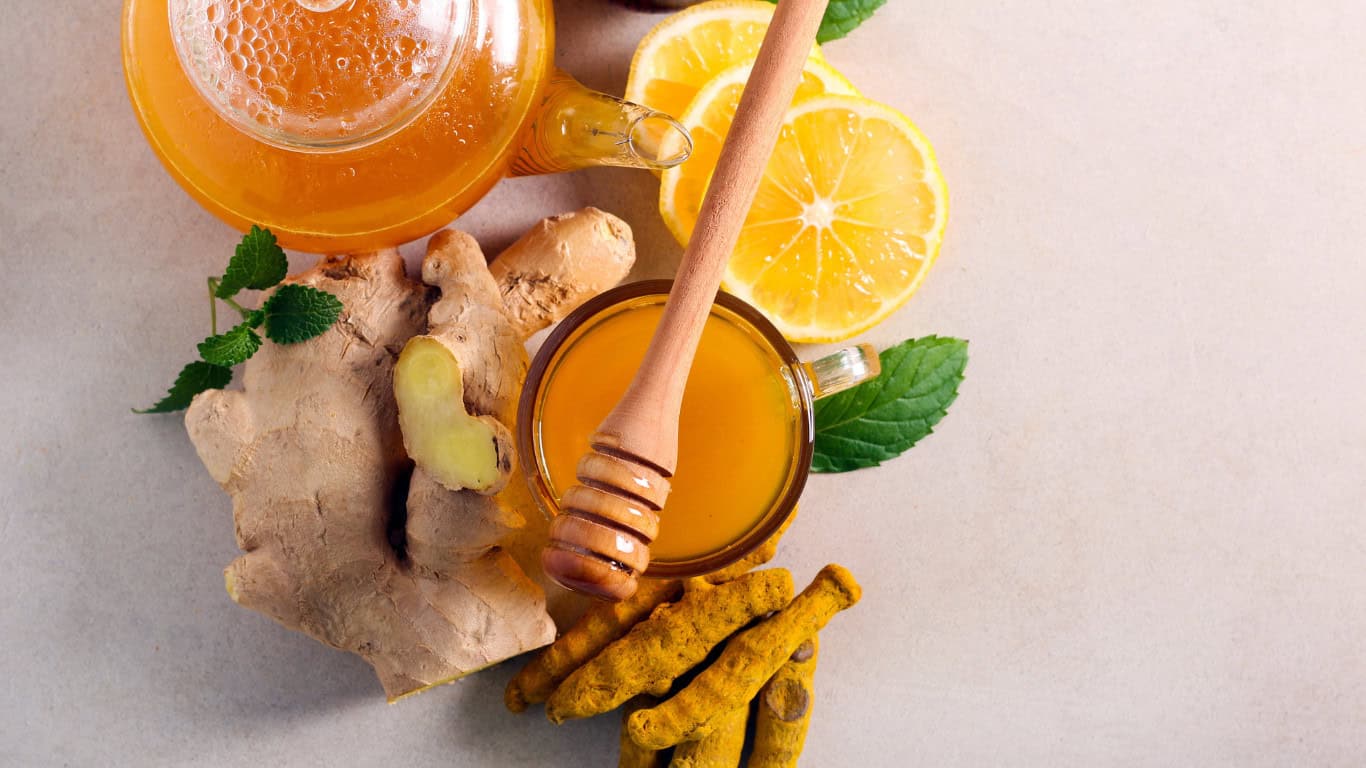
Once you’re familiar with the basic formula, you can consider adding other herbs to your fire cider. Aromatic herbs such as Thyme (Thymus vulgaris), Oregano (Origanum sp.), and Cayenne pepper (Capsicum annuum) are excellent. You can also add spicy roots such as Ginger (Zingiber officinale) and Turmeric (Curcuma longa).
Recipes vary widely, but for simplicity, below is a recipe with general ratios you can use — feel free to make it your own!
Ingredients:
- 1 medium Onion, finely chopped
- 5 to 10 Cloves of Garlic, finely chopped
- ¼ cup grated Horseradish
- 1 Lemon, sliced with skin on
- 3 to 4 cups (or enough to cover) Raw apple cider vinegar with the mother
- Raw Honey – once you press out your final infused vinegar, measure and add ½ as much honey as infused vinegar (if you have 3 cups of infused vinegar, add 1.5 cups of honey)
Optional Additions:
- Cayenne or Jalapeño pepper – 1 to 2 small peppers
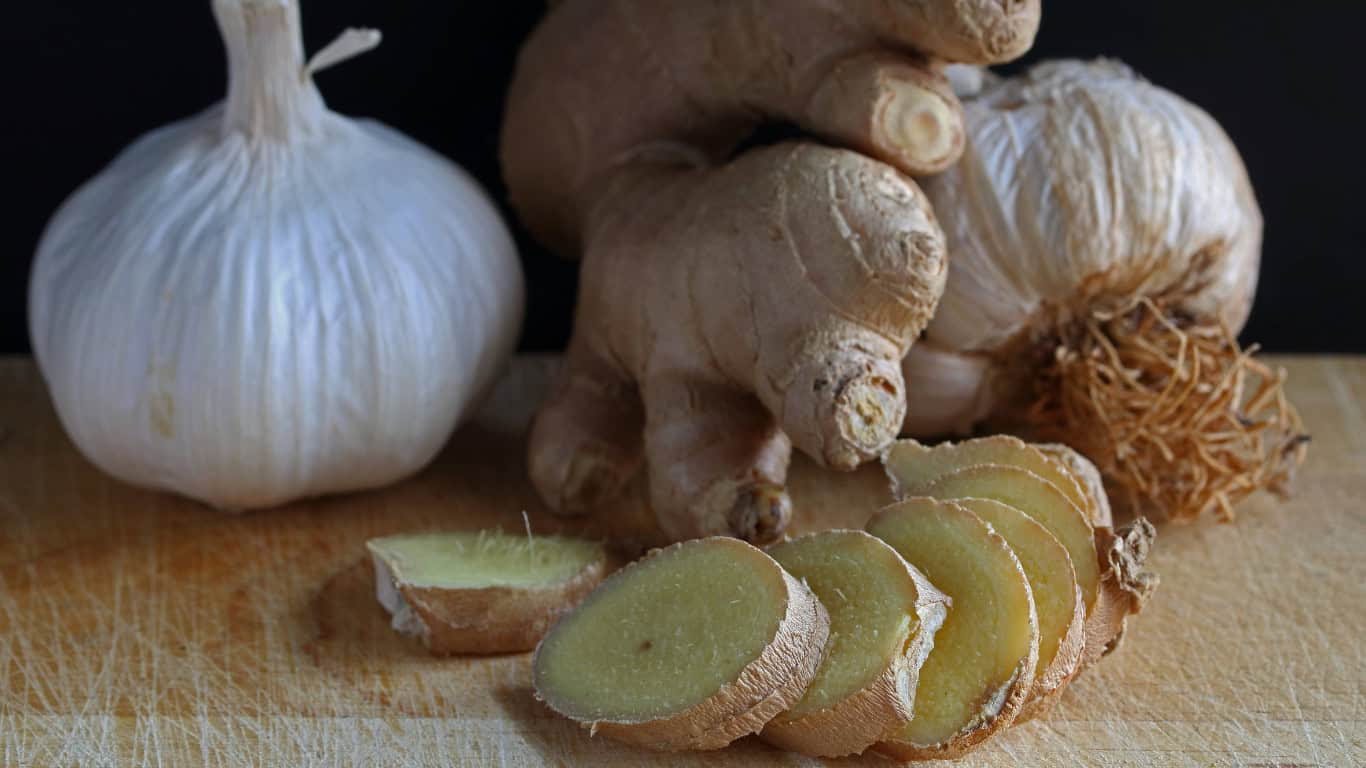
- Fresh Ginger root – ¼ to ½ cup, finely chopped
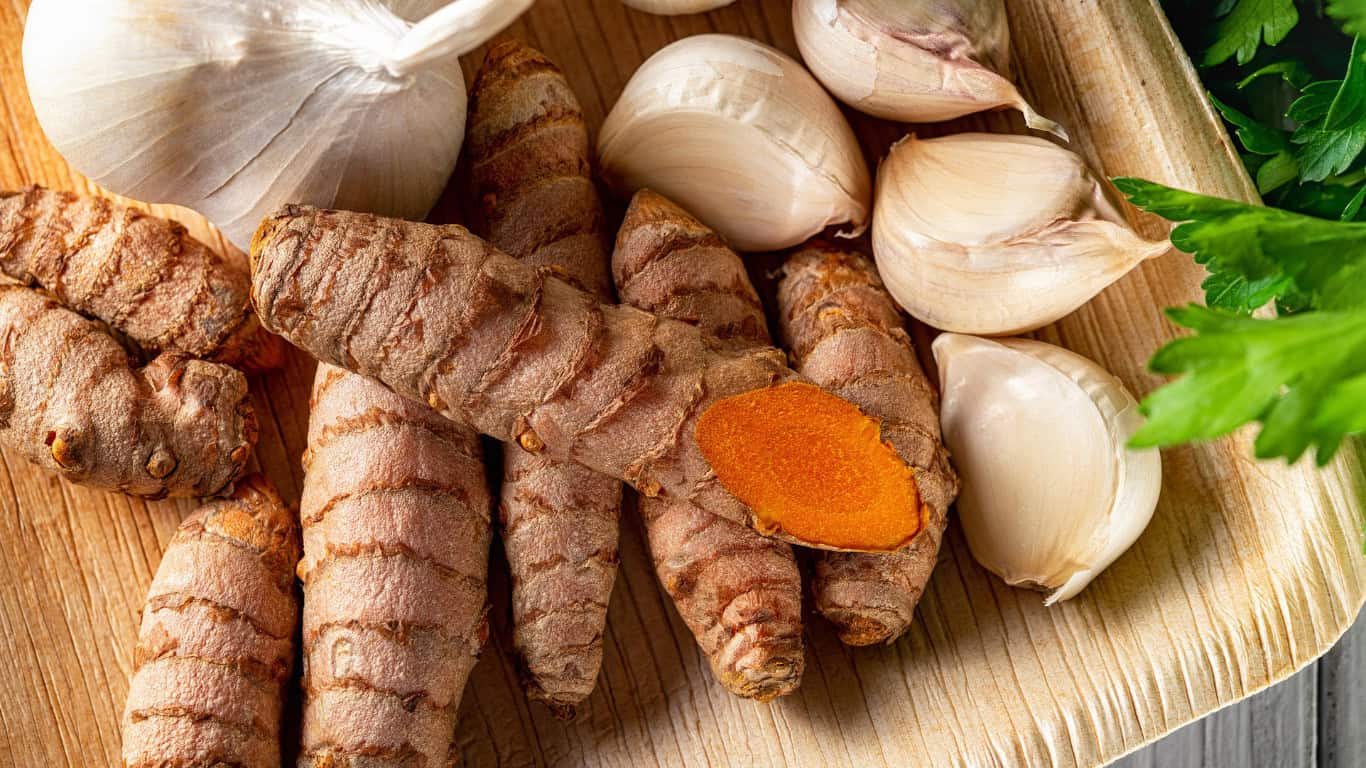
- Fresh Turmeric root – ¼ cup, finely chopped
- Thyme, Oregano, and/or Rosemary – 1 to 2 tablespoons each
Instructions:
- After finely chopping all of the ingredients, add them to a glass jar (leaving plenty of room for the vinegar)
- Cover with apple cider vinegar and place the lid on the mixture
- Macerate for 4-6 weeks
- Strain, filter, and press out the infused vinegar
- Stir in the honey
- Store your fire cider in glass bottles in a cool, dark place
Fire Cider Formulation Notes
Horseradish roots vary widely — from not very spicy at all to “Whoa! Where’s the tissue box? I need to blow my nose!” If you use Cayenne or Jalapeño peppers in your formula, keep the quantity fairly small compared to the rest of the ingredients. With Ginger and Turmeric, however, you can be liberal with the quantity. The same goes for Thyme, Oregano, and Rosemary.
Usually, fire cider is made in the folk method style — this isn’t a situation where you must use a specific ratio of herbs to menstruum. You can simply eyeball the quantities and use your intuition. Once you’ve made this recipe a couple of times, you’ll get a feel for it and can experiment with additions and quantities based on your preferences.
Once you’ve finely chopped all of your herbs, you’ll macerate them in apple cider vinegar for about a month. People use varying timeframes — some say six weeks, some say a month. At least one month makes sense. Then you’ll strain, filter, and press out the finished liquid. After you filter and press the vinegar extract, add honey. People prefer different amounts of honey. I make mine into an oxymel, which is a two-to-one vinegar-to-honey preparation.
Fire Cider and The Fire Element
As the name implies, fire cider is hot and spicy. The primary herbs: Onion, Garlic, and Horseradish share similar chemical constituents, and they’re all pungent, aromatic, sulfur-containing herbs. This gives them a sharp, pungent, spicy quality distinct from other pungent remedies rich in volatile essential oils, such as Thyme and Oregano.
The sulfur compounds in Onion, Garlic, and Horseradish give the preparation potent antimicrobial properties. Garlic contains alliin and allicin, which are potently antimicrobial and have strong affinities for the respiratory tract. If you’ve ever eaten fresh horseradish, you know it goes straight to the sinuses, which is indicative of the Fire element.
Fire moves up and out. It is heating, clears stagnation, disperses cold, and stimulates the digestive system. The alchemists considered the body’s core and digestive system as the alchemical furnace. This parallels the Ayurvedic concept of agni, the metabolic Fire, and jatharāgni, the digestive Fire. We have the more macrocosmic agni of the digestive Fire, and then the microcosmic agni within each cell. The digestive system takes in food, and the Fire element breaks it down into its constituent parts and absorbs it in order to nourish the body. A similar pattern occurs within each cell: it takes in nutrients, and the Fire within the cell processes them, breaks them down, uses them, and expels the waste products.
Fire is also strongly associated with the mind and cognition. We have all experienced the feeling of having a dull, cloudy, foggy mind. When your Fire element increases, it tends to stimulate your cognitive flame, focus, and attention. This can all be attributed to the Fire element. Just as we digest food in the gut, we digest information in the mind. The mind takes in experiences, processes and sorts them, and expels what it cannot digest. It is not uncommon for people with chronic digestive issues to have associated cognitive issues.
In elemental anatomy, the Fire element is strongly associated with the heart and the movement and circulation of blood, and we absolutely find this with the herbs in fire cider. These herbs are circulatory stimulants — they drive and move blood flow throughout the body. Many of the other herbs in fire cider, such as the optional Ginger, Oregano, Thyme, Rosemary, and Turmeric, all contain pungent, warming, volatile oils. These are also expressions of the Fire Element. The acidic vinegar also belongs to the Fire element. It warms and stimulates digestion.
Fire Cider’s Herbal Actions
If we were to assign a core action to fire cider, it would be the stimulant property. However, it’s important to differentiate this, because it isn’t a stimulant like coffee. In herbalism, the term stimulant has a broader association than just stimulating the nervous system the way coffee does.
Stimulant Expectorant
Specifically, fire cider is a stimulant expectorant. Most of the herbs in fire cider are also stimulant expectorants. The stimulant expectorant quality stimulates the cough reflex, which moves up and out, like the Fire element itself. It increases the Fire element’s influence on the Air element in the lungs and respiratory system. Stimulating the cough reflex is very useful for cold, damp, sluggish, gurgly coughs, and a weak cough reflex where nothing is coming up.
Other types of expectorants include demulcent expectorants and relaxant expectorants. These distinctions are important for administering expectorant herbs properly. You must match the herb’s energetics to the person’s tissue state.
Stimulant Decongestant
Fire cider also has stimulant decongestant properties. Just as we discussed that there are multiple types of stimulants, there are also multiple types of decongestants. Some are bitter, draining decongestants like Goldenseal (Hydrastis canadensis), while others are astringent decongestants that simply dry everything up.
With a stimulant decongestant, such as Horseradish, when you put it in your mouth, it moves straight up, opens everything up, and disperses any fluid stagnation.
Stimulant Diaphoretic
Diaphoretic means an herb supports a fever in doing its job. Stimulant diaphoretics drive blood flow up to the surface and out to the periphery. Every herb in this preparation: Ginger, Thyme, Oregano, Garlic, etc., can help a person break a sweat.
On the other side of the spectrum, relaxant diaphoretics relax tension at the surface, such as the skin, pores, and capillary beds, preventing blood from rising to the surface to vent the body’s internal heat through the skin. Relaxant diaphoretics are often very bitter herbs, such as Boneset and Blue Vervain. Some acrid herbs are relaxant diaphoretics, such as Lobelia and Pleurisy root. The herbs in this formula are all stimulant diaphoretics and circulatory stimulants.
Circulatory Stimulant
Stimulant diaphoretics are a type of circulatory stimulant. They are strong enough to push blood to the surface and make you sweat, whereas milder circulatory stimulants are warming, moving, and dispersive, but not quite hot enough to make you sweat, a useful distinction. Not all circulatory stimulants are diaphoretic, but all stimulant diaphoretics are circulatory stimulants.
Carminative
The herbs in fire cider are digestive stimulants or carminatives. This is truer of the mints used in some variations of fire cider. Thyme, Oregano, and Rosemary are the three that fit best into this formula. These three herbs are aromatic and contain essential oils that warm digestion, increase local circulation to the gut, and disperse wind, gas, bloating, and sensations of fullness.
When people eat really protein-dense or fatty meals, they tend to become bloated and full. They may not have enough digestive fire to break those meals down. The carminative mints in fire cider are very useful for that issue. Additionally, the pungency of the Onions, Garlic, Horseradish, and vinegar stimulates digestion. The vinegar also helps increase hydrochloric acid secretion in the stomach.
Antimicrobial
The sulfur and volatile oil compounds in fire cider have excellent antimicrobial effects. Because of its strong affinity for the digestive system, it will act there. Because of the volatility of the formula, some of these compounds will be exuded by the lungs and the respiratory tract, so there will be an antimicrobial effect in the lungs.
Apple cider vinegar has its own interesting medicinal virtues. It is mildly expectorant, so a shot of vinegar can stimulate a cough. It is very useful for digestive complaints, primarily due to hypochlorhydria (too little stomach acid). It helps lower gastric pH, though less than betaine hydrochloride, which lowers gastric pH more strongly. Apple cider vinegar can be useful for poor digestion, especially protein digestion. It can help alleviate mild dyspepsia symptoms, such as bloating, gas, sensations of fullness, and nausea.
I learned a simple test for stomach acid from Margi Flint, who says that if vinegar relieves an upset stomach, you likely have a hydrochloric acid deficiency. Sometimes, when they get an upset stomach, they crave sour things like citrus, which may indicate a hydrochloric acid deficiency. On the other hand, if vinegar makes the stomach pain worse, they may actually have too much hydrochloric acid.
Honey as Corrigent
Adding honey to this formula isn’t simply to improve the flavor. Without honey, this formula is very intense and very spicy. However, adding honey has a corrigent effect. Corrigent literally means “corrector.” People often use the term corrigent to mean something that improves flavor or makes a formula more palatable. However, in this case, honey buffers the overall heating effect of the herbs and counteracts the dryness to some degree.
In nature, fire warms, disperses, and evaporates fluid. The same is true within the body. Therefore, hot, spicy herbs tend to promote dryness. Honey is a nice addition because it helps balance the drying effect. It also makes it more palatable. If you use good-quality, unfiltered, raw honey, you will get all kinds of great effects from it as well. Some raw honeys have an antimicrobial effect.
Fire Cider Indications and Contraindications
Fire Cider Indications
Fire cider is excellent for people who have a constitutional pattern of cold, damp, and depressed tissue states, and depressed function of specific organ systems, such as digestive and respiratory. The sulfur compounds in this formula may benefit the liver as well. Where this is stagnation and a need for stimulation, fire cider may be helpful.
From an Ayurvedic perspective, fire cider is indicated for people with excess kapha dosha. In this situation, a person is cold, damp, heavy, sluggish, and stagnant. In the astrological tradition, there is Moon excess, which tends to be damp and phlegmatic. Fire cider may also be helpful for Saturn excess, which brings too much cold. Excesses of Earth and Water signs, which are very similar to kapha, are another indication for fire cider. In the Greek humoral model, fire cider is indicated for melancholic or phlegmatic humors.
Fire Cider Contraindications
Fire cider is often promoted as a universal health tonic, which is really not the case, so contraindications are important. There’s no universal cure-all that will be great for everyone because we all have our own unique constitution and temperament that should be taken into consideration.
Fire cider is not great for people who have a predominance of pitta dosha and choleric humors. These people have too much heat and dryness. They tend to have irritation in their tissues. If someone has an irritable, ticklish cough that makes it painful to breathe, or if they have hot, burning digestive symptoms, especially in the upper GI, fire cider is really not appropriate. This includes GERD, acid reflux, and any sort of upper GI burning pain.
We need to avoid fire cider with irritation or what we might call excitation and hypersensitivity of the tissues. In astrological medicine, avoid fire cider with excesses of Mars, the Sun, and the Fire signs.
How to Take Fire Cider
How do you use fire cider? Some people simply take a tablespoon or pour a shot glass of it and knock it down. You can certainly take it that way. However, it’s important to consider that undiluted vinegar can be hard on your tooth enamel. You might have noticed this if you’ve taken fire cider or apple cider vinegar straight. You can feel an odd sensation on your teeth, and if you’re doing it every day, it can wear down your tooth enamel. Because of that, I don’t recommend taking it straight. I recommend diluting it with a little bit of water.
One cool way to utilize this preparation that’s a great way to sneak it into your daily-ish routine is to utilize it as the vinegar portion of salad dressings. The sweet quality is present with the honey, the sour is there with the vinegar, and then you have that lovely pungent flavor. You can simply combine it with olive oil, and it tastes great.
FAQ
What is fire cider?
Fire cider is a vinegar infusion made with pungent kitchen herbs such as Onion, Garlic, and Horseradish. Many recipes include lemon and honey.
How long should fire cider steep?
Steep the herbs in apple cider vinegar for at least four weeks, then strain well and add honey.
What herbs can I add?
Common additions include Ginger, Turmeric, Cayenne, Thyme, Oregano, and Rosemary.
Who may find fire cider unsuitable?
Fire cider is not recommended for people with hot, irritated, or dry patterns, including burning upper digestive symptoms, reflux, or a painful, ticklish cough.
Should I take fire cider straight?
It is best to dilute it with water because undiluted vinegar may wear down tooth enamel. It can also be used in salad dressing and other recipes.