A Little About Elder (Sambucus spp.)
Elder is a classic remedy that has been used in traditional Western herbalism for a very long time. It is said that every household should have an Elder tree in the front yard because it is an entire medicine chest or pharmacy in one plant.
In modern herbalism, we know it’s an excellent remedy for the immune system, and much research has focused on its antiviral properties. As we’ve discussed in previous posts, the term antiviral can lead to misuse of herbs in some cases; a more accurate way to describe Elderberry’s antiviral property is that it is specifically antiviral against influenza, the virus that causes the common cold, and respiratory-route viral infections. It is not a broad-spectrum antiviral; in fact, no such thing exists, either in herb or drug form, because viruses vary widely in morphology. In vitro studies have shown Elderberry to be effective against influenza viruses and variants, including the H1N1 variant. However, it should be noted that we don’t just use the berry of Elder. The flowers are also a very useful remedy with slightly different properties.
One of the primary ways Elderflower is used is as a diaphoretic to relax tension in the periphery, stimulate peripheral circulation, and support fever — it is a fantastic fever remedy for both adults and children. It is pleasant-tasting enough that kids can usually get a cup of it down, especially if you add Peppermint, which improves the flavor, but on its own, it has a decent flavor.
Matthew Wood notes that “Elder opens all of the tubes of the body, the skin, the lungs, colon, kidneys, blood vessels, improving oxygenation, blood flow, perspiration, and elimination by the colon and the kidneys.” In addition to the flowers and berries, the bark and leaves have also been used, though they are more cathartic and can make you uncomfortable if you don’t use them properly, because they can induce nausea and vomiting. They can also be a bit purgative to the intestines.
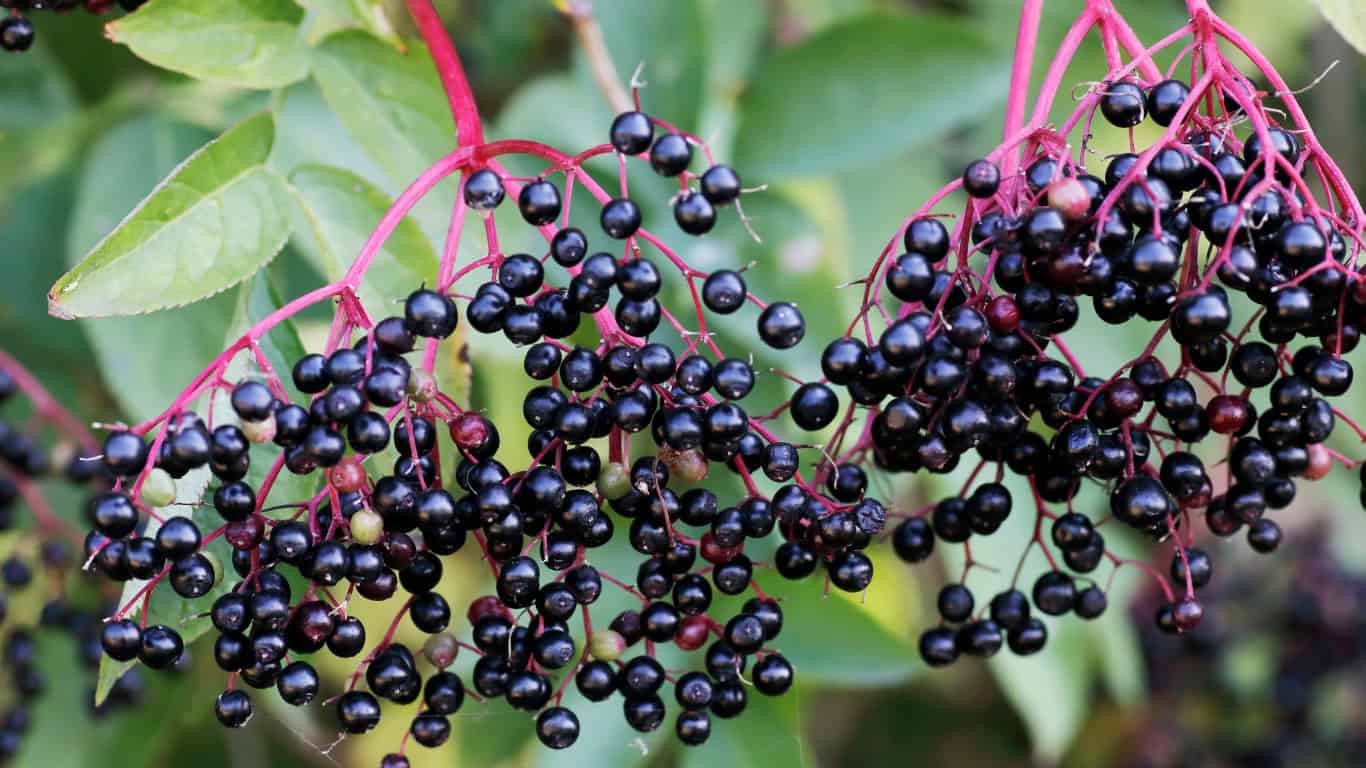
The berries have slightly different properties than the flower, since they’re one of our excellent, brightly colored berry medicines. In herbal medicine as a whole, we use many roots, leaves, and flowers. However, we use only a handful of barks and a handful of berries. This is likely because many berries are considered foods. Some are potent foods that sit on the edge of food and medicine, and Elderberry is one of our fantastic medicinal berries.

About Elderberry Varieties
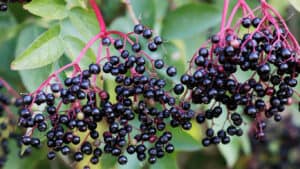
There are many species of Elder. The traditional European Elder is Sambucus nigra. In Eastern and central North America, we have Sambucus canadensis. In Western North America, we have Sambucus cerulea, a blue Elder. Many other Elder varieties and species exist, and they’re all interchangeable as long as the berries are dark purple, blue, or black. The main one we have on the west side of the Cascade Mountains is the red Elderberry, Sambucus racemosa. This is probably the only one you can’t use internally, though you can use the flowers.
As already mentioned, many people think of Elderberry as an antiviral. Categories for herbal medicines can help us organize, understand, and apply them. However, sometimes those categories can cause us to pigeonhole herbs. When we pigeonhole an herb for a particular use, we often lose sight of other properties they might have, and other ways they can be used.
A great example of this is Saw Palmetto (Serenoa repens). Its claim to fame is as “the prostate herb,” because some science was done on it, and it was shown to work on some of the biochemical pathways that can lead to benign prostatic hyperplasia (swelling of the prostate gland), and by working on some specific enzymes in that biochemical process. It is indeed excellent for the prostate, however most people now think of Saw Palmetto only as the prostate herb, forgetting or not understanding that Saw Palmetto is also very useful for the female reproductive system, immune system, and respiratory system.
A similar situation has happened with Elderberry, where many people think of it as a medicinal to take when you feel sick to help you get over it quicker, and that’s as far as it goes. Elderberry is a brightly colored medicinal berry, and invariably, brightly colored berries, foods, and medicines are highly concentrated in a unique class of phytochemicals called proanthocyanidins or oligomeric proanthocyanidins (OPCs). These compounds are highly antioxidant, nutritive, inflammation-modulating, and have incredible properties for the cardiovascular system.
These antioxidant compounds can strengthen veins, arteries, and capillary beds and reduce vascular inflammation. When vascular inflammation is excessive, it affects structural integrity, especially in the smaller capillary beds. When capillary integrity is compromised, capillaries can hold less fluid, making them fragile and leaky.
When the blood vessels are inflamed, they become weaker and are prone to nicking, almost like a scratch inside the blood vessel. The body repairs these scratches with cholesterol, and typically with low-density (LDL) cholesterol, aka “bad” cholesterol. The liver sends out LDL to patch nicks in the blood vessel walls. Low-density lipoproteins are light, fluffy, and sticky, and as they float through your bloodstream, they can stick to each other, forming atherosclerotic plaque buildup.
This is bad for cardiovascular health because it makes the arteries less elastic. Arteries need elasticity because the heart doesn’t do all of the work of pumping blood on its own; it gets help from the elasticity of the arterial side of circulation, which helps push the blood through. When cholesterol builds up inside the vessel walls, elasticity decreases, and the blood vessels can get stuck, narrowing the arteries. They aren’t able to expand, which can put extra strain on the heart and potentially lead to hypertension. Bright-colored berries rich in these highly antioxidant flavonoids reduce inflammation and protect the vessels from oxidative damage. This helps improve blood vessel elasticity, which has vast benefits for the cardiovascular system.

Elderberry Syrup Basics
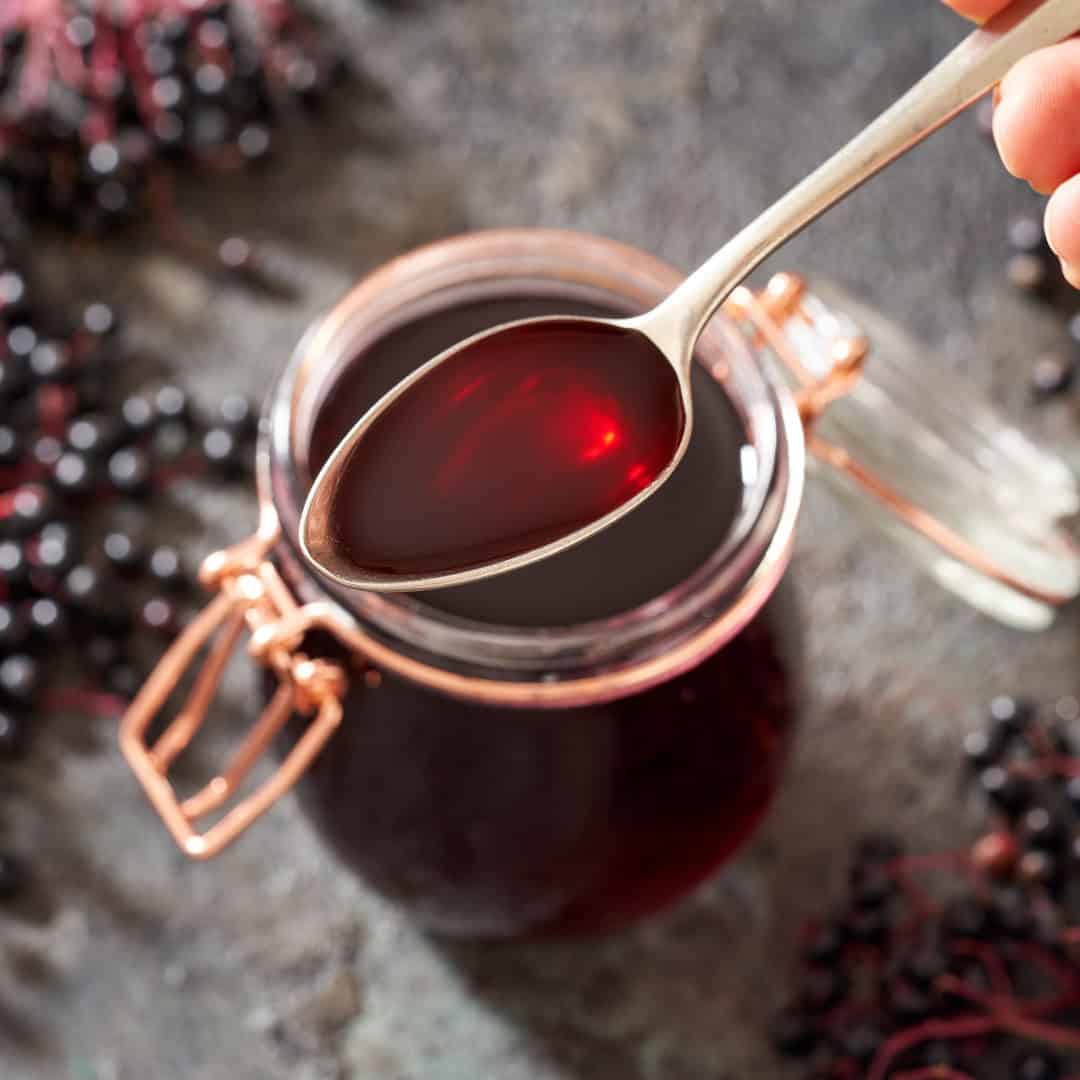
Let’s talk about the basics of Elderberry syrup. It is very easy to make, and the general premise of making an Elderberry syrup is that you are making a very strong decoction of the Elderberries.
A Basic Elderberry Syrup Recipe
Ingredients:
- 1 part Elderberries (Sambucus spp.)
- 4 parts Water
- 1 part Raw honey
Instructions:
- Decoct the Elderberries by gently simmering them in the water (avoid a rapid boil).
- Once the berries are soft, smash them and continue simmering gently, reducing to one part Elderberry decoction.
- Strain and filter the decoction, and then stir in an equal portion of honey to finish the syrup.
Notes On Making Elderberry Syrup
Simmer the berries in water until the liquid is reduced by at least half, preferably further, from 4 parts water to 1 part Elderberry tea. Filter the final product very well.
Honey turns your strong Elderberry tea into a syrup and acts as a preservative. Use an equal portion of honey to the amount of decoction remaining after filtering out the berry mash. For example, if you finish with one cup of Elderberry decoction, add one cup of honey. Some people prefer to use simple syrup or simply dissolve sugar into the decoction; however, most herbalists use honey, because it conveys its own medicinal virtues, especially if you use high-quality, raw, unfiltered wildflower honey. Though honey does help with preservation, keep your syrup in the fridge or it will eventually spoil.
A Simple Variation
Ingredients:
- 1 part Elderberries (Sambucus spp.)
- 4 parts Water
- ½ part Raw Honey
- ½ part Alcohol (Brandy or herbal tincture are preferred)
In this variation, at the end of the simmering and filtering process, to your one cup of Elderberry decoction, add 1/2 cup of honey and 1/2 cup of an alcohol of your choice. Brandy is commonly used because it is sweeter, smoother, and softer on the palate than spirits like vodka, Everclear, or whiskey. The alcohol will help to preserve the syrup better than honey alone. Brandy also has some medicinal virtues, as it can help calm a cough. It also makes the Elderberry syrup a little more pungent and punchy, which can be useful especially for coughs.

Adding Other Herbs to Your Elderberry Syrup
There are all sorts of cool ways to get creative with your Elderberry syrup preparation. For example, the honey you use doesn’t have to be plain; it could be infused with another medicinal herb. You can macerate your herb(s) in honey for a period of time and strain it out, and a lot of the medicinal virtue from those herbs will infuse into the honey. The more aromatic, essential oil-containing herbs tend to extract best in honey. My wife Whitney is a beekeeper, among other things, and she’s made various infused honeys over the years and found that aromatics make excellent infused honey.
The alcohol you use to preserve your Elderberry syrup doesn’t have to be straight brandy. It could be an herbal tincture, such as Elderberry tincture, to enhance the Elderberry-ness of your syrup. Or it could be another medicinal herb, depending on what you need. In our household, when we put up a batch of Elderberry syrup in the autumn when the Elderberries are coming out, we typically use Echinacea tincture as the preservative alcohol to add some immunostimulant properties to the syrup.
When adding other herbs to your syrups, note that some herbs are better infused than decocted. For many herbs, you can simply incorporate them directly into the Elderberry tea, such as Ginger. However, if you’re using very aromatic, volatile herbs, such as Thyme, Oregano, Rosemary, or Hyssop, it’s best to add those at the end. You would decoct the Elderberry and when it is reduced to roughly half the amount of water, you can remove it from the heat and add the herbs you want to infuse, stir it well, and put a lid on. Allow those herbs to infuse for 30 minutes to an hour.
The Artistry of Elderberry Syrup
You can keep your Elderberry syrup recipe very simple, which is absolutely fine! However, there are other remedies you could consider adding to the syrup:
- Other herbs in the infusion or decoction
- An infused honey
- Herbal tinctures
Spiced Elderberry Syrup
One very simple, and common way to modify a basic Elderberry syrup recipe, is to add spices. These could be common spices that you probably have in your kitchen. Many of the classic mulling spices work well here. These are nice to add if you’re giving the Elderberry syrup to children. Though the formula is already pretty tasty, especially with the honey, spices can improve the flavor.
Cinnamon, Clove, Cardamom, and Ginger are excellent additions to Elderberry syrup. These herbs will help drive the formula because they’re warming and aromatic, so they will stimulate circulation and move the blood. They probably won’t provide a full diaphoretic action in an Elderberry syrup; however, many of these do have diaphoretic properties, so they’ll be somewhat useful for fever.
Ginger has some antimicrobial properties, and some of these other spices also have expectorant properties. Some are more stimulant expectorant, because their warming volatile oils can help clear the lungs, which pairs well with the honey, because honey is a demulcent, soothing expectorant.
The Ultimate Antioxidant 5-Berry Formula
My favorite Elderberry syrup recipe is what I call The Ultimate Antioxidant Syrup. In this recipe, we shift away from the cough, cold, flu application of Elderberry syrup into a daily tonic, antioxidant supplement of sorts. This syrup tastes really good — you can put it on your pancakes, add it to yogurt or smoothies, or take it straight.
This syrup is an antioxidant powerhouse, and it’s a great formula for anyone who has a family history of heart disease. It will be helpful for those who have inflammation in their vasculature, leaky capillary beds, and perhaps bruise easily. The person who needs this formula may also have spider veins or varicose veins.
Ingredients:
- Elderberries (Sambucus spp.)
- Hawthorn berries (Crataegus monogyna)
- Blueberries (Vaccinium corymbosum or angustifolium)
- Goji berries (Lycium spp.)
- Rosehips (Rosa spp.)
- Ginger root (Zingiber officinale) – optional, if desired
Preserved with and augmented by:
- Rosemary-infused honey (Rosmarinus officinalis)
- Horse Chestnut tincture (Aesculus hippocastanum) – optional, use if veins are a concern
Brew the ingredients together as shown in the basic Elderberry syrup instructions. In the final formulation, after decocting and straining, add Rosemary-infused honey and preserve with brandy or if desired, preserve with Horse Chestnut tincture or a combination.
In many ways, Rosehips are like a berry, hence the five-berry formula. Rosemary-infused honey has strong antioxidant activity, to drive circulation, and to volatilize the antioxidants and deliver them throughout the cardiovascular system.
This formula is highly inflammation-modulating and antioxidant. Use it for people who need extra support for their vascular health. For example, if someone has more severe varicose veins, you could add Horse Chestnut tincture to the final product. You could also add Ginger to the brew to enhance the circulatory-stimulating effects.
Horse Chestnut is a well-known herb in Western herbalism that moves blood and stimulates circulation; it also has a tonic effect, increasing the tone of the venous side of circulation. You could also use Stone root (Collinsonia canadensis), which is classically used for varicose veins.
This is a valuable preparation to consider for people undergoing cancer treatment. Generally speaking, conventional cancer treatment is essentially oxidant therapy — it tries to kill cancer cells through oxidation. Unfortunately, the oxidation isn’t limited to the cancer cells. This is why people feel terrible when they undergo chemotherapy, radiation, etc. Doctors often recommend avoiding antioxidants because they think they will interfere with the conventional therapies. However, most clinicians say that’s not true, and that loading people up on antioxidants is a good call because it helps protect their tissues from some of the damage caused by the oxidation from cancer therapeutics. The berries in this formula are indicated for that purpose. It’s an excellent formula. Besides, doesn’t it just sound amazing and tasty?
Daily Immune Building Elderberry Syrup
Contrary to popular belief, Elderberry is not just for acute immune situations. In fact, it is a protective herb that will help to strengthen, nourish, and build your immunity when used as an immune tonic.
Heading into cough, cold, and flu season, or when kids go back to school, is a great time to use Elderberry as preventative medicine. This recipe is an antioxidant, nutritive syrup that can help strengthen your immune function.
Ingredients:
- Elderberries (Sambucus spp.)
- Astragalus root (Astragalus membranaceus)
- Reishi mushroom (Ganoderma lucidum)
- Schisandra berries (Schisandra chinensis)
Preserved with and augmented by:
- Baikal Skullcap tincture (Scutellaria baicalensis)
- Turmeric-infused honey (Curcuma longa)
Brew the ingredients together as shown in the basic Elderberry syrup instructions. In the final formulation after decocting and straining, add Turmeric-infused honey or Turmeric paste (simply mix Turmeric powder with honey), and Baikal Skullcap tincture.
Turmeric is another herb that is commonly pigeonholed for inflammation and joint pain. It is helpful for those issues; however, it also has immune-regulating effects. Baikal Skullcap tincture is immune-regulating and is used for acute infection situations. The Skullcap will make it taste a little more bitter, however, so you could leave it out if desired.
Take this formula when you’re well to keep yourself well as a deep nourishing, immune tonic to replenish the vital force. You can combine it with other immune tonic remedies to enhance these effects. Of course, all of the medicinal mushrooms are great in this formula, and other species of Reishi can be used, such as Ganoderma oregonense.
This immune tonic formula is great for people who get sick often and seem to catch every bug that goes around. Because Astragalus is in the formula, it isn’t a good formula for acute issues, such as fever, because Astragalus, in a way, has an anti-diaphoretic effect and can actually drive an acute condition deeper into the tissues.
This is an excellent formula for people who get seasonal allergies. It would be ideal to start working with this tonic Elderberry syrup couple months before allergy season to strengthen the immune system. Many of the herbs in this formula stabilize mast cells, which release the histamine that is responsible for allergic reactions. This will help to prevent those mast cells from being so permeable and leaky. Many of these herbs will also help to reduce histamine production itself.
Acute Immune Elderberry Syrup
I would be remiss if I didn’t give you an acute immune Elderberry syrup recipe!
Ingredients:
- Elderberries (Sambucus spp.)
- Elecampane (Inula helenium)
- Ginger root (Zingiber officinale)
Preserved with and augmented by:
- Echinacea tincture (Echinacea spp.)
- Osha-infused honey (Ligusticum porteri)
Decoct the Elderberry, Elecampane, and Ginger together. Once the tea has properly decocted and reduced to one-quarter, filter the tea. Then add Osha-infused honey and Echinacea tincture. This is an amazing formula for addressing cough, cold, and flu; stimulating immunity; moving the blood; and supporting the respiratory system.
Ginger, Osha, and Elecampane all have stimulant, expectorant properties. We live in the Pacific Northwest, where it’s very damp and cold, so this syrup’s warming, stimulant, expectorant properties are great for this region.
If you live in an area where dry coughs tend to occur, you might modulate the formula by adding Licorice root (Glycyrrhiza glabra), Solomon’s seal (Polygonatum biflorum), Shatavari (Asparagus racemosus), Mullein (Verbascum thapsus), or Coltsfoot (Tussilago farfara), to address the cough. You could also add Wild Cherry bark (Prunus serotina), which is the basis for many classic herbal cough syrup recipes.
For coughs, syrups are a great delivery medium for herbs because the honey in the formula helps soothe any potentially irritating properties in pungent, spicy, stimulant expectorant plants. Syrup is also demulcent, soothing, and calms a cough. This is a neat way to combine an Elderberry immune-support formula with cough syrup.
There you have it! A simple Elderberry syrup, with the option to add spices, a five-berry antioxidant syrup for cardiovascular support, or a syrup to support recovery from oxidative stress. You also have an immune-building syrup for daily wellness and prevention, and an acute syrup for cough, cold, and flu.
FAQ
What is Elderberry traditionally used for?
Elderberry has long supported respiratory infections and given general immune support. It is also a potent antioxidant for other uses such as the cardiovascular system.
How do you make a basic Elderberry syrup?
Gently simmer Elderberries in water, strain the reduced decoction, then combine it with an equal amount of honey.
Can you add other ingredients to Elderberry syrup?
Yes. You can use spices, a variety of herbs, infused honey, and tinctures to customize a formula.
Are Elderflowers used the same way as Elderberries?
No. Elderflowers are used traditionally as a diaphoretic used to support perspiration and fever, while the berries are highly antioxidant and have action against respiratory-route viral infections.
What herbs can be added to a cough-focused Elderberry syrup?
Ginger, Elecampane, and Osha are great for a more stimulating, warming formula, and herbs such as Mullein, Licorice, Shatavari and Wild Cherry bark will give a more soothing, demulcent quality.