In the spring, we explored the Fire element in the post The Fire Element in People and Plants, and in the summer, we explored the Water element in A Journey Through The Water Element Signs and Herbs. In this post, we’re focusing on the Air Element in honor of the fall season and the sign of Libra.
When compared to the Fire, Water, and Earth elements, the Air element is quite unique. It is invisible and suffuses everything. You can only see the Air element through its effects on the other elements: the wind moving the leaves in the trees and over the earth, the wind rippling across the water, or fanning the flames of a fire, or even putting it out. The Air element shapes how we relate to the world around us and, like the other elements, is integral to life.
We all need air to breathe. Plants need carbon dioxide, and humans need oxygen. A beautiful synergy occurs through the Air element: our out-breath is the in-breath of plants, and the out-breath of plants provides the oxygen for us to keep breathing.
In a very literal way, we are in relationship with the plant kingdom with every single breath we take.

The Air Element in Alchemy, Traditional Medicine & Astrology
In alchemy, the elements are divided into the volatile, heavenly elements, Fire and Air, and the fixed, terrestrial elements, Water and Earth. This delineation matters in alchemical philosophy and has practical applications in the lab, because you can actually see the volatile and fixed natures of the elements in the glassware.
Air is more fixed than Fire, and it is associated with the philosophical principle of Mercury, an amalgam of the Air and Water elements. Water is the most volatile of the fixed elements, Air is the most fixed of the volatile elements, and Mercury bridges the two. This is why Mercury is called “the messenger”; it bridges the heavens and the Earth.
In Ayurveda, the Air element is closely associated with vāta dosha. It is a generative element of vāta, and when you look at vāta and the Mercury principle in alchemy, you’ll notice they overlap significantly. However, they differ in their generation, with vāta being the most volatile and ethereal of the doshas. This is because it’s composed of Air and Ether, whereas Mercury is composed of Air and Water, and they share the airiness.
In the Galenic model, the Air element is associated with the sanguine constitution. In the zodiac, Air plays a central role. There are four elements, and each one exists in three modes of expression: Cardinal, Mutable, and Fixed. Libra is Cardinal Air, Gemini is Mutable Air, and Aquarius is Fixed Air. This gives us insight into how the Air element manifests in nature, and how it uniquely manifests in people and plants.
In an elemental model of herbalism, we can look at the element on its own, which has a gamut of correspondences to our constitution, organ systems, tissues, and pathological patterns. It also has many relationships to how it impacts plants. The astrological understanding of the elements takes the broad elemental orientation and divides it into three modes of expression, giving us more detail and offering fascinating insights into interconnections within the body that may not otherwise be visible.
In traditional humoral models, such as the doshic model of Ayurveda, the Air element is related to the lungs, which makes sense, but it’s also related to the colon, a connection most of us wouldn’t make. According to Ayurveda, a “dotted line” connects the colon and lungs, and they are united through the Air element.
Now let’s take a journey through the Air correspondences and how the Air element manifests in people, physically and psychologically, through the Air signs of the zodiac.
The Air Element in People
The Air Element Through the Sign of Gemini
Mutable Gemini is the third sign of the zodiac. The mutable mode represents change and movement, so Gemini is like the mind’s whirling winds. Gemini represents the development of the intellect and our capacity for speech and communication. As we progress through the zodiac, we add layers of complexity within human consciousness. For example, with Aries, we have consciousness itself and pure action, because it is the first Fire element and the very first sign of the zodiac. With Taurus, the next sign, we have Earth, which is the experience of having a body and senses.
When we move into Gemini, we sense the world around us through Taurus and the body. We have perception, and we know there’s information around us. Gemini represents the capacity for human consciousness to take in information from our surroundings. Many people think Gemini represents the mind, thinking, and communication. However, it is really what lies beneath those things: raw perception.
In the body, the Air element through Gemini manifests in the lungs and the respiratory system, one of its primary organ system rulerships. It is also associated with the capillary beds. Mercury is at the boundary between Air and Water, and the capillary beds are at the end of the arterial circulation, where nutrients and oxygen diffuse into the extracellular fluid to nourish the cells.
Gemini rules the arms and hands, Aries rules the head, and Taurus rules the neck and throat. As we progress down the body, branching or division occurs. That is why Gemini is the sign of the twins, represented by the two pillars like a Roman numeral two (♊︎). With that division, we have two lungs, two bronchi, two arms, and two hands. Our hands enable us to do a lot, and they represent our will in some ways. We can think of Gemini as the central Air element in the upper body. It relates to inhalation and oxygenation.
When the Air element of Gemini manifests strongly, we may have a highly vāta individual, from a constitutional perspective. Gemini types embody a strong vāta constitution because they are ruled by Mutable Air and Mercury. They tend to be cold, dry, nervous, anxious, highly active, very talkative, and their minds go a million miles a minute.
With Gemini, there is a relationship to the nervous system, as it is in the entire mutable cross: Gemini, Sagittarius, Virgo, and Pisces. Each of those signs governs different attributes of the nervous system. Gemini rules the afferent nerves, whereas Sagittarius relates to the efferent nerves.
The Air Element Through the Sign of Libra
Libra is commonly thought of as the pause in the zodiac. It is the transition point between the first six signs and the last six signs. Think of it as the space between breaths. We inhale, pause, exhale, pause. Libra relates to those pauses. This is where we rest. In that way, Libra is the still, tranquil Air.
Libra represents our relationships and how the inner and the outer relate to each other. Where Gemini focuses on taking in information, Libra recognizes that another person has their own intake of information and their own way of seeing things. Libra identifies with the nature of relationships, relating to others and learning to see through another’s eyes.
Notice that with the Air signs, there’s a “two-ness,” or duality. Gemini’s symbol, as we saw, consists of two vertical and two horizontal lines, forming the Roman numeral two ♊︎. Libra has two lines and the little bump at the top ♎︎, the sign of the scales, and this is where Libra says, “I have my perspective, and that person has their perspective.” Libra is always trying to find a balance between those things, and Librans tend to have an innate capacity to see through the other person’s eyes, so they can be very relatable.
A key aspect of Libra is the capacity to be comfortable with paradoxes, stemming from their habit of constantly weighing, analyzing, and examining things. Sometimes they suffer from “analysis paralysis.” They occupy that pause in the zodiac, and they get so busy weighing and considering that they can become stagnant and stuck.
As we progress through signs of the zodiac elementally, we slowly expand outward to take in a greater level of consciousness of ourselves and the world around us. Whereas Gemini says, “Here I am perceiving, taking in data,” Libra takes it to, “Now there’s another individual who is also taking in and perceiving data that might be different from mine, and I want to understand that.” The worldview broadens with Libra.
Libra is the Cardinal Air sign and our dominant sign for the transition into autumn. You may notice that there’s a change in the air when autumn comes. The smells, the wind, and the air all change. It is distinctly different from summer, and in that transition we can actually feel the cold start to come in.
Libra’s physical correspondences can be a bit confusing in relation to the Air element, as they seem more watery. For example, Libra rules the kidneys, low back, and the ovaries. These are not notably airy organs. There is an interesting relationship between the kidneys and the Air element, and it helps to look at it step by step. The kidneys secrete erythropoietin, which signals the bone marrow to produce more red blood cells. Red blood cells carry oxygen in the blood. Gemini is the inhalation, and in a way, Libra is responsible for the blood’s capacity to carry oxygen throughout the system. That is where the Air element comes in physiologically, which can help click the puzzle pieces together to understand how it works.
How do we relate the Air element to the kidneys, ovaries, and low back? Traditional Chinese Medicine holds some interesting correlations with the Air element. In TCM, the Kidneys are said to grasp the Lung qi. The Kidneys grasp the vital force the Lungs bring into the body. That is pretty similar to the process with erythropoietin, but it also relates to breathing difficulty, and asthmatic situations can be viewed as the Kidneys not grasping the Lungs. In TCM, the Kidneys relate to the body’s baseline vitality, because they store jing, the vital force we are born with.
When we burn the candle at both ends and run ourselves ragged, we can create Kidney yin deficiency or Kidney yang deficiency. Both of those states indicate a need for rest and rejuvenation, which relates to Libra. It is also worth noting that when Kidney yin or yang is deficient, some symptoms resemble those of excess Air element. There is a reflex to Capricorn, which squares Libra, potentially indicating a medical issue. Capricorn rules the knees and the bones. In TCM, the Kidneys correlate with bone development —when Kidneys become deficient, the knees and low back can become sore. This is a Libra-Capricorn reflex at play. Sometimes people get dizzy, lightheaded, and spacey. To be clear, Libra isn’t precisely the same as the TCM Kidney, but there are clear correlations.
The Air Element Through the Sign of Aquarius
Aquarius is the third sign and manifestation of the Air element in the zodiac. In the Northern Hemisphere, the month of Aquarius is the icy cold air of winter. It is the Fixed, heavy, dense, cold air which penetrates deep into the body and the bones.
In our progression with the Air element, at this point, the consciousness and awareness of the other extends to humanity as a whole or to groups of people. This could be our own peer group, but it can also be the state of mind and consciousness in humanity as a whole. Again, Gemini is self, Libra is other individuals, and then Aquarius extends this to groups of individuals.
The Air element manifests in Aquarius as cold, detached intellect. Aquarius is a sharp intellectual sign and tends to push intellectual boundaries because the Air element, in the grand scheme of things, is the mind. It is our psychology and the thinking state of the individual. The paradox of Aquarius is that they focus on their individuality while also seeking ways to better humanity and the world around them.
Physically, Aquarius represents gaseous exchange. Gemini brings in the air, Libra makes the red blood cells that distribute oxygen throughout the body, and Aquarius handles peripheral circulation and the gaseous exchange that happens at a cellular level. Judith Hill describes Aquarius as the electrical system, and electrical impulses run through the nervous system. In strong Aquarian constitutions, there is a proneness to nervousness, anxiety, tension, and even melancholy and depression. Neuromuscular junctions trigger muscular contractions, which is why Aquarians are often tense. They may be psychologically tense, but they can also be physically tense and prone to cramping, spasms, tension, or muscle constriction.
How the Air Element Signs Work Together
The lungs, nervous system, and the body’s oxygenation are connected, and movement as a whole is governed by the Air element. This also describes the vāta dosha of Ayurveda quite well. Vāta governs the lungs and the nervous system, which makes sense. When you’re anxious and stressed out, deep breathing calms your nervous system because you’re directly regulating the Air element in your body. Vāta also governs the colon, which is why you get gassy and bloated when vāta accumulates in the bowel.
Gemini and Aquarius tend to be cold, nervous, and anxious. Constitutionally, they can be thin, wiry, intellectual, and dry. Libra may be a little more moist because of Venus’s influence and Libra’s architecture.
Gemini inhales, Libra produces red blood cells that bind oxygen, and Aquarius releases that oxygen at the cellular level. This is the way the Air trine works. In the zodiac, trines represent elemental harmony, so they are often considered beneficial aspects. However, they can also lead to excess, because if you have an excess of Gemini, that airiness might spill over into Aquarius or Libra. If you have a Gemini excess of tension, nervousness, or anxiety, that can deplete the TCM Kidneys and deplete your vitality. Gemini and Aquarius both tend to be nervous, and that excess can feed into Libra and affect the TCM concept of the Kidneys. Interestingly, the sign opposite Libra is Aries, which rules the adrenal glands. If you’re nervous, anxious, or stressed out, it can feed into that pattern. Too much Gemini tension, constriction, and clamping down affect Aquarius, constrict peripheral circulation, and can lead to cold hands and feet.
These are some ways we can look at the pattern of the Air signs, how they work together to create a cohesive, functional system within the body, and also how they can lead to dysfunction.

The Air Element in Plants
The Morphology of Air Element Plants
Morphologically speaking, the Air element in plants is similar to constitutional patterns in people. In a five-element model, the Air element is associated with the plant’s leaves, where much of the gaseous exchange occurs.
Air element plants are usually light, thin, tall, and spindly. They are also often dry and rough, with a lot of space between their parts. Leaf structures often have a feathered, lacy appearance. Climbing plants have Air qualities because they cling to other plants, so they’re reliant on that relationship.
The Taste of Air Element Plants
In terms of taste, Air plants are often bitter. Bitter aggravates vāta dosha because bitter-tasting herbs tend to increase dryness, drain fluids, and are cold. Bitter aggravates Air and Ether, which are the two elements that make up vāta dosha. Conversely, the acrid flavor is remedial for excess Air element because acrid-tasting herbs are spasmolytic and relaxant, and some are nervine or sedative. These are excellent actions for calming excess airiness.
The aromatic taste makes sense because aromatic herbs are rich in volatile oils that diffuse into the air. I jokingly say that if you’re anywhere near a Rosemary (Rosmarinus officinalis) or Lavender (Lavandula angustifolia) plant and you sniff, you can smell it. If you stand in a Lavender field, it’s intoxicating to smell so much Lavender! In a way, the plants are in two places at once: they are outside the body, and the chemicals float around in the air, and you can smell them, which is sort of an inside-the-body function. Being in two places at once, or bridging outside and inside, is a very mercurial quality.
Aromatic herbs often have an affinity for the respiratory tract and are carminative, relieving gas and bloating in the digestive system. That lines up with the Air element, and one could argue that astringency relates to it as well. Astringency also has an earthy quality because it increases structural tone in the tissues. However, in Ayurveda, astringency is associated with vāta because it aggravates dryness and increases tone.
Affinities of Air Element Plants
The nervous system, the brain, and the lungs are the main affinities of Air plants. The digestive system in general also plays a role, but in a very particular way. Especially with colon-oriented patterns such as gas. We can see the relationship to the nervous system, especially the neuromuscular junction, with acrid herbs, the spasmolytics. This is because too much Air element generates the wind/tension tissue state.
Actions of Air Element Plants
The spectrum of nervines: from mild nervine relaxants to stronger nervine sedatives and hypnotics all act on the nervous system component of the Air element.
As mentioned, spasmolytics also work on the nervous system, but primarily act on the muscles, relieving excess Air, constriction, and tension.
Expectorants act on the lungs. There are many types of expectorants, so just because something is an expectorant doesn’t mean it’s an Air-element plant, though it will likely affect the Air element. Some expectorants are relaxant, which are a little stronger in the Air element quality. Other expectorants are hot, spicy, and pungent, such as Garlic (Allium sativum). Still others are more soothing, moistening, and demulcent, such as Marshmallow (Althaea officinalis). Marshmallow is not an airy plant, but it does work on the lungs.
The nootropic action is an expression of the Air element. It brings blood flow and oxygenation to the brain, enhancing cognitive function, focus, and perception. Many of the nootropics clear your head, so you can be more aware and have better memory and focus.
Finally, the carminative action encompasses volatile oil-containing plants that act on gas, bloating, tension, and constriction. Many carminatives are also mildly antispasmodic.
Energetics of Air Element Plants
Energetically, Air element plants have cold, dry, relaxant properties. There is a dynamic of sympathy and antipathy at play with the elements, so you have to consider whether an herb increases or decreases the Air element in the body. Some herbs are sympathetic to Air because they relate to the lungs, but they might be antipathetic to Air because they moisten dryness, thereby decreasing excess Air element in the lungs.
A Selection of Air Element Plants
Blue Vervain (Verbena hastata)
Blue Vervain is an excellent nervine relaxant. It’s a very bitter, acrid nervous system relaxant and spasmolytic. It is also a reliable relaxant diaphoretic. This herb is commonly used for wind patterns and conditions within the body, such as nervousness, ticks, tremors, palsies, and vague neuromuscular issues.
You can see the Air element very clearly in the morphology of Blue Vervain. It is a tall, thin, slender herb with beautiful, dainty purple flowers. Everything about it is petite, airy, and spacious.
Mullein (Verbascum thapsus)
Mullein has a two-year pattern. In the first year, the basal rosette appears. In the second year, a very tall inflorescence rises straight upward. Of course, all plants grow up, but Mullein really shoots upward and gets extremely tall. Mullein is a very versatile respiratory herb. It is moistening but not too moistening. It is a little tonic, but not overly tonic. It is also mildly relaxant.
Mullein can be used for a wide variety of coughs, including dry, wet, or tense coughs. Specifically, Mullein is excellent for an irritable cough with a tickling sensation. In Chinese medicine, those tingly, tickly sensations are a sign of wind, so a ticklish, irritable cough, where the Air element is agitated, is a great case for Mullein.
Interestingly, the Mullein flower is useful for nerve pain, which is why it’s common in ear oils. Mullein flower soothes the pain and inflammation that can accompany an ear infection. In these cases, it is commonly combined with St. John’s wort (Hypericum perforatum) and Garlic, which helps treat the infection. David Winston discusses using Mullein root for nerve pain, specifically facial nerve pain, such as TMJ and trigeminal nerve pain.
Milky Oats (Avena sativa)
We can’t talk about Air element herbs without mentioning Milky Oats. These are Oats in the milky stage of their growth that act as a nerve trophorestorative extraordinaire.
This is a very vāta-looking plant. Oats are tall, thin, dry grasses. The seed exudes a milky white latex that tastes sweet. It is used for excess nerve stimulation over time, which can lead to burnout. It is specific for prolonged Air element excess that exhausts the nervous system. Milky Oats is a key remedy for excess vāta patterns in which the nervous system is tense, dry, and exhausted. This is what the old doctors called neurasthenia, and it’s often related to HPA axis dysfunction. I think of Milky Oats like pouring milk on a hot, dry, burned-out nervous system, even though that’s not exactly what’s happening.
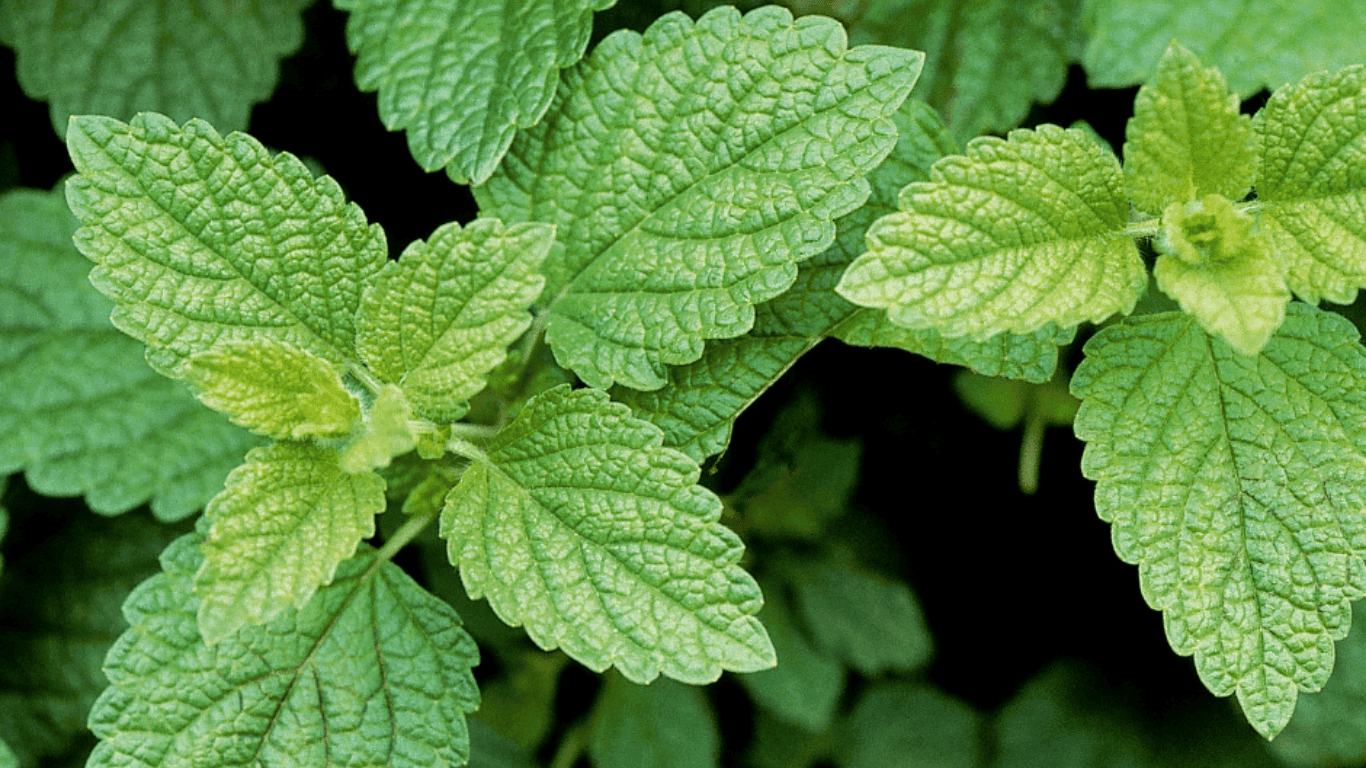
Lemon Balm (Melissa officinalis)
Lemon Balm is a versatile nervine relaxant. It calms the overly airy, nervous, anxious, overstimulated nervous system, but it also lifts it in a positive way. Lemon Balm calms the mind and heart down so that the spirit can be uplifted.
Lemon Balm’s aromatic, volatile, and carminative properties help with nervous digestive issues, especially those that lead to wind in the heart. It is useful for palpitations, arrhythmias, hyperthyroid patterns, and excess heat or tension, especially when they manifest in the heart. Lemon Balm eases excess Air element as it manifests through the mind and nerves, through the gut as a carminative, and through the heart.
Lemon Balm is also useful for an Air element deficiency state, where an individual may be melancholic and perhaps take life too seriously. They may be rigid and need to lighten up a bit. They need upliftment in their heart to relieve the melancholy and depression.
The Evolutionary Herbalism Foundations Course
We’re in the final days of enrollment for our brand-NEW Evolutionary Herbalism Foundations course. Enrollment closes September 25th, 2026. Click here to get all the details and sign up now!

FAQ
What are the Air signs?
Gemini, Libra, and Aquarius are the three Air signs of the zodiac.
How does each Air sign relate to the body?
Each has many correspondences, including a long list of anatomical relationships. For the purposes of this post: Gemini relates to breathing and perception; Libra to oxygen-carrying blood and balance, and Aquarius to circulation and cellular exchange.
What can excess Air look like?
It may show up as nervousness, anxiety, dryness, tension, restlessness, spasms, tics, tremors, gas, and bloating.
What are common Air-element plant qualities?
Airy plants are often tall, slender, spindly, light, dry, aromatic, and bitter.
Which herbs can support excess Air patterns?
Blue Vervain, Mullein, Milky Oats, and Lemon Balm can support Air element functions for respiratory, digestive, nervous system, and tension-related patterns.