
The Elements Are the Foundation of Medicine
The Elements play a critically important role in traditional systems of medicine worldwide. They are part of the foundational pattern of life’s energetic architecture. When you look deeply into the nature of existence, and the structure of plants, people, psychology, and the patterns of the seasons, it becomes clear that all of these things derive from the Elements.
We can think of the Elements as the four primal clays that shape and mold everything in life. In Western philosophy, this goes back to Aristotle and Plato, who talked about the Elements. When you study Chinese philosophy and medicine, the Elements are there as well. In Tibetan medicine and Ayurveda, the Elements are foundational. North American herbal traditions such as Thomsonianism, Physiomedicalism, and Eclecticism incorporate the Elements into their discussions of tissue states. At a time when the practice of medicine was quite intellectual and not quite as “earthy” as it is now, when science was becoming the dominant way of thinking, the language they used to describe tissue states, such as excitation or stimulation, still included the Elements.
The Elements are also integral to many esoteric systems, such as alchemy. In truth, alchemy was an original science rather than the esoteric system it is often considered today. Many of the scientists who are now household names, such as Francis Bacon and Isaac Newton, were into alchemy. However, as science became more predominant, people sought to distance themselves from alchemical philosophy and strip the spirit from the system, diminishing its meaning. More scientists began leaning toward mathematical, linear, reductionistic ways of understanding things. That stripped meaning from many things, and that’s how we ultimately ended up with the “life as machine” philosophy we have today. It is as if there are gears and pulleys, without an animating spirit. Spirit is at the root of the alchemical tradition, and the Elements are foundational to it. When we prepare medicines in the lab, we utilize the Elements: Fire, Water, Air, and Earth.
The Elements are foundational to our understanding of the way a plant grows. What is a seed? The seed is the plant’s future potential. Within the seed is the root, the leaf, the flower, the fruit, and the seed of the next generation of plants. So the seed is akin to the quintessence — the Fifth Element. You put the seed in the earth; you give it water; it takes the fire from the sun and the carbon dioxide from the air — it requires those four elements. The roots relate to the Earth Element, the stems relate to the Water Element, the leaves relate to the Air Element, and the flowers relate to the Fire Element. The fruit and seed are the quintessence, the Fifth Element.
Just as the Elements are foundational to how plants grow and what they need, they are also foundational to the seasons. There are four seasons here in the West, each associated with one of the four Elements, and then one Element governs seasonal transitions.
The Elements are also at the foundation of astrology, where there are four Elements in three modes. My teacher, Judith Hill, refers to the three modes as the rates of matter in motion, so those Elements have three primary modes of expression or three speeds: Cardinal, Mutable, and Fixed. We have Earth, Water, Air, and Fire, each in Cardinal, Mutable, and Fixed. Four Elements multiplied by three modes gives us the 12 signs of the zodiac. Medical astrology offers great insight into the human constitution, our tendencies toward excesses and deficiencies, strengths and weaknesses, and predispositions to disease. Medical astrology helps us address disease states and understand when to plant, harvest, and prepare herbs. It also shows us the nature of the herbs. The astrological tradition informs virtually every aspect of herbal medicine, and the Elements are essential to it.
The Fire Element
When you explore the Elements, you can see that at the solstice and equinox points, you have the Cardinal signs of the zodiac — the Cardinal cross, and that each Element initiates a new season. The astrological year begins with Aries, our Cardinal Fire sign.
In many cultures and traditions, Fire is the primal Element. According to the Western traditions of alchemy and astrology, the initial pulse of creation emerged from Fire. In alchemy, it is referred to as the primum mobile, the first stirring or movement of creation from the prima materia, which is the first matter. We have that initial movement, that first impulse to creation from nothingness. There is a movement that creates friction and generates a spark, and that spark generates first light.
The Bible says that in the beginning was the void, and then there was the first light, the dawn of creation: “And God said, ‘Let there be light,’ and there was light. God saw that the light was good, and he separated the light from the darkness.” Thus, the Fire Element was the first Element to be generated.
It is a little different in Ayurveda, which holds that the first Element is Ether, or space. Space contains Air, and within that space that contains Air, a wind blew, and that initiated the spark, which initiated Fire. So, in Ayurveda, you have Ether first, then Air, followed by Fire. Whereas, in alchemy, Fire is first, and then Air is generated.
Nonetheless, the Fire Element lies at the root of creation, as reflected in our solar system, with the Sun at its center. We could think of the Sun as the celestial Fire, whereas the flames here on earth are the terrestrial Fire. The fire that you light in your fireplace is simply releasing the stored energy of the Sun trapped in the wood of the trees.
In Ayurveda, while there is certainly a concept of the Fire Element, agni, it is usually translated into the working units of the three doshas. Ayurveda is mainly concerned with the management of the three doshas, and we find the Fire Element in the pitta dosha, which is composed of Fire and Water. The corresponding humor in the Greek system is the choleric humor. In Sheldon’s constitutional types, the mesomorph is the corresponding type. So you have various constitutional patterns across the systems that correlate with the Fire Element.
For our purposes, we are using the zodiac to delineate the dynamics of the Elements in a little more detail, as it provides a triune model for each Element. This shows the stages of transformation the Element undergoes. It also shows a harmonious system within the body, the Fire Element system in this case. You can see nuances in the constitutions. For example, with an understanding of the zodiac, you can delineate an Aries Fire Element type from a Leo Fire Element type and a Sagittarius Fire Element type, offering more specificity. You can also see interconnections in areas of the body as brought together through a particular Element, based on the zodiac.
The Fire Element in People
We have three Fire signs in the zodiac: Aries, Leo, and Sagittarius. Aries is the Cardinal form of Fire, Leo is the Fixed form of Fire, and Sagittarius is the Mutable form of Fire. The Cardinal quality is the force of initiating something new. Cardinal signs always fall at the beginning of each season, bringing in the new season and providing the energy needed to generate something new.
We can think of the Cardinal sign as the spark. The Fixed quality is fixed down and in, and we can think of it as the quality of coercion, stability, and the solidity of containment. The Mutable quality is changeable, fluid, adaptable, moving, and morphing.
If you are familiar with the three doshas of Ayurveda, you might immediately recognize the similarity between Cardinal and pitta dosha, Fixed and kapha dosha, and Mutable and vāta dosha. However, that doesn’t mean every Fixed sign of the Zodiac is kapha in nature, because each sign is a complex interweaving of various forces. It isn’t simply a mode, but an Element in that mode, and the Element is a little more important than the mode itself. A planet is also attributed to that sign, which further influences its nature. So, we need to look at the totality of the forces that come together to generate a particular sign of the zodiac.
Fire Element people, in general, tend to have a pitta constitution — a medium, often muscular build, an intense manner, sharpness in their speech, and often red colorations in the body. The red colorations can be in the skin, the sclera of the eyes, the mucosa, or the hair in some instances. Freckles are common among Fire Element types, as are sharp features and characteristics — sharp-pointed nose, sharp-pointed chin, and chiseled features. These are qualities and characteristics of Fire Element types in general.
Aries
Aries is first, and it is the Fire of action. It is the Fire of the head in medical astrology, and rules the head and the brain. Aries’ symbol is the ram. It is the initial pulse of Fire, and the spark that lights the flame. It is the initiatic energy, and you could think of it as pure force. Aries represents the birth of anything, the first step in the evolutionary process that is life, beginning with birth.
With birth comes the necessity for the survival instinct. A baby is incredibly vulnerable and has to fight for survival. Aries represents the fight to survive and to preserve the self. Aries is the self and the survival mechanism of the body and the psyche, and this is why, physiologically, Aries is not just the head and the brain; it is also what’s in the brain: the hypothalamus. It is the whole HPA axis, including the adrenals, and the higher regulatory centers that govern and control the adrenal glands, which are the survival mechanism.
When there is a threat to your survival, the HPA axis kicks into gear, and you have a fight-or-flight response, which is very much an Aries response of the body. A fever response, especially a rapid, hot, quick, intense fever, is another Aries-type response of the body. So it’s the head, the brain, and the fire of the upper part of the body, which is why Aries acts first and thinks later. Aries people tend to jump into action, doing things without thinking, for better or worse. This can sometimes get them into trouble, which is why Aries Fire types are accident-prone.
*Keep in mind that when we are looking at the medical attributes of a sign of the zodiac, constitutional aspects, and organ systems, a person’s Sun sign is not necessarily the most important part of this. This is especially true when it comes to the constitution. Have a look at our post, How to Really Read your Constitution in the Natal Chart, which goes into more detail about the astrology of your physical constitution.
Leo
Now, let’s have a look at how Leo comes about and is differentiated from Aries. Aries is self-oriented and is the Fire of action. Aries just does the thing. It is the first sign, so it doesn’t really develop anything else. The same is true for each of the first four Elements, which develop various attributes of the self.
With Aries, you have action and the Fire Element. With Taurus, you have the sense of one’s body and the Earth Element. With Gemini, you have the intellect and a way of thinking with the Air Element. Then, Cancer establishes feelings and emotions with the Water Element. Finally, we get to Leo, which contains those first four signs, so it takes the Fire Element and elevates it to another level, giving it more tools to work with.
Leo, ruled by the Sun, is the Fire of the personality. It is the development of the ego itself, in many ways. In the body, it is the heart, circulatory system, spine, and gallbladder. Leo is the will to action, the will to do things, but it doesn’t just act for the sake of action (like Aries); it acts in service to the self. That is one of the great things about Leo, but it can also be one of the pitfalls of Leo, because it can become arrogant and self-centered. As the planets orbit the Sun, Leo may feel that everything should orbit around them.
Leo is the Fire in the center of the body — the heart, cardiovascular system, and circulation. Leo types have a strong will and strong creative Fire. The Leo type wants to express itself, whereas the Aries type just wants to act. Leos may feel they have something inside they want to express outwardly, and they want others to see it. Leo wants to be witnessed and recognized, and thrives on that. The Leo expression of the Fire Element is of the heart, rather than the head, like Aries.
Sagittarius
Whereas Aries is the Fire of the upper part of the body, and Leo is the Fire of the central part of the body, Sagittarius is the Fire of the spirit and of the lower body — the hips and the thighs are governed by Sagittarius.
Sagittarius is the archer and the arrow itself, and is associated with movement and long-distance travel. This is why Sagittarius is the archetype of the traveler and the adventurer. Sagittarius wants to experience the new, the unknown. The Sagittarian impulse is that moment when Bilbo Baggins runs out his front door to join the company of Gandalf and Thorin Oakenshield, the spirit of adventure to get out of the Shire, and to experience the unknown.
Sagittarius is also the intellect, but not only the intellect, like Gemini, which wants to gather facts and information, but the scholar, who wants to learn something philosophically oriented. It wants to ask the big questions: What is the meaning of life? What is my purpose? Why am I here? What is this all about? What is belief? That’s why it is the archer, the arrow that soars and above the terrestrial. It sees things from a higher perspective, which is why it is associated with Jupiter. Jupiter has that higher perspective, faith, and belief in something greater than the self to aspire to.
Sagittarius has deep traditional associations with religion, as does the Ninth House, and with the higher power. That translates into movement in the body. What makes us travel? Hips and thighs are responsible for our locomotion. Arterial circulation is the pathway by which blood travels through the body. The muscles move us. So Sagittarius is the Fire of the lower part of the body.
These three signs, Aries, Leo, and Sagittarius, form the Fire trine in the chart and govern Fire in the body. The Fire system is responsible for distributing the vital force throughout the body, as expressed through heat, vitality, and blood. One way we can look at this is by examining how these three signs of the zodiac work together and demonstrate the function of the Fire Element in the system.
Let’s say that a bear is chasing you through the woods, which activates Aries. Your hypothalamic-pituitary axis, and specifically your adrenals, are triggered. Aries is activated, lit up, and filled with vitality when there’s a threat to survival. That excess energy from Aries feeds seamlessly into Leo and Sagittarius. In Leo, when you undergo a stress response in your HPA axis, your heart rate goes up because Leo rules the heart. Additionally, digestion shuts down to some extent because digesting breakfast is less of a physiological requirement of the body when a bear is chasing you, so the heat of the core is pushed out to the periphery — to your arms so that you can fight, and to your legs so that you can run. Sagittarius governs the movement of blood and arterial circulation. Sagittarius shunts the blood out to the periphery so that you can fight and run away. When the HPA axis is triggered, the pupils dilate (the eyes are associated with Leo because of their association with the Sun). Aries also governs the eyes because they are seated in the Aries area of the body. So we have an interesting dynamic: Aries is triggered, heart rate increases, which stimulates Leo, which, in turn, stimulates Sagittarius, and activates the entire Fire system of the body. Additionally, when the HPA axis is triggered, immunity decreases somewhat because fighting off a virus is less of a physiological priority when a bear is chasing you.
That was an illustration of how the vital force flows through the Fire trine in the zodiac, which, hopefully, gives you a deeper understanding of what we see in the body. Of course, we could go much deeper with these three signs of the zodiac. There are constitutional variances among Aries, Leo, and Sagittarius, and more in-depth understandings of the anatomy, physiology, and interconnections among them. But this is just a small taste of how the Fire Element is reflected in the system and differentiated through the three Fire signs of the zodiac.
The Fire Element in Plants
Morphology
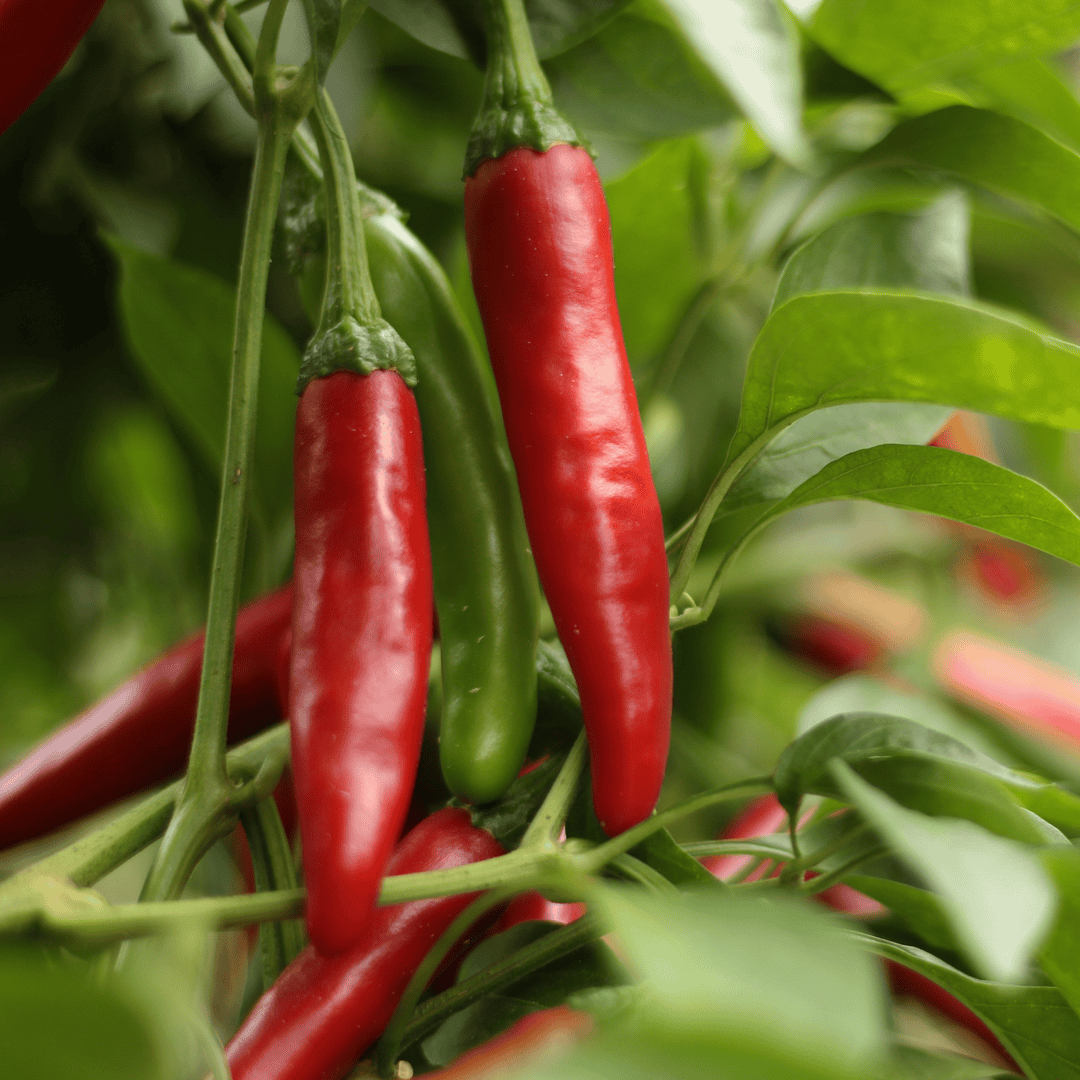
One way we immediately see the Fire Element reflected in plants is in their morphology. Fire Element plants have an intense appearance. The plants can appear sharp in many ways; for example, in the leaf margins, we often see serrations, lance-shaped leaves, or highly pointed varieties. In terms of color, we often see redness in the flowers, berries, or leaves.
Taste
Fire Element plants are often pungent with varying degrees of intensity. They can be burning like Horseradish or Cayenne Pepper, or they can have a more aromatic form of pungency, indicating essential oils.
Affinities
Plants with a strong Fire Element kindle digestive fire and stimulate blood circulation. Often, they work through the heart and the cardiovascular system, and aid the eyes, adrenals, and immune system.
Actions
Stimulant is the main action of Fire Element plants. They’re stimulating, though not in the sense of coffee, which is more of a nervous system-type stimulation. There are other types of stimulants — digestive stimulants, hepatic stimulants, respiratory stimulants — anything that increases vitality and blood flow and heightens the activity of an organ system can be a stimulant.
Examples include circulatory stimulants that increase the flow of blood and cirulate it throughout the organism. We have specific manifestations of circulatory stimulants, such as stimulant diaphoretics, which are so strongly stimulating that they push the blood and therefore heat to the surface, through the pores of the skin, relieving the inner heat of the body. These are classically used to treat fevers, which is a pretty clear indication of excess Fire in the body.
Then we have immune stimulants. We have stimulant expectorants, which are herbs that trigger the cough reflex. If you have a low-grade respiratory infection, low vitality, and a cold, wet, phlegmatic cough, stimulant expectorants bring Fire to the lungs to irritate them a bit, raising their activity so a productive cough can occur. All types of stimulants fall under the Fire Element.
Energetics
Finally, we have the energetic signatures of Fire-Element herbs, which are typically hot, dry, and stimulating. Herbs that taste hot, spicy, and pungent stimulate digestion and circulation and tend to be diaphoretic. Often, they have antimicrobial effects too, and they are hot and drying in their humoral properties.
It is important to mention that these categories — tastes, affinities, actions, and energetics — are not separate. They are separate categories for the sake of study, but they’re all very much connected. For example, stimulant expectorants are almost invariably hot and dry, and they are invariably pungent in taste and flavor. They typically act on the digestive fire, blood, circulatory system, etc.
A Selection of Fire Element Plants
Cayenne (Capsicum annuum)
Probably the clearest example of a Fire Element plant is Cayenne Pepper. The pepper itself, technically a fruit, is bright red. Cayenne fruits seem to want to move up as they grow — a key feature of the energetics of Fire Element plants — and likewise, they move the vital force up and out. They are centrifugal in their energy, so they radiate outward, and they move upward in a similar way to fire itself.
You can see Cayenne’s volatilizing energy in its morphology: it has a flame-shaped pepper that curls up. When you taste it, it’s hot and spicy. It is pure Aries energy and pure Fire Element. It activates the entire Fire trine, stimulating blood flow and circulation.
Cayenne is an incredible heart remedy, triggering the Fire trine of Leo, Sagittarius, and Aries and driving blood to the head. This is a classic herb used in North American herbal medicine and other traditions as well, as a universal circulatory stimulant. The Eclectic, Finley Ellingwood, described it as equalizing the circulation. If you have too much blood flow in one area but too little in another, it will balance out the circulation in that way.
Prickly Ash (Zanthoxylum clava-herculis)
Similar to Cayenne, Prickly Ash is an incredible herb for peripheral blood flow and circulatory stimulation. It is excellent for Raynaud’s Syndrome and cold hands and feet. Prickly Ash is a Sagittarian herb in its action on the nerves. Sagittarius, as a Mutable sign, is related to the nervous system in general and the coordination of the central nervous system. It opposes Gemini, which rules the afferent nervous system. Sagittarius is responsible for the coordination of the neurological system, and it relates to the spinal nerves and the sciatic nerve, the biggest nerve in the body, that runs through the hips and down the thighs, which are the main areas of Sagittarius.
Prickly Ash is a good example of a Sagittarian quality of the Fire Element, with its action on peripheral circulation and the nerves.
Rosemary (Rosmarinus officinalis)
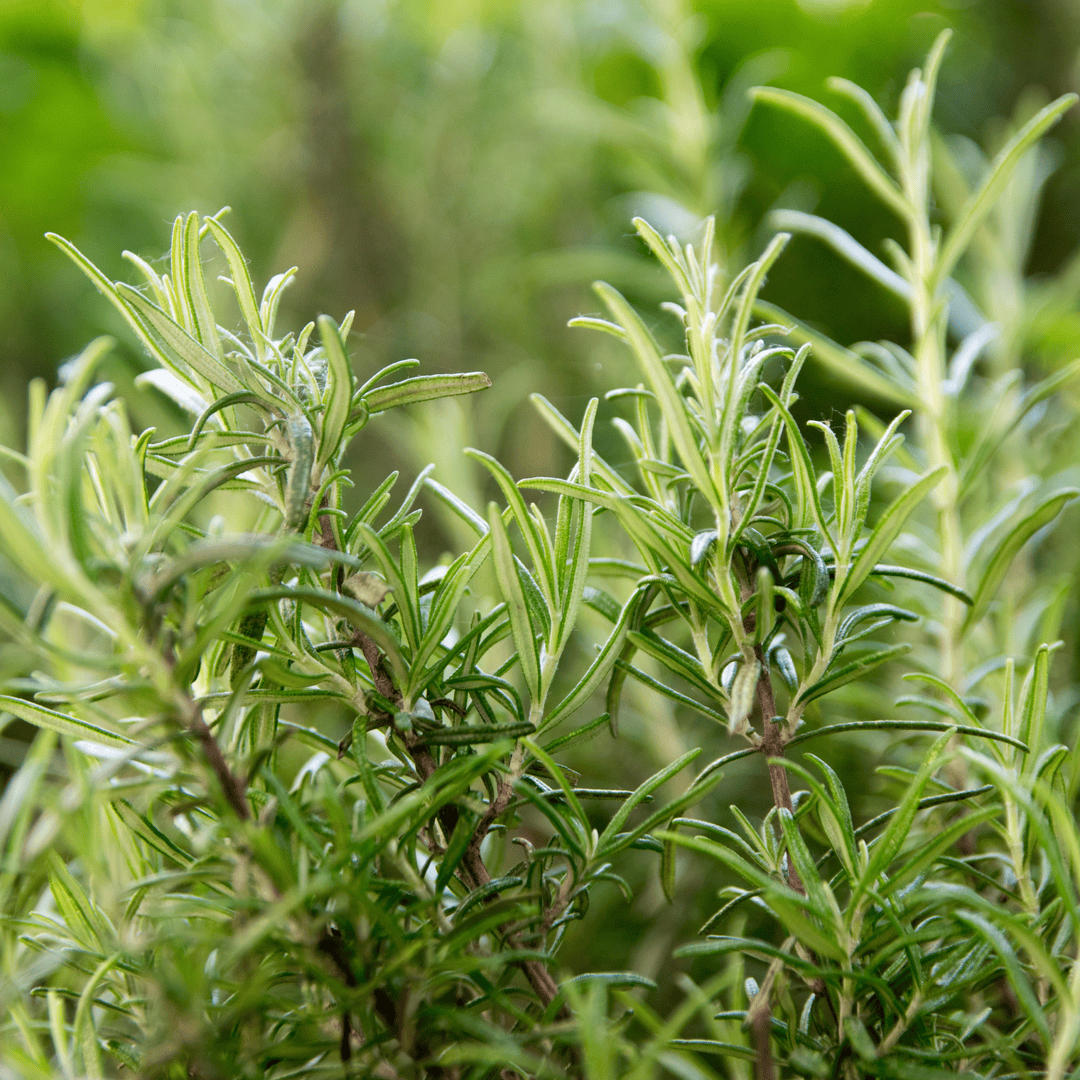
Rosemary is a wonderful, classic solar remedy, and we can certainly consider it a Fire Element plant. The sharpness of the little leaves, the pungent, warming, aromatic, carminative nature stimulates circulation in and warms the gut and digestion. It is often used to season meats because it stimulates digestion and helps the digestion of heavier foods.
Rosemary drives blood flow to the head and brain, which is why it is known for remembrance (improving memory). It is a great remedy for the eyes, and it is also associated with the Aries side of the Fire Element, driving blood up into the head, brain, and eyes. It is great for brain health, cognitive function, and focus.
Hawthorn (Crataegus monogyna)
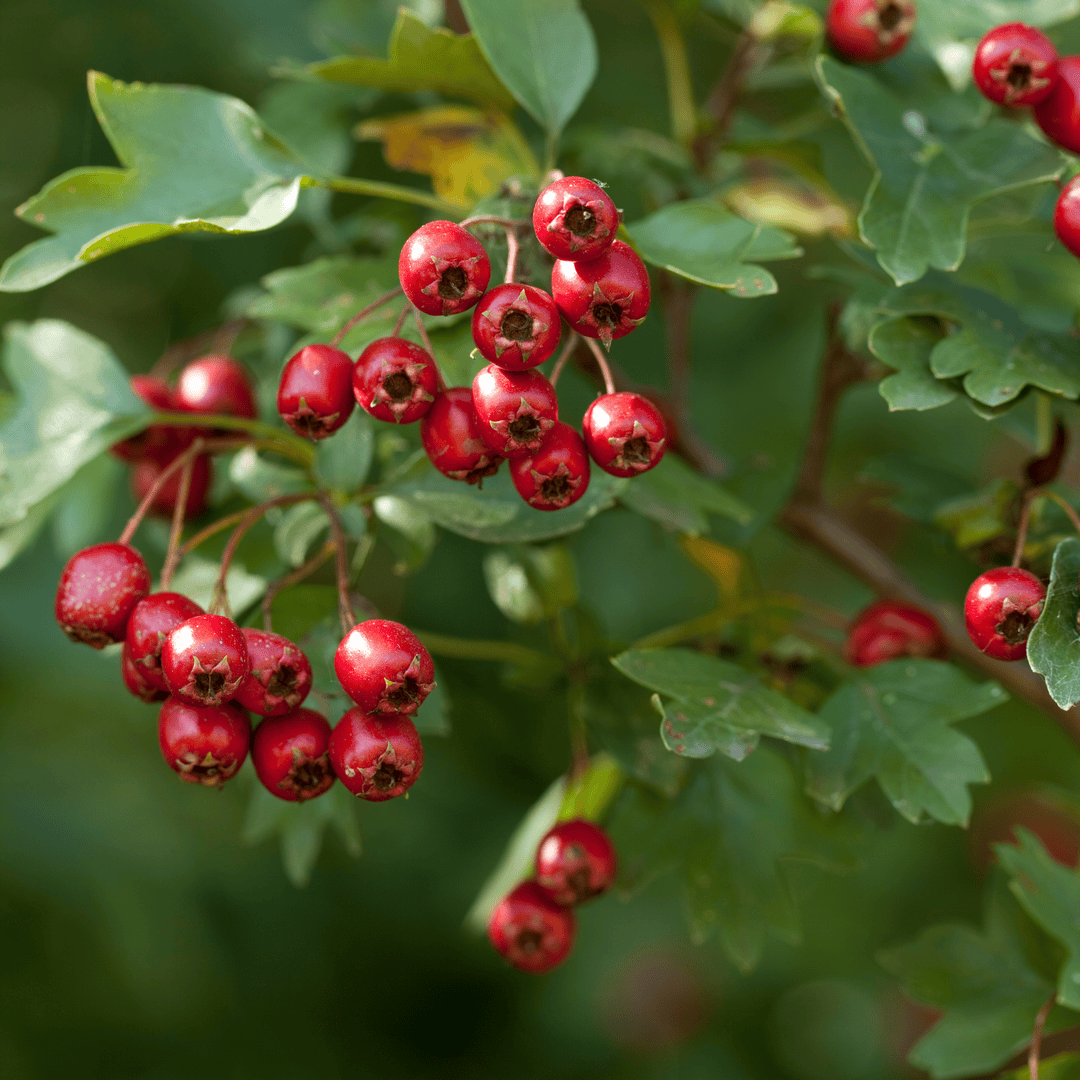
Lastly, we have Hawthorn, which is in a different class. Morphologically, it has sharp thorns, which is why it is named Hawthorn. It also has bright red berries, so the thorns and red berries are clear Fire Element signatures.
When we look beyond Hawthorn’s morphology, we see that this is a heart tonic par excellence. If you ask anybody who knows herbs what the number one heart and cardiovascular remedy is, they will probably say Hawthorn. Perhaps a high-level practitioner would consider a more cardioactive remedy, such as Digitalis or Lily of the Valley, but most herbalists will mention Hawthorn.
Hawthorn is very specific to Leo, with its affinity for the heart and cardiovascular system, particularly the vasculature. The other herbs we’ve discussed thus far are warming, circulatory stimulants. What’s interesting about Hawthorn is that, as you’ll see in these elemental and planetary correlations to plants, sometimes the herb is similar in nature to that Element or planet, and sometimes it is opposite in nature. You can look at Hawthorn and see that it looks fiery with its thorns and bright red berries. However, when you work with it medicinally, you find that, rather than bringing in more Fire Element, it relieves excess Fire Element. It is similar to Fire in that it targets the heart, cardiovascular system, and vasculature, but unlike Fire, it is cooling and antioxidant.
Hawthorn is specifically used for heat excitation and inflammatory damage to the heart and blood vessels, cholesterol buildup, nicking in the walls of the blood vessels, inflammation, and oxidation. It cools excess heat.
Hawthorn is also a bit calming. Fire Element folks tend to be pretty energetic and have a lot of vital force. Leo, particularly, has a lot of energy and heat. Hawthorn not only cools the heat but also calms the nerves.
In Chinese medicine, they talk about the Shen, which is your spirit that lives in your heart. That is reflected in the West through the Sun, which correlates to the heart, and it’s your spirit, which reflects much of your psychology. Hawthorn acts on both the physical and the psychospiritual heart, helping you to stay calm, cool, collected, even-keeled, and less nervous and anxious. It isn’t a sedative, but it cuts that nervous edge. It can be helpful for people who wake in the night with disturbed dreams, which may be due to something troubling the heart or the spirit. In these cases, the heart isn’t anchoring the spirit, so they can’t rest as well. The sweetness of the Hawthorn berries helps nourish and strengthen the heart, enabling it to better hold the spirit.
There is so much more we could discuss here, in terms of the depth of the Fire Element, and of course, we could cover many more medicinal herbs as well, but those are the four I want to share with you for now, and I hope this is interesting and illustrative of this elemental force. Stay tuned for the next element in this series around the summer solstice.
Elemental Herbalism
Typically, it takes many hours of description and discussion, along with quite a bit more detail, to cover an Element. This is exactly what you get in the Elemental Herbalism program. This program provides a full, in-depth analysis of the Elements in people and plants, and it is on sale right now! This is an in-depth exploration of each Element as it reflects in people spiritually, psychologically, emotionally, physiologically, and pathologically.
We also go into how the Elements are reflected in plants through their actions, morphology, clinical patterns, and even their chemistry.
Join Elemental Herbalism now at a discounted rate!