
Rethinking “Anti” Herbs In The Context of a Classic Formula
As discussed in a recent post, thinking of herbs as “anti” something is an allopathic way of thinking, and I’ve always had a bit of an aversion to it. However, I’m starting to embrace this way of thinking a little more. To read the full discussion on that topic, be sure to check out last week’s post, The Ultimate Guide to the “Anti” Herbs.
In today’s post, we’re continuing our exploration of the “anti” herbs by breaking down the classic trio of Garlic, Wild Indigo, and Echinacea. This formula comes to us from the British Herbal Pharmacopeia (BHP).
The traditional indication for this triplet is for the treatment of general bacterial or viral infections. Note that it says it is indicated “to treat infection,” not necessarily that the triplet itself is “antiviral” or “antibiotic.” Although this triplet is indicated for infections, it would be a mistake to think these herbs will go in like Navy SEALs and assassinate pathogens. It’s important not to get stuck in a militaristic way of thinking.
Of course, some of these herbs do have a direct effect: when their constituents come into contact with bacteria, those bacteria will no longer thrive in the environment of that herb. Garlic is a prime example of this. However, we should think a little more broadly and holistically about how these herbs support the body in fighting off infection. Medicinal plants don’t necessarily kill the bug. Instead, they support the body’s ability to kill it.
Consider this: your immune system has evolved over millennia to deal with pathogens. It is more sophisticated and refined in its response than simply “kill” or “don’t kill.” Still, sometimes help is needed, and often, herbs help the body do what it needs to do more efficiently and effectively.
Let’s consider each herb in this formula and discuss the synergies, similarities, differences, and how to combine and dose them (which is important because these herbs are potent, especially Wild Indigo).
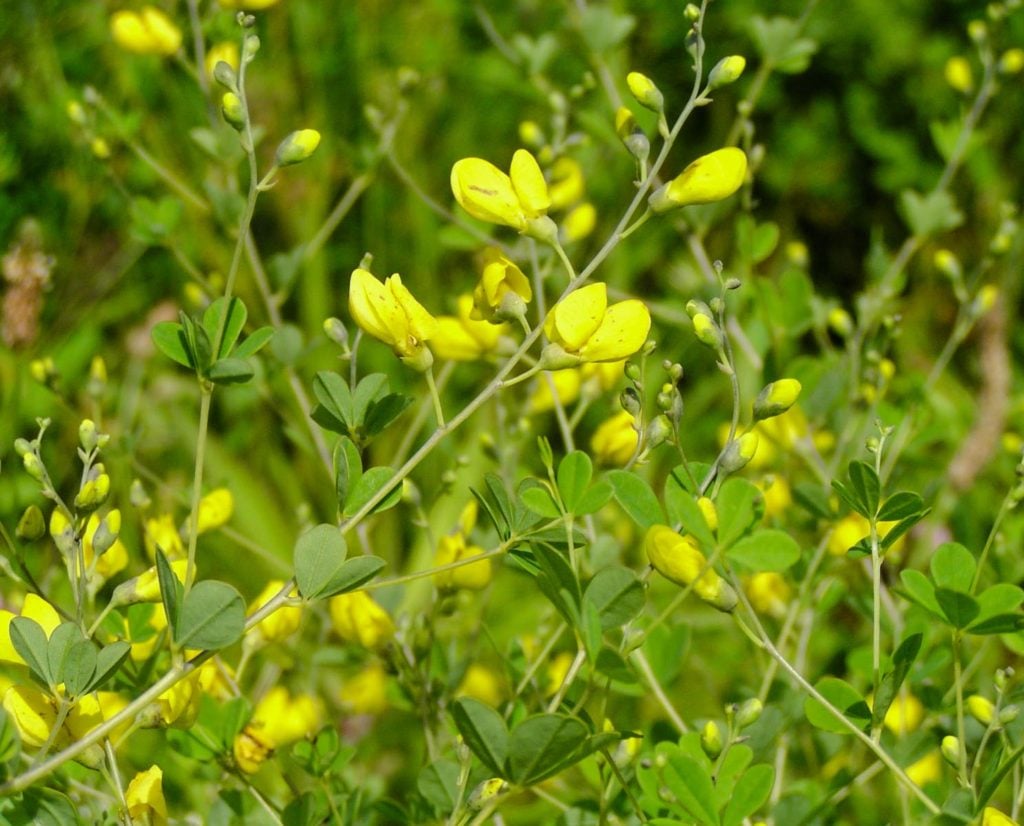
Wild Indigo (Baptisia tinctoria)
You might be surprised to learn that Wild indigo does not have purple flowers. It’s actually a yellow-flowered plant. There are several species of Baptisia, but the traditional one is Baptisia tinctoria, which is best prepared fresh.
Wild Indigo is a low-dose herb because it is powerful. Some people are sensitive to this herb, and it can trigger intense gastrointestinal upset, pain, nausea, and vomiting, so while it is super useful, care should be taken.
As an alterative, Wild Indigo is very effective and strong. It specifically clears heat coupled with dampness, especially in the blood. We see blood heat patterns in eruptive skin diseases and infections, sepsis, putrefaction, and pus accumulation. This is a deep level of infection that has gone bad. It is an immunostimulant and a specific antibacterial for the digestive system and bowel.
Wild Indigo is used in modern herbal medicine for severe Crohn’s disease, ulcerative colitis, and dysentery. It has a specific indication for bloody and mucopurulent discharges. In the GI tract, this manifests as stinky blood and pus in the stool, a bit like tissue sloughing off. In these situations, there is often a lot of bleeding, severe inflammation, and infection. The way the old doctors described it is like the color of the washings from meat, which is a gross visual but helpful for its specificity. Oftentimes, there’s like a leaden or dusky — pales to purplish — hue to the tissues.
Wild Indigo is used for severe throat infections — diphtheria, strep throat, and especially abscesses. There can be pockets of pus and stinky discharge.
I used to get strep throat often as a kid. It was awful when I had my wisdom teeth removed. I was in pain from the wisdom teeth, and shortly thereafter, I ended up with a bad case of strep throat. If you’ve ever had strep throat, you know it’s very painful. It feels like you’re swallowing shards of broken glass coated in sand and gravel. One of my tonsils grew an abscess. I woke up one morning and that abscess had swelled, and my tonsils were touching with the abscess bridging both tonsils. I could barely breathe, so I went to the ENT, where the doctor numbed me up, put a scalpel down the back of my throat, and lanced the abscess.
I’m going to paint a really disgusting picture for you — sorry for those of you who are squeamish — but, for me, in retrospect, when I came to understand Wild Indigo, it was exactly what was needed for this situation. I remember spitting out and vomiting a bunch of stinky, yellow pus. So, Wild Indigo is excellent for really gross types of infections like the one I had.
Topically, it is useful for cellulitis, MRSA, and Impetigo. It’s also useful for venomous bites, such as those from rattlesnakes, brown recluse spiders, and black widows.
Wild Indigo is excellent for several conditions we don’t see much anymore: typhoid, dengue fever, scarlet fever, and diphtheria. Think of Wild Indigo for these serious infections, mucopurulent discharge, sepsis, pus, infection, discharges, and stinky smells.
In summary, Wild Indigo is a powerful alterative to clear the damp/stagnation tissue state, coupled with severe heat, irritation, excitation, and infection.
Dosing
This is a low-dose herb. Do not exceed five to 10 drops per dose. That’s five to 10 individual drops, NOT dropperfuls. If you were to take five to 10 dropperfuls of Baptisia tinctoria, you would be in a seriously uncomfortable situation. I recommend starting at five drops and seeing what is tolerated. Of course, for topical use, you don’t have to be quite as careful, but for internal use, be very careful.
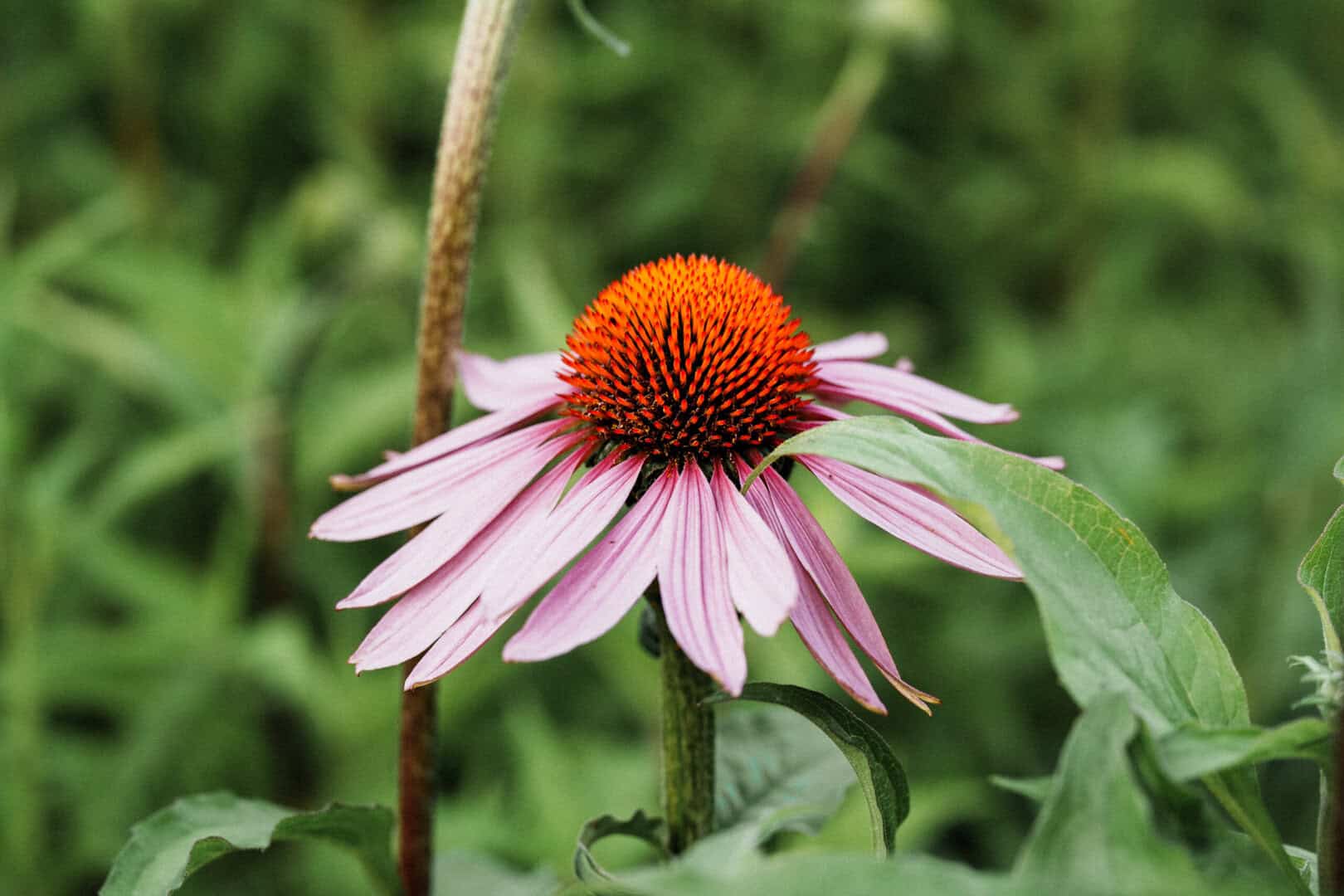
Echinacea (Echinacea angustifolia or purpurea)
Echinacea is a very common and popular herb. People who don’t know anything about herbal medicine have heard of Echinacea and know that it does something for your immune system. However, Echinacea is not just an immune stimulant for coughs or colds! This herb is so ubiquitous that it has watered down our perception of its power.
Traditionally, however, Echinacea was not considered an immunostimulant but rather a blood-purifying alterative. So it was classically used for heat and dyscrasias of the blood, as well as for venomous bites. If you ever get a rattlesnake bite, you should drink a bottle of Echinacea and also apply it topically on the way to the hospital.
This herb was traditionally used for sepsis. If someone had a wound that went septic, with a red streak up the arm — a very dangerous situation — Echinacea was a top choice. It takes a very powerful herb to address something like sepsis. That red streak is blood heat, and Echinacea is a potent cleanser for the blood and lymphatics. I think of it as a lymphatic alterative, which is excellent for infection when the lymph nodes are swollen. A large portion of our immunity lies in our lymphatic system. Echinacea powerfully stimulates the immune system, boosting the immune response and activating the immune complexes that protect the body.
Echinacea also appears to have some direct antibacterial and antiviral properties topically. It is indicated both topically and internally for herpes simplex virus, cold sores, and shingles, to support the immune system. Whenever you get herpetic lesions or outbreaks, when that virus crawls out of your nervous system, and you get tingling and nerve pain, your immune system is working very hard. Echinacea is a very useful remedy to consider for such things.
Similar to Wild Indigo, the Eclectics and Physiomedicalists used Echinacea for very serious conditions and diseases that we don’t see much anymore. As sanitation, water, and other factors improved, many infectious diseases, such as typhoid, scarlet fever, and diphtheria, decreased.
What type of Echinacea?
Echinacea angustifolia is preferable if you can acquire it. Otherwise, Echinacea purpurea will work just fine.
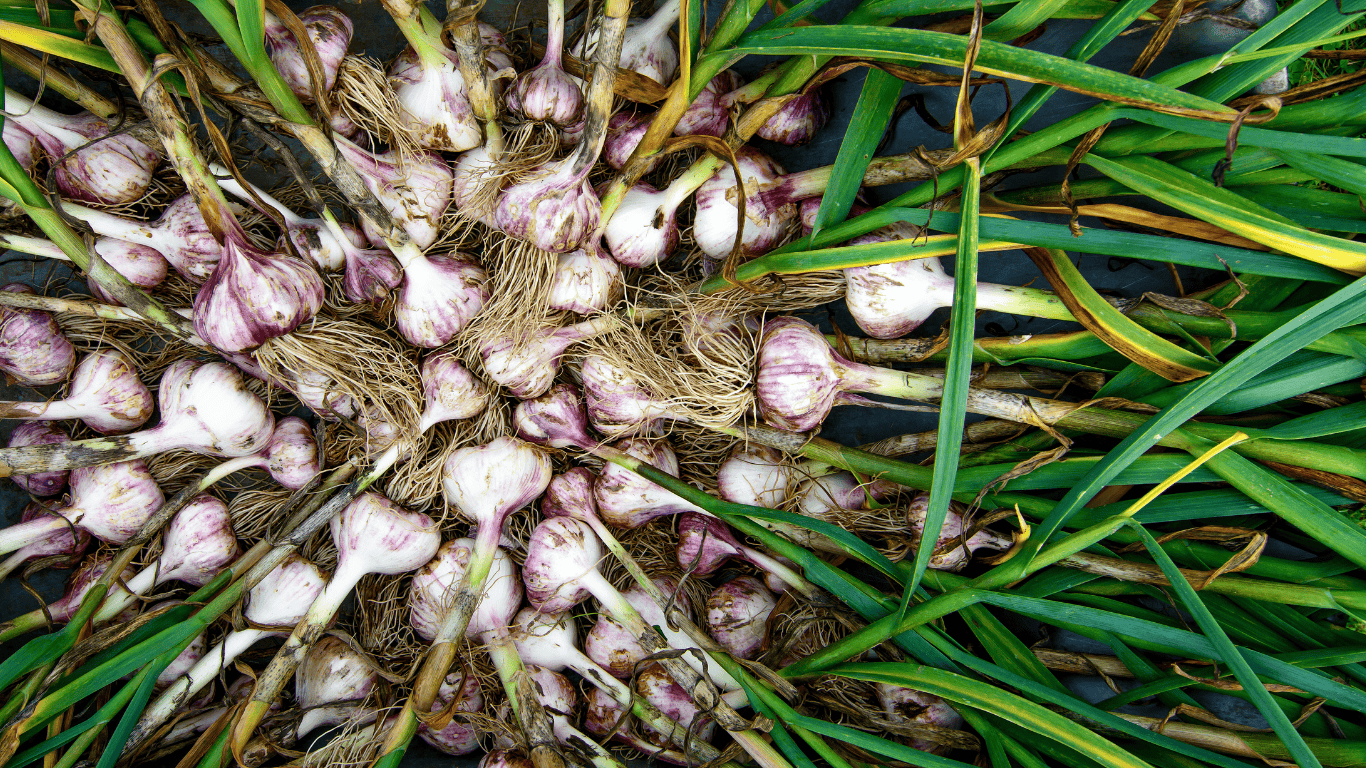
Garlic (Allium sativum)
Lastly, in this triplet, we have Garlic — a powerful herb, which is easily overlooked, as it is in most people’s kitchens. However, don’t overlook Garlic’s medicinal potency!
Knowing your kitchen remedies, such as Garlic, really comes in handy. Even if you’re consulting with someone remotely, say they live by themselves, and they’re super sick and can’t get to the store, most people have a fresh head of Garlic in their kitchen.
Garlic has a strong affinity for the lungs and respiratory tract. You can soak your feet in a garlic foot bath — just hot water with some cloves of Garlic crushed in it — and the respiratory affinity is so strong, you’ll end up with garlic breath. The sulfur compounds are absorbed through the skin, transported through the blood, and excreted through the lungs. It also works through the bloodstream, similar to the other two herbs in this formula.
Garlic has potent antibacterial effects; not much can survive alongside Garlic. If you kiss your partner, and they have garlic breath, it’s a bit unpleasant. It’s also unpleasant for bacteria, fungi, and other pathogens.
Garlic is a very hot, pungent herb — the Greeks classified it as a fourth-degree hot herb. It can even burn your skin when applied topically. My first herb book was pretty terrible (I don’t remember the title). I used to get acne as a teenager, and this book recommended slicing a fresh clove of Garlic and applying it topically, which was supposed to help my acne go away. I tried it, and it raised a big blister on my face and made it much worse.
This herb acts as a stimulant in several ways. It stimulates circulation, diaphoresis, and expectoration. It reaches the deepest layers of the lungs and removes cold and damp, making it an excellent remedy for deep-seated respiratory infections and damp-type pneumonias. These are serious situations and often challenging to address because the herbs must get deep into the respiratory system.
In the cardiovascular system, Garlic has a mild blood-thinning effect. This can be useful for improving blood flow to areas with poor circulation, where damp accumulation and infection-related stagnation may occur. With an infected area, there’s high turnover, significant accumulation of metabolic waste products, poor circulation, and poor blood flow. Garlic will not only warm and drive the blood in that direction but also thin the blood somewhat, helping it reach areas of poor circulation.
Garlic is a very broad-spectrum, antiamoebic, antiprotozoal, antibacterial. It is a useful herb to consider for biofilms. In biofilms, bacteria form interconnected networks that create a new, self-organized system. They can be challenging to treat, difficult to break up, and they can become resistant to drugs very quickly because they have a high degree of self-organization.
Garlic is excellent for topical applications, but of course, you need to make sure you administer it safely and effectively — don’t put it on straight. Mix it with other things to temper its effects. A good way to do that is to mix it with a demulcent powder, such as Slippery Elm or Marshmallow root.
Next, let’s discuss the commonalities and differences among the herbs in this triplet, along with cautions and ways to administer them.
Commonalities Between These Herbs
The Echinacea and Wild Indigo pair is a powerful combination with a long history in North American herbalism. This pair was used by both the Eclectics and the Physiomedicalists for a wide range of infectious states.
In some older texts, Echinacea and Wild Indigo were used as a base, with other herbs added. So you’ll see Echinacea, Wild Indigo, and Goldenseal, for example. Or Echinacea, Wild Indigo, and Garlic. So that pair is very powerful, rooted in tradition, and is the base for the German-made patent product called Esberitox.
All of these herbs are broad-spectrum in their actions due to their affinity for the blood, mucous membranes, and immunity. These are tissues and organs that are systemically distributed throughout the body, such as the mucosa, blood, immune system, and lymphatics. So these herbs affect organ systems that are universally distributed throughout the body, giving them a broad-spectrum, far-reaching effect.
Differences Between These Herbs
As for the differences between these herbs, Wild Indigo and Echinacea are both cooling, while Garlic is hot, so we have some balance in their energetics.
There are significant biochemical differences among these herbs, especially in their antibacterial properties. With Wild Indigo, you have alkaloids. With Garlic, you have sulfur compounds. In Echinacea, you have alkylamides, so there is a diversity of constituent types in these remedies that give it a broad-reaching effect.

Primary Uses for This Formula
The net actions of this triplet are antibacterial, alterative, and immune-stimulant. It addresses infection from multiple angles. It stimulates immunity and innate host resistance. It cleanses and clears waste products, dead bacteria, and dead white blood cells.
It has an antibacterial effect on the pathogen itself, as well as on circulation, immunity, and on the mucosa, especially the respiratory and digestive mucosa. It affects the lymphatics and the blood. All three of these herbs are traditionally used for severe infections and blood poisoning. It works on the skin and putrid conditions.
This formula is for infections of the throat, digestive system, or skin, or for dyscrasias of the blood. Consider this triplet for antibiotic-resistant infections, mucopurulent discharges, and infections that have progressed to the point of forming pus. Also consider it for the sinuses, teeth, tonsils, and throat, and the digestive system. Anytime there is pus accumulation, stinky smells, poorly healing wounds — that’s a good time to reach for this formula.
Cautions & Contraindications
Caution: Wild Indigo is very strong and is a low-dose herb. Do not exceed five to 10 drops per dose. Do not use this herb or this formula for pregnant or lactating women. An overdose can seriously irritate the digestive system and induce vomiting, mainly due to Wild Indigo, so be cautious there.
Garlic is very hot, and it can irritate the upper digestive system. The most effective way to take it is to crush a fresh clove and allow it to oxidize for 10 minutes or so, which will activate the sulfur compounds. Typically, we don’t want oxidation to occur, but Garlic is an exception because oxidation enhances its antibacterial properties.
Generally, you shouldn’t take this formula on an empty stomach. You might want to mix it with something to temper its heat — such as a demulcent powder.
An Example Combination (strong)
- 80-90% Echinacea (Echinacea spp.)
- 5-10% Wild Indigo (Baptisia tinctoria)
- 5-10% Garlic (Allium sativum)
This is meant to be a tincture formula, because it’s too harsh to take any other way. It won’t taste good as a tea, but you could use it as a topical wash.
The predominant herb in this formula is Echinacea, because if you’re taking high amounts of this tincture, you need to be careful how much Wild Indigo you’re getting. Therefore, with low-dose herbs, the dosing is crucial.
For example, if you take a 5 ml dose of this formula and 80% of that is Echinacea, 10% is Wild Indigo, and 10% Garlic, you just move the decimal point over one place to get the percentage. So at 5 ml, you’re getting approximately ½ mL of Wild Indigo, which is about 10 drops — the higher end of the dosage range. Five ml is a pretty strong dose. If you cut that dose in half, you’d end up with 2.5 ml, which is about five drops of Wild Indigo.
So, when you use 10% Wild Indigo in the formula, the 5 ml range is the top end of your dosage. It’s better to start with 2-3 ml and see how someone responds before increasing the dose.
Consider tempering this formula by adding a small amount of Licorice (Glycyrrhiza glabra) to soften the Garlic’s harshness and temper the “toxicity” of the Wild Indigo. Licorice is used in formulation to temper or harmonize the formula, making it a little less harsh and less likely to cause adverse side effects. You should generally avoid Licorice in people with high blood pressure.
If you’re adding Licorice, adjust the other herbs as follows:
- 70% Echinacea
- 10% Wild Indigo
- 10% Garlic
- 10% Licorice
How to Take This Formula
I recommend adding Echinacea and Wild Indigo tinctures to a spoonful of Manuka honey with a crushed clove of Garlic. This is a little more involved than some people will want to deal with, but it will give you the best effect from the Garlic. It’s also a way of ensuring your dosing is right for the Wild Indigo.
To do it this way, take your spoonful of Manuka honey with the crushed Garlic, add five drops of Wild Indigo, and a couple squirts of Echinacea tincture.
So there you have it! Our amazing, super-powerful, super-effective antiseptic triplet. I hope this gives you some confidence in working with some of these issues, whether for yourself or your clinic.