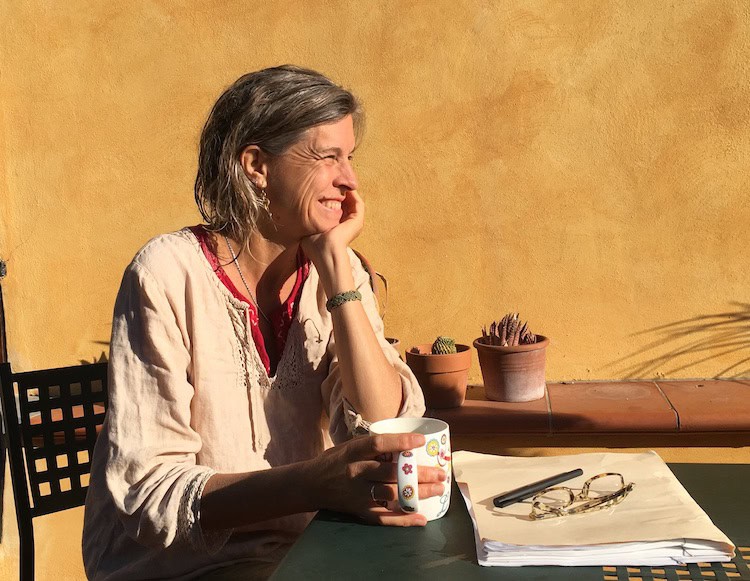

Sajah: In this interview, I talked to Ann Armbrecht, author of Following the Herbal Harvest: A Search for the Healing Promise of Plant Medicines.
This is a different kind of interview than I typically do here. Oftentimes, I’m chatting with folks about everything from clinical herbalism and using plants medicinally with people, to alchemy and medical astrology.
This discussion with Ann delves into a whole other side of herbal medicine that a lot of people are probably completely unaware even exists, or they don’t really think about — the herbal products industry.
I met Ann a long time ago at the International Herb Symposium and then met her again last year in Cincinnati, Ohio, at the American Herbal Products Association (AHPA) event that followed the symposium.
She gave a presentation on the sustainability of herbs in Appalachia, where much of the American Ginseng harvest occurs. I thought her talk was very interesting, and she’s got a great project called the Sustainable Herbs Initiative (SHI), and she’s doing great work, has traveled all over the world, has observed everything from farmers to manufacturers to facilities and the whole supply chain.
Her big question is: What is the process of a medicinal plant from seed all the way to the bottle of tincture sitting on the shelf at Whole Foods, or the encapsulated herbal product sitting at your local co-op? What is that process, and how can that be done in the best way possible from an ecological perspective and from a fair trade and workers’ perspective, to preserve high-quality herbal medicine that will actually heal?
One of the things I love about this conversation with Ann is that she really has a foot in two worlds. She’s done herbal training and studied with Rosemary Gladstar. She’s very aware of the world of herbalists and herbalism, and yet her other foot is in the world of the products industry, which, believe it or not, is not always run by herbalists.
It might be surprising to know that many herb companies out there aren’t actually run by herbalists. They’re not started by herbalists. They’re not managed by herbalists; herbalists aren’t even really part of the equation, not for all of them. Of course, there are lots of companies that were started by herbalists, are run by herbalists, and are maintained by herbalists, but many aren’t.
Ann’s whole thing is about bringing those two worlds together and helping people in the industry become aware of the intelligence of the plants themselves, and she clearly has a very deep, reverent connection to nature, to the herbs, to the spirit of the plants, and to the people and the cultures that have arisen around the medicinal plants. She wants people to be producing good-quality medicine. She wants relationships to be positive amongst people in the products industry. She really wants to lift everything up and I think that is a really wonderful thing.
Ann co-directed a film called Numen, which explores the world of herbal medicine. It’s a really great documentary. I remember her giving me a copy at an International Herb Symposium, boy, it was probably back in the early 20-teens, maybe 2012, 2013, sometime back then and it was fantastic. So check out Numen, Ann’s documentary, check out the Sustainable Herbs Initiative. Pick up a copy of her book, Following the Herbal Harvest. This is eye-opening stuff. Ann tells some pretty interesting stories and experiences from her worldly travels. And there are some really great insights and perspectives that I think will be pretty eye-opening for you. So enjoy this episode of The Plant Path as I engage in a conversation here with Ann Armbrecht.
Sajah: Hello there, Ann. Thank you so much for joining me on the Plant Path. It’s a real pleasure to have you here.
Ann: Thanks for inviting me. It’s great to be here.
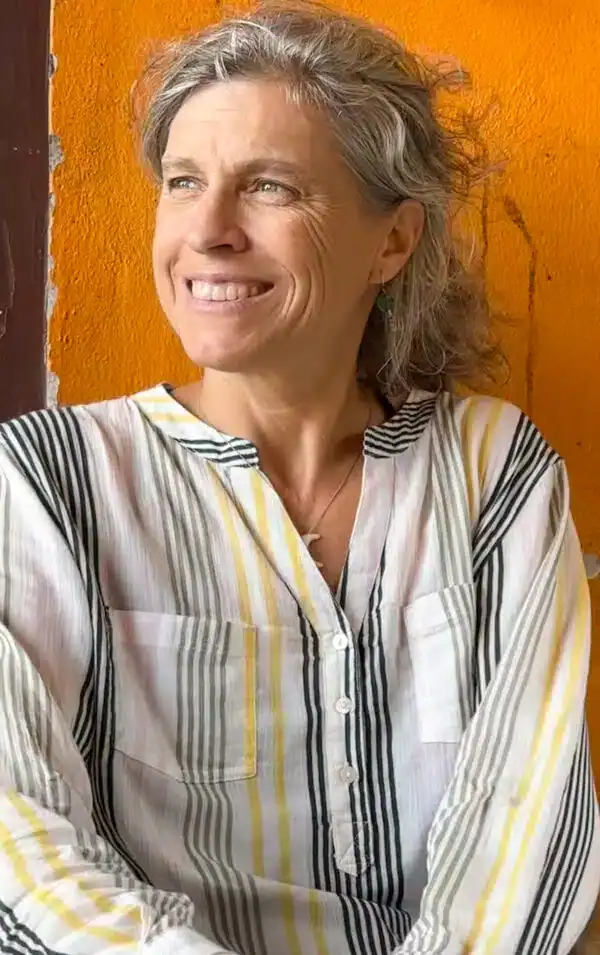
Sajah: I was really excited to have this conversation with you because I got to hear you speak at the American Herbal Products Association meeting in Cincinnati last year. And I loved everything that you were sharing, and I thought it would be great to have you here on the Plant Path. I think you have some really interesting perspectives to share and insights into the world of herbal medicine that we may not talk about much here on the Plant Path.
I’m curious if you could start out just introducing yourself and talking a little bit about your work, especially regarding the Sustainable Herbs Initiative.
Ann: I’m going to back up from Sustainable Herbs Initiative a bit to talk about how I got into this work, if that’s okay.
That’s great.
I’m an anthropologist by training, and I did my research for my doctorate in Northeastern Nepal, and I was looking at the relationship between villagers and the land. So that included actually a lot that was on land tenure and political disputes over, it was a common property system of land tenure, but also the shamanic journeys across the landscape.
When I went to Nepal, I had a lot of naive ideas about indigenous people having a stronger relationship with the land than we did. And I found, like anything, it’s more complex there. But when I came back — so I was there in the early 1990s — when I came back, I went to the Women’s Herb Conference, met Rosemary Gladstar and other herbalists, and decided to enroll in Rosemary’s Apprentice program. And as I was in that program, I was struck by the similarities in how she spoke about the relationship with the plants and how it echoed what I had encountered in Eastern Nepal around a sense of restraint and respect, a sense of being in relationship with a more-than-living world, and things like that.
And so I was really drawn by herbal medicine because there were herbalists in the modern world. It wasn’t at the far end of a river valley, like a week’s walk from a road where I was in Nepal. And so I jumped into herbal medicine, thinking this was the answer to everything.
As I studied, I realized, of course, that with anything, it’s black-and-white, and there are more complications and contradictions. And my husband and I made a film kind of celebrating those values of herbal medicine to bring them more to the forefront. And as we were interviewing people for that film, we interviewed people at Traditional Medicinals, Herb Pharm, and New Chapter. And I became interested in where herbs are from and the stories of the people and places behind finished herbal products.
It shapes why I do the work, how we do the work at SHI [Sustainable Herbs Initiative]. And so I had this question — what happens if we know the stories of the people, plants, and places behind finished herbal products? I did a Kickstarter to raise funds to go tell those stories and to document them in video. I raised $60,000 for that, in large part because Learning Herbs and John Gallagher really put his energy behind it.
There were a lot of $35 donations from herbalists who really helped me get to that higher level that allowed us to travel to Eastern Europe, India, and the Western US, and to Germany, and the UK, to create what was then the Sustainable Herbs Project. And that was a multimedia website with videos and telling the story behind the steps it takes from herbs to go from source to finished product.
And I thought my audience was the herb community, but then I realized that I needed to understand companies and industry and the challenges that they were facing, because the herb classes I took at the time, it could be very black and white, like companies were “good or bad.” “Source locally, but not globally,” whereas so many herbs are sourced globally.
And, so I wanted to understand the complexity of the issues, and so I took the program to the American Botanical Council, where it was for five years. And when I was there, I took that time to really understand much more about the industry, the challenges that companies face. And that’s what I write about in my book.
As I was doing that work, I would organize panels at trade shows to bring in different speakers with a lot of experience in this, to talk about what needed to happen around transparency, traceability, and fair trade practices. And I realized everybody knows what needs to happen.
The challenge was more about what was keeping those individuals and companies from actually being able to make those changes. And so the work of Sustainable Herbs Initiative now, so last year I took it to the Sustainable Food Lab, away from American Botanical Council, because Sustainable Food Lab is also working to bring companies together to collaborate to address these challenges. And there’s an approach we use. But I’ll stop for now because that was a long kind of answer.
No, that’s great, thank you for explaining all that. It brings up all kinds of different directions I could take with this. So I think it’s a really interesting point that a lot of people probably don’t think of, you go out, you go to Whole Foods, you go to your local co-op, you go to your local herb shop, you look on Amazon, and there are so many herbal products out there these days. It just feels crazy.
It’s overwhelming, and you look at the amount of stuff on the shelf, I guess the physical shelf, but also the digital shelf, so to speak, and you’ve got to wonder where all these plants are coming from, who’s growing them, and who’s harvesting them, and is this sustainable? Are these plants of decent quality? Are there issues with adulteration? It just seems like there’s a huge smorgasbord of issues that could arise there.
So I’m curious, what are some of the most surprising things that you’ve seen, and as someone who’s involved in the herbal product industry, what do you see as the edges in terms of sustainability, quality, and accessibility, and all of those things?
I’m not exactly sure what the question is, but maybe you can rap off of what I was just saying there.
Yeah, I’ll try. Actually, so just before this interview, I was looking back through my book to get ideas, and there was this moment when I talked about, in South India, I was visiting some farms with an Indian botany professor. I had heard this speaker at a conference talking about the really good work he was doing with the farmers.
And so we traveled to visit, and he took us to the farm and the fields, and that was all lovely. And then after that, we went to a sparkler factory, which he was also investing in. And this sparkler factory was just off this dirt road in South India. I don’t know if you’ve been to South India, but there were these little sort of cement shacks where the sparklers were made, spread out because of the risk of explosion, and the workers had their arms deep in whatever was covering the sparkler, whatever that aluminum kind of thing is. And so they were just covered deep with that. And at the time, I thought I was working to tell the whole story of the industry, and I thought I have no interest in telling the story of an industry where a company is both supposedly doing really good practices with farmers and also having these workers with their arms up in that aluminum.
And that’s an extreme example of capitalism, right? The point was to make money. But then I was visiting an herbalist after my first trip in the UK, and I had just a little footage on my phone of a small machine; there are huge machines out there. This was not even a big machine. And she was so surprised that it was being processed, at the mechanization. And so that was also a wake-up for me because I was so surprised by the mechanization. And that’s just an example of my naiveté, right? Because if you are importing container loads of herbs, you have to be mechanized.
Oh, absolutely.
And so I think that was like the degree of mechanization and the gap of our understanding, like the naiveté in the way herbalism was being taught. And that it’s, that’s the world. And so, how do we engage with it and the companies that are doing that work and trying to do it right? Because there are ones that do it right. And address things like horrible-quality items, like another place in South India where wild harvesters would bring in sacks of herbs that had been used for cement, so they were just reusing the sacks. And so, say a company that’s using fair wild certification or organic certification, they get new sacks, and they’ll provide those collectors with those sacks. And so there are steps to pay attention on their way to engage. And so I guess the gap in education was another surprise.

Yeah. It’s interesting because I think a lot of people … you’re talking about kind of the naiveté of it all and, it almost feels like there’s this little bit of a gap or a split where, over here you have the herbalists and the people that are learning about the plants and botanizing and learning therapeutic properties and want to be clinical practitioners, and they’re learning all the medicinal properties that are really on the herbal path. A lot of the folks who go through Rosemary’s programs and other herbal programs.
And then there’s this whole other world of the product industry, and it seems like a lot of times the herbalists maybe come into it thinking that someone is going out and picking these leaves and grinding them with the mortar and pestle and extracting them. And it’s like man, you look at the level of mechanization and … it is an industry, right? And an industrialization of it, in order to do it on a massive scale, it is definitely a very eye-opening experience. I remember there’s a company, I believe in Italy, that makes a lot of manufacturing equipment for large-scale herbal processing.
And it was really interesting to watch the way they were doing the Rosehips and they had this really involved process and giant pieces of equipment that would crush the Rosehips a certain way and then sift through to get all the little hairs out and then to separate the seeds and then to move them on these huge conveyor belts, and then you’ve got tens of thousands of pounds of final grade, cut, Rosehips.
And then you buy the Rosehips and don’t really think about the level of what goes into getting it to you. It’s pretty eye-opening to me.
So I guess what that brings up for me is, why do you think someone in the world of herbalism should be educated on the herbal products industry and think about and consider and really care about where their herbs come from and how those herbs are processed, handled, and taken care of?
Before I answer that, I wanted to just respond to when you were talking about the Rosehips, and one of the things when I was first traveling around Eastern Europe. And I was able to visit some fair wild-certified processing centers because they wanted their story told. And Joseph Brinkman, who was at Traditional Medicinals for years, was the head of sustainability. He’s done more to bring awareness to these issues than probably anyone else. And so I would be texting him like, “What do I look for? Are spiderwebs bad?” Because we were in this drying facility with all these spiderwebs. And he said, “Spiderwebs aren’t great, but there are other things that are worse.”
And then at that same factory, there were all these, I think it was dried Goldenrod. And it’s supposed to be in sacks. It wasn’t in sacks, and it looked like it had gone to seed. And I’m not an expert, but I thought that’s probably past when you should harvest it.
So I asked the owner of the facility about the quality, and he said yes, the harvesters brought it in past prime. But he said the relationship for him with the harvesters mattered more. And maintaining that relationship depended on his buying what they’re harvesting. If he rejected it, that would create trouble with the relationship, and he would find another buyer. He knew that it wasn’t the top-quality Goldenrod, but he would find another buyer for that Goldenrod.
So why I’m sharing those two examples is that a lot of this journey for me has been learning to see what matters and what makes a difference. And then the other part, like that example of him finding another market for that Goldenrod that was past prime, past when a company like Traditional Medicinals would ever buy it, is why people should care where herbs are from.
You should care if you’re buying anything that you’re not growing and harvesting yourself. You should care if you’re encouraging anyone else to use herbal products, because the quality of that end product is directly related to the attention that’s given each step of the way.
Herbalists talk a lot about the importance of intention in the relationship with the plants. And this is like the socioeconomic version of intention, right? If you’re paying attention, you’ll notice if Peppermint’s mixed in with the Nettles that you’re harvesting. And if you’re not paid very well, then you’re probably not going to really care. But if you feel better about your job, you’re more likely to bring more care to how you handle the herbs.
Anyone who works with plants knows that you grow them, that’s one part. But then, how you handle them afterward will determine the quality of that plant. And so if you care about having that end product do what you hope it’ll do, you want to make sure people are paying attention all the way.
People tend to pay attention more, as I said, when they’re better cared for, get better pay, have better living conditions, aren’t worried, all the things that make us all do better work. And then there is another part, I think, so that’s the selfish “is this product gonna work for me?” side.
But there’s also, so at Sustainable Herbs Initiative, we do these in-person gatherings. And a couple of years ago, about 30 of us were in Appalachia. We had a roundtable conversation with wild harvesters. This is Southwest Virginia, which is really impoverished, challenging old coal mining areas. There was an herbalist, Lori Briscoe, who spoke; this was a round table of stakeholders in the industry: brands, ingredient suppliers, traders, and she’s an herbalist who worked in the area. And she said the people in this region have been exploited by the logging industry. They’ve been exploited by the coal mining industry. They’ve been exploited by the pharmaceutical industry that’s dumped opiates in the area.
She said that they want to believe in the herbal products industry, but it would be sick and twisted if, in producing herbs to heal people in other places, they’re not also helped in some way. And so these products are about wellness. And to me, that wellness is only as good as thewellness each step of the way.
Absolutely. I love that. That, to me, speaks to the integrity of our healing art. It would be very, as you said, contradictory to be creating these healing herbal products, but in the process of getting that product to market, it’s exploiting people or causing problems in the local area where they’re being produced, or if people are just getting totally ripped off.
I love that you are involved in this, and like you said, from seed to getting on the shelf, what does that process look like? Can you walk through that a little bit? It sounds like you’ve traveled all over the world and observed many different companies: farmers, manufacturers, and bulk herb providers.
I’m just curious for someone that doesn’t know anything about the industry that might be listening, what does the process usually look like, say, for an herb being grown on a farm overseas to actually getting into a supplement bottle that someone sees on the shelf at Whole Foods — what does that process look like?
There are a lot of different ways, but do you want the better route or the worse route?
I’m curious to hear both sides of this topic. Because I know there are probably some not-so-savory aspects of all of this, and I’m sure there’s also some really great stuff. I’m curious to hear the spectrum.
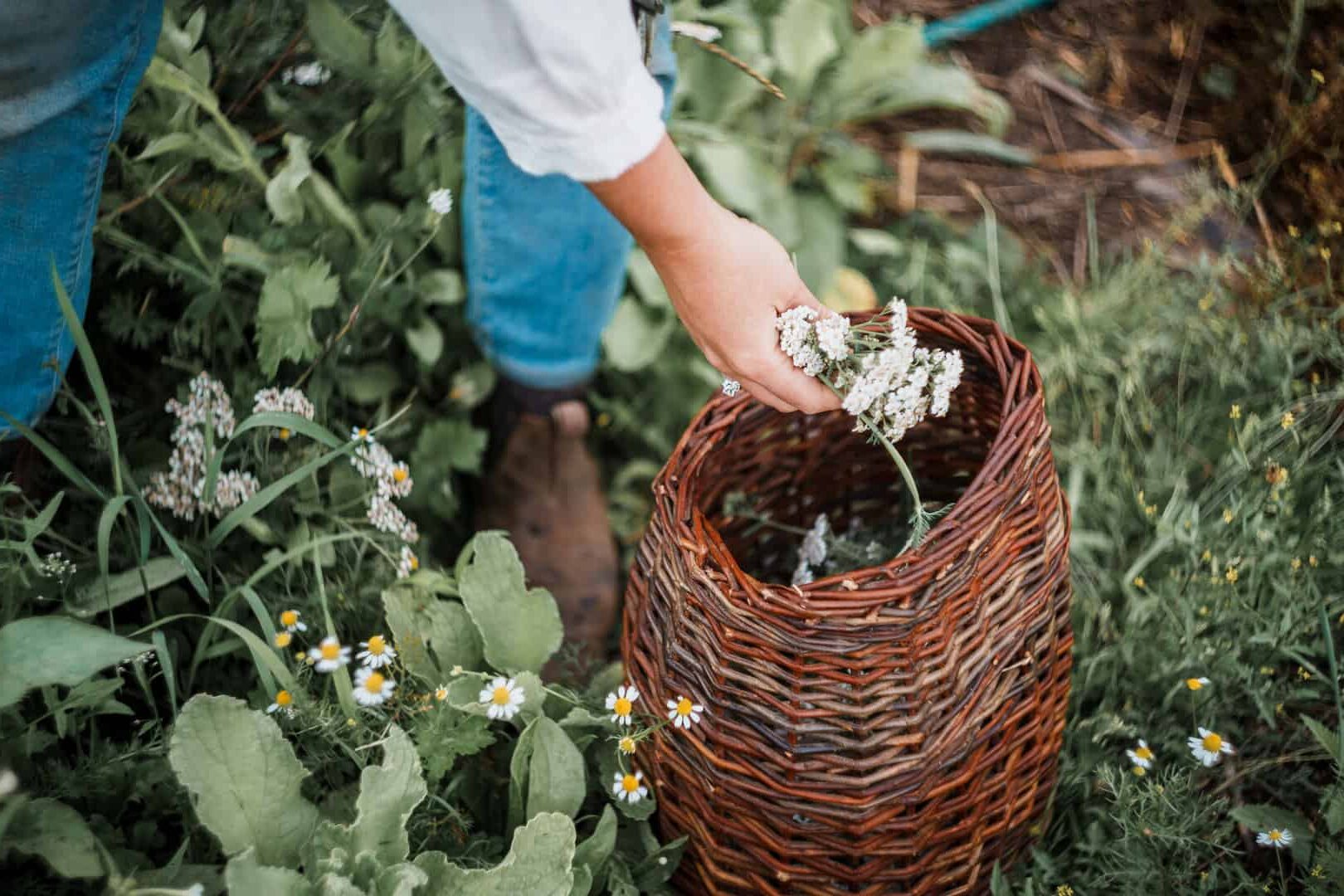
Yeah. I’ll think of a company, so this is what’s called a processing company in South India, and they are certified Fair for Life. Certified organic. Certifications aren’t perfect, but certifications help provide the difference between this first example and the second example.
So they’re a processing facility, and they source Ginger, Turmeric, Ashwagandha, and things like that. They’ll contract with farmers in the area. Probably not directly with a farmer. So they would contract with a buyer who would then work with 50 different farmers who farm maybe one or two hectares. That person, he would be the certified organic, the one with the certification, maybe. He would buy the herbs from those farmers; probably, the drying would either happen in the fields or with that first-level buyer.
Then those herbs go to a larger processor, so if it’s for a tea company, they would do the first-level processing, which would be maybe cut and sift, some of those machines you just talked about with the Rosehips. And then those herbs would be transferred, maybe to Germany. A lot of herbs go through Germany because they have some of the highest quality control and the best quality machinery.
So it could go there, and then it could go to a brand in the US, and some of those brands would then package the tea themselves. Or if it’s a capsule, they could encapsulate it themselves. Other brands would then use a contract manufacturer who would handle that step. And then the brand basically doesn’t have any manufacturing. They’re just doing the storytelling, the marketing, and the selling. And then there’s a big range of how much that brand knows about where those herbs are from and can connect to the source. And that kind of determines those different examples I asked you if you wanted to know about.
Organic helps ensure, even if that larger processing facility I mentioned in South India doesn’t know all the farmers, there’s a paper trail. So somebody knows. If a company has no idea — often a brand will just buy from an ingredient supplier, or the contract manufacturer will do the buying, and they will buy on an open market. There are auction houses where a bunch of farmers would bring their Ashwagandha, Turmeric, or whatever to this auction house. A buyer would come buy those, however much they want to buy, and so there’s no paper trail to the farmers, or it would be a similar thing with wild harvesters.
We’re just finishing a buyer’s guide to herbal products, which has been quite challenging. It’s trying to say, these are the questions to ask. And I had a lot of people in the industry look at it to give advice, and nobody could really conclude or state clearly what to look for, but they said I was naive to think that saying companies need to know the source of their herbs was possible. One person told me that only 5% of companies can actually trace the herbs to the source.
That could mean that a paper trail exists. I don’t really know. But the point is, there’s big room for improvement.
Wait, hold on. Did you just say 5% of companies actually know where their herbs are coming from? Did I hear that right?
That’s what he told me. I have to check and make sure that’s right…
That’s very interesting. That’s a really small number. Okay, so there are a couple of things you mentioned there that I wanted to clarify. So when you’re talking about certifications, say you’re talking about these farms in South India, are those certifications internal, like within those are India’s regulations, or is this something that you guys do at Sustainable Herbs Initiative, like you go in with your standards that they can get themselves up to meeting your standards?
That’s one thing I’m always very curious about, for example, for us, in our business, we source all of our herbs very locally. We’re a very small business. We’re not by any means buying 20,000 pounds of anything. But when I think of the United States, for example, we have certain standards that are set in terms of what it means to be organic or what it means to be following all the CGMPs laid out by the FDA. Of course, the guidelines, criteria, and standards in other countries are different, if there are any. I know in some instances there may not be.
So I’m curious: is there some way that US-based companies go into those other places and say, hey, if you manufacturers from these other places have a really, like you’re talking about the paper trail, and they can feel very confident that they’re going to meet certain microbial specs or they’re going to be keyed out properly to the right species, and that there aren’t going to be adulterants and things like that. Thoughts on that?
There’s a huge range of quality, and, back to that sparkler example, in that moment, I decided I didn’t really care about the whole industry. What I really wanted to do was focus on the companies that were trying to do it right. And so that means companies that are having relationships …
So certifications, if a company is Fair for Life certified, they’re an Ecocert, which is an international certifying body, they would go in and do that audit. At SHI, we don’t do any kind of auditing or anything like that. And then in India, there’s an Indian organic, but then the companies that are selling their ingredients as these certifications, those are internationally recognized. And there’s a whole process for that.
And so that’s part of it. But what’s also really important is having some relationship. And that can be through a trade show, coming up in Europe is the biggest organic trade show. And that’s where a lot of buyers in the US and Europe meet with primary processing companies, or companies will actually visit the supply, the source, the community, the companies in the source. That makes all the difference because then you have a face, then it’s a human-to-human connection. Problems always come up, but then you can troubleshoot and work on addressing those problems.
At Sustainable Herbs Initiative, what I’ve really tried to do, because I think relationships and connecting people to people in a way that’s respectful, based on listening, is the way to solve these bigger problems. That’s really what we focus on, bringing different people involved, different stakeholders together, and then out of that, new partnerships, new buying relationships have formed because people know each other and have formed a personal connection. And so it’s not just a transaction. There’s a transaction that takes place, but it’s also within a context of, “Oh, I know who you are as a person.”
The companies that support the Sustainable Herbs Initiative, for the most part, there are some larger ones, but for the most part, they’re smaller companies. And our hope is that by telling the story of the importance of relationship, of the importance of knowing where your herbs are from, more people who are buying herbs will ask companies questions like, ” Where are your herbs from? What do you know about the processing? What do you know about how people are treated?” That it’ll switch on. And companies know people are paying attention. We do need to really follow up on this and get on top of it.
Yeah. If the companies know that their customers care about that and are going to, in a way, hold them accountable, is that what you’re talking about?
Exactly. And companies listen. It’s a competitive marketplace. They all say that if customers ask, then it matters.
That makes me think of one thing, you’re talking about the customers of herbal products really wanting to, in a way, have trust and faith in the companies that they support, and that the herbs that they’re getting are being done in a good way.
How do you encourage people to do that? How do you encourage people to come to understand where the herbs are coming from? Is it just becoming educated on which companies they’re purchasing from? Is that the gist of it? At Sustainable Herbs Initiative, do you have certain ways where you say, ok, we’ve gone through these companies, we recommend them?
I’m trying to put myself in the shoes of the listener who buys herbal products, and is like wow, I’ve never really thought about this. I wonder if I’m supporting companies that are doing good work in that way.
Yeah. Early on, people had asked me about this, and I wrote a whole blog post about why I don’t like to recommend companies.
When I learned how to make herbal medicine, what was so empowering was making the herbal medicine, and it wasn’t just buying a product on a shelf. That’s a different relationship with the plants and with what I’m taking. And I feel like buying products can be similar.
I know everybody’s busy; nobody has time to do research and all of that. And to me, the most meaningful work I have ever done with plants is these journeys, following them to the source and getting to know people along the way.
So I feel there’s a way of doing this — say, Turmeric, or an herb that you use a lot in your practice or as a person — do some research on that one plant. Find out where it’s from, what the issues are around sourcing, and what the companies are, or if it’s a particular company that you’re buying from, read what they say about what they’re doing, and if you have questions, ask them. And if you don’t necessarily like their answers, don’t abandon them if you like them overall, but have a relationship with that company and see how you can encourage them to do more and support them by buying products. It’s like we’re making a donation to support the work that company is trying to do.
These companies are competing, as I said, in a super competitive landscape. And so they need to sell products, and they’re competing on the shelf with products that aren’t investing nearly what some of the higher quality companies that really care about these issues are investing in, both paying more for raw material, investing in the communities they’re sourcing from, and paying their own workers better.
So those things all cost more, and thinking of buying from companies as a way to support that work, as well as getting a good product for yourself, is one thing. Doing the research on some companies and then believing in them and staying loyal … recurring customers is a metric that matters.
When I went to herb school, and studied at Rosemary’s, at that time, we were told these are the three companies to buy from, and they’re still some of the good companies to buy from. But what I do now, rather than say to buy from these companies, is look at the companies that support Sustainable Herbs Initiative.
There are 40 or 45 companies, and it’s growing. There are smaller companies that come in all the time. It’s harder to get the bigger companies, but those are companies that are making an investment, not just financially, but also a lot of time. We have a lot of ongoing meetings, education, and peer-to-peer learning, and there are working groups that are thinking about issues. So they’re investing resources in making the industry better. So that’s a place to find where those companies are.
Nice. I love that. Before we got started here with our conversation, I was looking over some of the notes, and you had mentioned something about “seeing double” and what it means to see double, and I was really intrigued by that. I joke to myself in my own head, and I was like, oh, like going cross-eyed. And then I thought, no, she’s not talking about being cross-eyed.
So I’m really intrigued. What does it mean to see double, and why does it matter?
So in Hedangna, which is the village where I lived in Nepal, they had a story about the founding of the village hundreds of years ago. And they said that at that time, the humans and the ancestors lived side by side. Humans could do everything the ancestors did. But the ancestors were just bigger and stronger and more powerful, and they lived much longer. But for the most part, they didn’t marry or anything like that.
But then one young man wanted to marry the daughter of the most powerful ancestor. And so he begged and begged, and finally the daughter was allowed to marry this human. And the human went on a hunting trip with her brother. So these were all ancestors, and they cry, they tell the story much longer than I’m telling it now, but in this part of Nepal, it’s very mountainous. And the ancestors just would fly over, and the humans had to go up and down and up and down.
And finally, they got to this one point, and the ancestors said they were looking for a lere. They said, ” You go to the top of the valley, and we’ll stay down here, and when you see it come in, you chase it down here, and we’ll catch it.” And so he went up there, and he was sitting for a while, and nothing came.
And the ancestors came up and said, “Did you find anything?” And he said, no, nothing. So they went back down, and he was sitting, and he sees a bird fly by and catches the bird and puts it under his hat. And then he doesn’t call them, he doesn’t say anything. And they come up, “Did you see it?”
And he says no. So this kept going on and on, back and forth. And finally, they were exhausted and exasperated, and they said, ” You haven’t found anything. We chased it up here.” And he took his hat off, and he said, ” All I’ve seen is this tiny little bird.” And they were like, “That’s it!” And they were astonished that he couldn’t see. This was what they were hunting.
So anyway, they went ahead, they wrapped it in leaf, and they gave him the biggest bone, the thigh bone, because the person who catches it would get the biggest bone. And then they traveled back up and down and up and down to the home of his wife. And he walks in, and she’s sitting by the cook stove, and she looks at the fire.
He throws the leaf with a bone down, and he says, “This is what we spent the whole day hunting? Your brothers think this will last us for a long time. We’re supposed to live on this?” And as the bone flew through the air, it got really big, and it fell on her leg. And it broke her leg. And she yelled out, laughed to her father, “Why did you marry me to this greedy meat-eating human? He doesn’t see that what is very tiny can last for a very long time.”
And so then the storytellers would pause when they told the story and say that at that moment the ancestors and the humans separated because the humans were selfish because we could only see with our eyes, physical objects. We couldn’t see beyond to what would make that physical object last a long time or not; we couldn’t see the unseen.
And so the ancestors are the ones who can see double. And so they talk about another concept called chhatarwa. And chhatarwa is when they would make an offering to the new rice, and they would ask the ancestors to imbue that rice with this essence that came from the ancestors, that would make it last a long time. And it either had that, or it didn’t.
So I would think so much about this seeing double, which, to me, so much of herbalism resonated with, that our attention matters, how we handle the plants in an herbalist practice way. And then, as I was following the herbs through the supply chain, I thought, that’s also what I’m doing. I’m seeing double, I’m seeing the people and places and plants that our economic systems don’t want us to see. They don’t make it easy for us to see. It’s another kind of seeing double. And by seeing double in that way, it helps us to be less selfish. Because it’s less just seeing this object, and what do I get?
Yeah. The humans behind it, too, right? That’s not just some company, that’s not just a farm. Those are humans. Those are people toiling and working hard, and I love that. What a great story. Where did you hear that story?
This was in the village where I lived in northeastern Nepal.
No kidding. Wow, what a great story. I love that. Seeing double. That’s great because I feel like it’s a good way of, in our modern world, where it seems like everything is single serving, sometimes made very poorly, things break easily. The thinking is to use it until it breaks, then buy another one.
We don’t really think about creating something that will last for generations. It’s all about this immediacy and not thinking long-term, not even thinking about future generations. It’s all just a little more myopic, right? So I love how that story illustrates that.
I think what draws me to this work is that I feel like that’s what’s at the essence of herbal medicine, right? Any system around the world — it’s that sense of care.
So if there’s any industry where it’s possible to imbue some of that care, so there’s more reciprocity, some of those qualities of gift exchange rather than just transaction. It seems like products made from plants should be where we could make it happen. I don’t know if it’s possible, but…
I would 100% agree with you. Man, if anyone’s going to do it, it seems like the herbalists should be able to figure it out. Because that’s the thing, it’s the tricky edge, right?
Okay, we’re working with plants, we’re working with the living medicinal intelligence of the earth, and that is a sacred thing. That is a thing of beauty. That one plant that’s growing — who out there in the world is going to put that plant into their body, and it might heal them, it might transform them, it might change their life. That’s a beautiful thing. That’s a sacred thing.
And yet, in order for that to happen in our modern world, it does have to go through transactional situations. And it has to be bought, and it has to be sold, and it has to somehow get to that person. I know a lot of people really don’t like that, but that is the reality of the world we live in.
But how can those things be balanced? Maybe making an herbal business, but not just with the thought of making millions of dollars and ripping people off and getting rich quick or whatever. But, really thinking about what it is that we’re doing and what we’re providing.
In the industry we can’t really say it, but from my perspective as an herbalist, and I would imagine you would agree, we’re providing a healing medicine that can really help someone. And I think there’s a way to balance those two things. I don’t know if that makes any sense, but just the way you were explaining that made me think that way.
Yeah, it makes sense. And I think that’s where, especially herbalists and herb schools, can make a big difference. Not by saying “Just buy local, just grow all your own,” but by seeing — because the trade of herbs and spices is one of the oldest trades in the world, with a history of colonialism and extraction.
And a lot of the communities in South India and all over the world, Eastern Europe, their economies depend on the supply networks. And I feel like there’s a real value in, in my book, I talk a lot about the work that Traditional Medicinals has been doing in Rajistan, the work they’re doing to support the communities where they source their Senna say. It’s not a black and white “just buy local, just buy out your back door.” It’s how can we support right relationship, wherever the herbs are from. Its distinguishing thing isn’t the location, it’s how they’re cared for and respected, I think. And that’s a quality thing. That’s an ethics thing.
I love that. Yep. Because exactly what you’re saying, it doesn’t necessarily matter if it was grown down the road or across the world, so long as the people understand and care for and are working with the plants in a really good way, and that they’re receiving the support that they need to thrive and to flourish, right? Not just to survive, but to thrive. I think that’s a good thing.
And I think in a lot of ways that’s the way nature functions, right? Yeah, there’s a lot of competition in nature, but there’s also a lot of harmony and cooperation and partnership that occurs in the natural world too. And I think there’s a way that the herbal industry can model that in a way.
Another interesting thing I want to make sure we have time to get into, because I’m very intrigued, there was something you said in the pre-interview, where you’re talking about the laral value of a thing.
What is the laral value of a thing and how does it relate to herbal medicine and the herbal products industry? I’m very intrigued by what you have to say about this, because I have no idea what it means.
It comes from the Roman word lares or household gods. And I’ll just read this, it comes through the word for the everyday gods who guard the house and hearth, the spirits. This is a quote: “The spirits who, if propitiated, watched over the house or community to which they belonged.”
So in other words, if you tend the lares, the house is cared for by the household gods. And if not, that’s taken away. But I came across this in a book by Robert Pogue Harrison, a literary philosopher who’s talking about the laral value of a thing is the part of ourselves we put into that object.
It’s like chhatarwa, what I was saying before, that essence from the ancestors that makes objects last. So it’s just a way of saying what I was talking about before. But how I think of it, I think the laral value is what herbalists are talking about when they talk about the importance of intention.
And Guido Masé, the herbalist who’s from Vermont, also wrote a really insightful essay about my book a while ago when he was talking about the laral value now, in the modern world, is not just singing to the trees. So singing to the trees is a way of making offerings to the plant, those are ways of honoring the essence of that plant.
And there are other ways to honor the laral value. It’s getting to know where the herbs are from. It’s connecting with that company. It’s taking those actions in the modern world to support companies that are trying to do it the right way. I don’t know if what I was saying is clear.
It’s totally clear. I love that, when you were describing that, it reminded me, I’m an avid audiobook listener and I just finished a four book series on the classic Greek myths and, I believe it was Hestia, there was a lot of talk about Hestia as the deity associated with kind of what you’re talking about, the home and the hearth and and the principle of guest rights in a home. This was apparently a really important thing to the Greeks.
Anyway, when you were talking about laral value, it was making me think of Hestia and how there was this great reverence and respect for the nature of the home and the hearth and the way that it is attended to, and that attentiveness, the way you’re talking about that same attentiveness to the plants, to realize that there is something of value within the plant beyond its extractive value, beyond its chemical profile, beyond its mercantile value. That there’s something deeper within it, as you said, an essence, an intelligence, a consciousness, a spirit within that plant that we, we being my wife and I, and our work with the plants and with our very small-scale manufacturing business with our spagyrics, that’s something that we’ve always strived to uphold and maintain in terms of the herbs we grow.
We make those offerings and talk to them and pray to them and really try to keep that alive because I think that’s an important thing, and it seems like something that’s worth holding onto, to that reverence and that respect for the intelligence of the plant, the beauty of the plant, the knowledge of the plant.
I feel, if we get too scientific, too reductionistic, and if we don’t take that time to slow down and honor that, I feel like something in the medicine gets lost. I don’t know if you have thoughts on that, but that’s the way I feel about it sometimes.
Yeah. So it’s interesting because that’s the line I walk in the work at SHI. In monthly meetings we begin with a plant visualization and try to include plants as having a seat at the table in the conversation as we also hold things like the challenges of certifications for producers, how they bear the cost, how, some of the things I was talking about in the wild plants talk, at AHPA, the equity for wild harvesters, how to hold both of those.
That there is this essence in plants, there’s this industry that mostly treats it as a commodity. Is there a point where we can listen and let the plants inform at these in-person gatherings. A year and a half ago, we were in southwest Oregon at Herb Pharm and we did a drop dose.
We were talking about regenerative farming practices and wild harvesting issues, but we also did a drop dose where Mark from Herb Pharm, gave us a tincture. We didn’t know what it was and we all took it. And then we went and sat on the land. And then we came back.
And this is a group of people who are mostly not herbalists. Maybe there were 35 people, and maybe five are herbalists. The rest work in sustainability or purchasing, or sourcing. This isn’t something they’re familiar with. And then we sat and went around and shared the experience with that plant.
And afterward, Kevin Casey, the CEO of Banyan Botanicals, said everybody in that circle was moved by a plant. And yet we went back to business as usual. After that, we went, okay, now, we’ll do this. And I really took that to heart. I was like, okay, if we’re really listening to the plants, how do we change what we’re doing in a way that still addresses the issues in an industry. If that makes sense.
So then when we were in Nicaragua the following fall, we went more deeply into a journey with the plants, in that case with Ginger, because we were visiting Ginger farmers to really listen. And we shared the stories that came to us from Ginger.
And now those stories are sort of part of the conversations of the circle of SHI members. And they’re still operating in the industry. But I’m really trying to see how we can listen, how does it change what we do? Are there other ways to do business?
Yeah. I love that, you said something there that really stood out to me that I really love. And that was that the plants have a seat at the table. What a great line. I love that. Because you picture it as business people trying to do deals, talking, and it’s all about these plants.
And the plants are like, hello? What about me? That is a delicate bridge to build in a way, right? How do you bridge these two things together? I really tip my hat to you and what you’re doing, the work that you’re doing at Sustainable Herbs Initiative, and for your incredible book too, that you were kind enough to give me a copy of.
Can you share with everybody where they can learn more about your work and maybe just share about your book a little bit, and talk about where people can find and learn more about what you’re up to?
Sure, my book was published by Chelsea Green Books, and you can find it anywhere where you can get books and on Chelsea Green’s website. Bookshop is a good place to support independent bookstores. And then the work of the Sustainable Herbs Initiative, we have a website, and there is a section that I’m building out right now, and it’s telling the stories of the botanical supply, the steps that I outlined in a not very thorough way for you here, but really trying to tell those stories in a more detailed way.
And there’s also a section that we’re updating around taking action, and for herbalists and herb teaching, ideas around bringing these practices into teaching, into working with clients, as well as being a consumer of herbs.
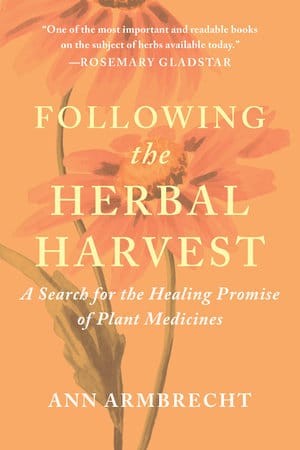
What’s the name of your book? Can you remind everybody? It had a name change and I get confused which one’s the current one?
It’s Following the Herbal Harvest. The first name was The Business of Botanicals. I never liked it because it is focused on the business. And one of the key themes is shifting from that idea to the medicine of place. This idea that the medicine and the place can be a huge global supply network in the ways that we’ve talked about. That all goes into the quality of that finished product. And so I didn’t like the title The Business of Botanicals, so I got them to change it.
The book is really about my journey, asking these questions and my hope is that it invites you, not to do this or that. It’s not really a book about that. It’s about questions to ask and digging deeper and having the conversations, because as I said before, that journey has been the most powerful herbal medicine that I’ve taken, far more than any tincture or any capsule or any growing that I’ve done or anything like that.
It’s the relationships I formed with the plants and with the people doing this work. So it’s an invitation to do that in your own way.
I love that. Thank you so much, Ann. This has been fantastic. I love the perspectives you can share with everyone listening. Usually, we’re talking about clinical herbalism and working with people, or medical astrology, or alchemy, and all this other stuff, and I haven’t really done too much on the industry side of things.
Mainly because I’m not that well aware of it, to be honest. I think going to the AHPA gathering, for those of you not familiar AHPA is the American Herbal Products Association. That was really eye-opening for me too, being around other people that make herbal products and have their businesses or are suppliers and they’re making extracts, or they’re contract manufacturers, like this whole other world, it was really eye-opening for me.
Of course, I got to hear you speak there, and that was where I got inspired. I thought it would be really cool to share some of this knowledge and information with the greater herbal community because it is really eye-opening and just like you’re saying, I think having an awareness of some of these processes and issues and just the kind of the state of affairs in the herbal world is good for people to be aware of, especially as it seems like right now, there’s such an explosion of herbal products. I don’t know, maybe it’s just me, but it just seems like there are more and more companies, supplement companies, and herbal products, and especially with the mushrooms just exploding right now. And it makes me pause and think, okay, where is this going?
What direction is this all going? And, is it a good direction? And, I really appreciate knowing that there’s someone like you out there who is doing the work to help ensure that it moves in a good direction.
So thank you for doing that. And thank you for coming onto the Plant Path to share with everyone today, I really appreciate it.
Thank you so much. Thanks for your questions.
Learn more about The Sustainable Herbs Initiative
Check out Ann Armbrecht’s book, Following the Herbal Harvest: A Search for the Healing Promise of Plant Medicines at Chelsea Green Books (or find it wherever books are sold).