
In the world of herbal medicine lies a green plant that often goes unnoticed. However, its healing potential is nothing short of remarkable. Meet Cleavers, a humble herb that easily slips under the radar as it hides itself among (and voraciously clings to) other plants in the lushest parts of the forest.
It’s easy to think the most powerful herbs are those with antibiotic or adaptogenic properties, or the low-dose botanicals that tread the fine line between poison and medicine. Yet Cleavers taught me that sometimes it’s the gentle remedies that give you the best results.
I’ve written quite a bit on the benefits of Cleavers over the years, but I continue to be drawn to working with it again. It grows prolifically all over the Pacific Northwest, and I’ve used it extensively in my practice, often seeing profound healing results.
Another common name for Cleavers is Bedstraw or Lady’s Bedstraw. It gained these names because deer like to rest on patches of Cleavers and sometimes even give birth to their babies there. This herb has a traditional association with deer, which is worth noting since animals can inform herbal medicine, too.
Cleavers has a longstanding historical usage in European medicine and North American herbalism. Although Cleavers isn’t an herb you would use every day like a rejuvenating tonic, it has easily become one of my favorite herbs over the years. It has some unique properties I haven’t encountered in any other herb, especially on the psychological level. I’ve come to really appreciate this plant, and I’m confident that by the end of this plant profile, you’ll feel the same way too.
Common name: Cleavers
Latin name: Galium aparine
Family: Rubiaceae
Tastes: Salty, Mild, “Green”
Affinities: Lymph Nodes, Throat Region, Pelvic Region
Actions: Relaxant Diuretic, Alterative, Lymphagogue
Energetics: Cooling, Moistening (short-term), Drying (long-term), Mildly Relaxing
Taste of Cleavers
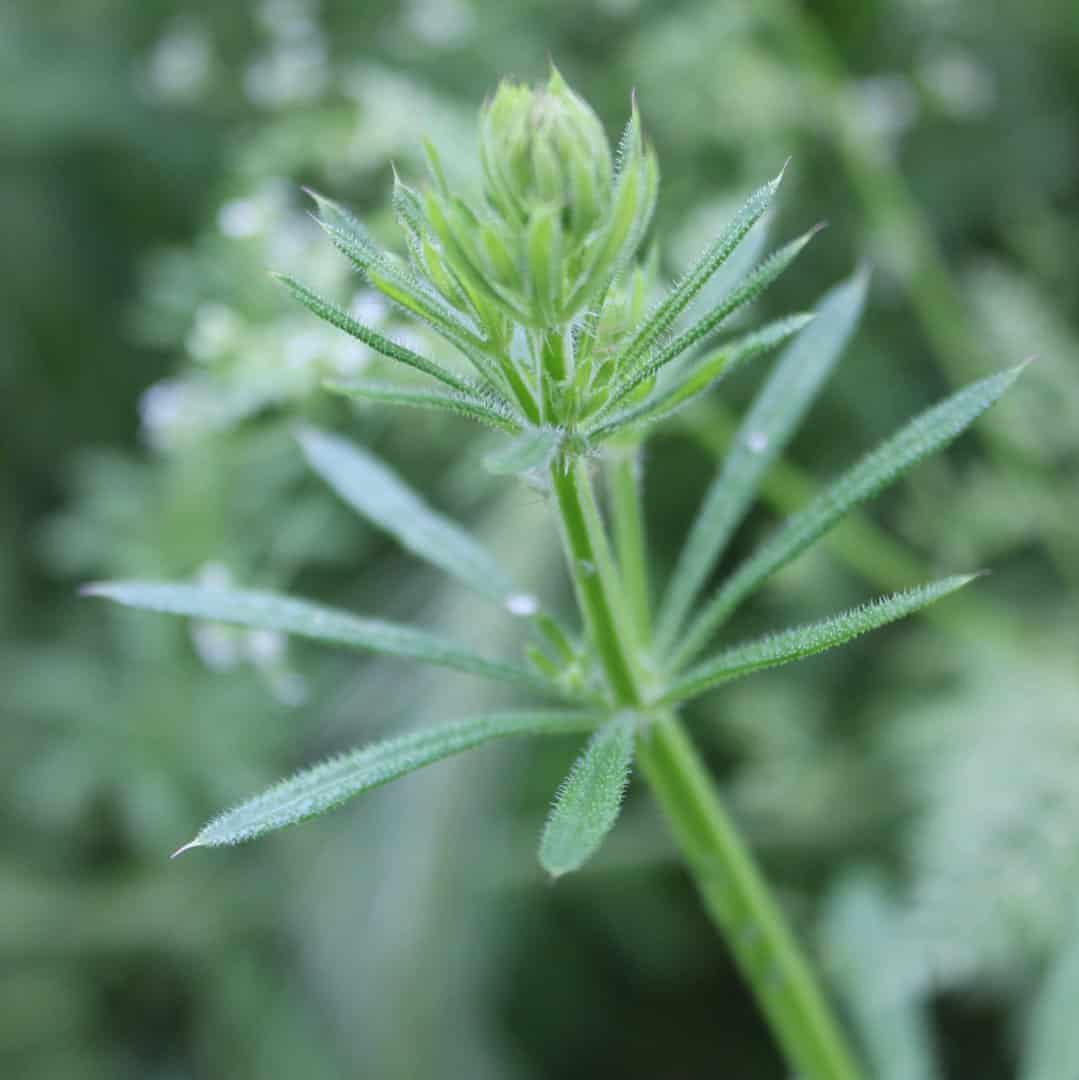
Cleavers is a mild and pleasant-tasting herb. Because it’s loaded with minerals, the herb has a somewhat salty taste. The leaves are crispy, juicy, and fresh with a “green” taste, almost similar to the taste of other leafy greens. The smell and taste always reminds me a little bit of fresh cut grass.
Affinities of Cleavers
Cleavers works on the archetype of the water element within the body, granting it an affinity for the kidneys, urinary tract, and lymphatic system, as well as for the reproductive system. Because of its action on the inner waters as a cleansing alterative, it has a reflex action on the skin. These are the primary organ and system affinities for this plant.
While sometimes we think of affinities only in terms of organs, systems, or tissues of the body, it’s also helpful to think in terms of general regions. For example, we have lymphatics scattered throughout the entire body, but when we consider Cleavers, it has a unique affinity for the throat, pelvic, and inguinal regions. These are helpful affinity patterns to know, as they help you select Cleavers more specifically.
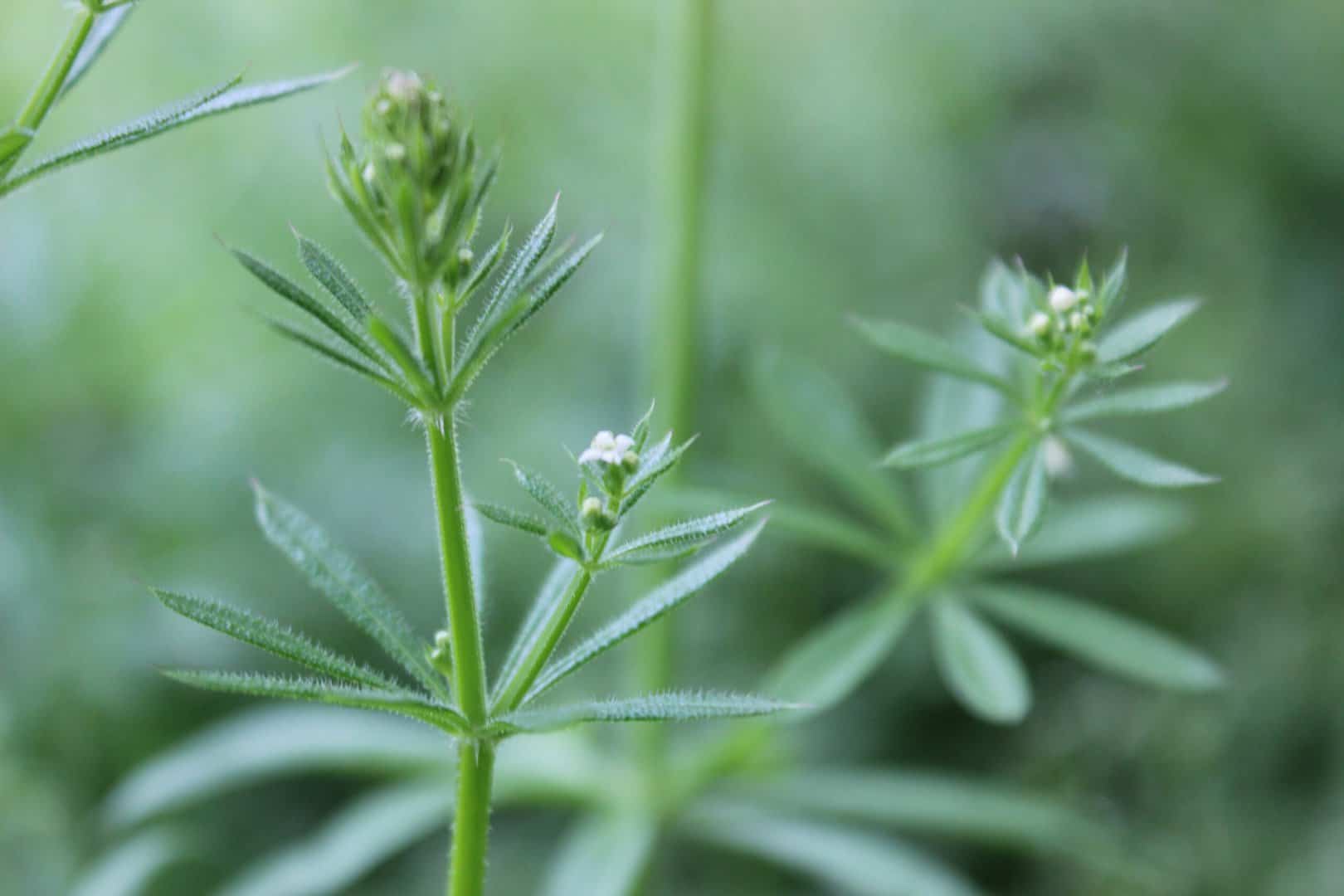
Matthew Wood taught me that this herb has an affinity for the nervous system. And while Cleavers aren’t used as a calmative agent for anxiety and symptoms like that, it is said to be beneficial for inflammatory nerve diseases. If you look at the herb when it goes to seed, you’ll see how it forms little bulbs that resemble the bulbous ends of neurons. This doctrine of signature reflects this indication for the nervous system.
Another viewpoint is that the two bulbs side-by-side are a testicular signature. You can use Cleavers for orchitis, epididymitis, and testicular swelling. It also alleviates pain and lowers swelling when a blow to the testicles leads to inflammation and pain radiating up the pelvic region and down the legs.
Moving further into the male reproductive system, Cleavers is indicated for prostate conditions when there’s inflammation and swelling because of damp accumulations. Prostate issues can lead to urinary tract issues. And because Cleavers works on both the urinary and male reproductive systems, it’s a unique remedy that targets the systemic cause and symptoms like incontinence, difficult urination, and strong urges to urinate. It also has an affinity for the female reproductive system, typically the ovaries, uterus, and breasts.
By purifying the lymph and draining dampness through the kidneys, Cleavers “clean” the waters within your system. When you learn to see Cleavers as working on all of the inner waters of the body, and not just on the kidneys, you gain a broader perspective on all of the ways you can use this herb. Anytime you need a diuretic to drain swelling, especially in the lower extremities, Cleavers is a key remedy to consider.
The Herbal Actions of Cleavers
“Cleavers is one of the most effective diuretic blood purifiers known. It is very effective for the treatment of all urinary and reproductive-organ inflammations as well as hepatitis and venereal disease. It is used to treat enlarged lymph glands, cystitis, psoriasis, and skin diseases and eruptions”
~ Michael Tierra, The Way of Herbs
I consider Cleavers to be one of those herbs that really has a singular action, but with specific ways that action manifests. The primary one being alterative. This means it opens the body’s natural detoxification pathways and promotes the elimination of metabolic waste products through the channels of elimination. There are many different types of alteratives, so to me it’s a bit too vague to just know an herb is alterative, we have to specifically know what type of alterative it is.
For Cleavers, its alterative action manifests by having a diuretic action on the kidneys and urinary tract and by supporting the lymphatic system as a lymphagogue. In this way, from my perspective, it is working on cleansing and purifying the inner waters of the body. To be more specific, it has a soothing, cooling, relaxant diuretic effect (in contrast to a hot, stimulating diuretic such as Juniper berry).
And although Cleavers isn’t necessarily antimicrobial, it supports your immune system through lymphatic cleansing and drainage. It is the perfect remedy for hot, irritated, and inflamed UTIs with symptoms like burning upon urination and swollen lymph nodes in the inguinal region. I’ve used it many times in formulas for this pattern, and it is very effective.
This fresh, green herb is one of my favorite remedies for the lymphatic system because it’s gentle yet effective. Although you may be tempted to reach for the hardest-hitting lymphagogue herbs, such as Poke (Phytolacca decandra), you should always use the mildest remedy that can achieve the desired healing outcome first.
I think this is an important principle in holistic herbalism in general. Always go for the gentlest remedies first. If Cleavers does the job, you don’t need to use a harsh herb like Poke. Sometimes using a strong herb can be harmful, especially for people with a delicate, sensitive, or weak constitution. Cleavers is a great choice because it’s so gentle, yet effective at cleaning the lymph.
I use Cleavers for lymphadenopathy, specifically for throat infections like tonsillitis and strep throat. It’s a classic remedy used for diphtheria, which we don’t see too much anymore. It reduces swelling in the tonsils and adenoids by clearing stagnant fluids from the lymphatic system. Although some consider Cleavers an immune stimulant, I see its effects on the immune system being a result of its lymphatic properties since these two systems are closely connected.
If we think of it acting on the body’s inner waters (as a lymphagogue and diuretic), it helps to consider pathological patterns involving fluids. You can use Cleavers any time there’s a condition characterized by fluid stagnation that leads to growths or hardened masses. In the female reproductive system, these could be uterine fibroids and ovarian cysts. In the breasts, it can show up as mastitis and lymphatic swelling. Because of its cleansing properties on the lymph, Cleavers is also indicated for hot, irritated, and damp skin conditions such as boils and cystic acne.
The Energetics of Cleavers
The effect of Cleavers on temperature is quite clear, as it’s noticeably cooling to tissues that are hot, inflamed, and irritable. This is particularly notable in the urinary tract (such as burning pain upon urination). But its action on moisture is a bit more interesting (and slightly confusing at first).
Some authors say Cleavers is moistening, others say it’s drying. How can something be moistening and drying at the same time? These discrepancies can be remedied by looking at a few different patterns in how plants operate. In the case of Cleavers, I find it helpful to consider the short-term, acute action of the plant in contrast to its longer-term effects.
In a short-term usage situation, Cleavers is great for moistening, lubricating, and cooling tissues that are hot, dry, and irritated. But, consider the fact that it’s a diuretic and alterative that is increasing excretion of fluids from the body… that is naturally going to dry us out. I think of it as short-term and locally moistening, but constitutionally drying over the long term.
Because Cleavers has such an affinity for the urinary tract and is cooling and moistening, it’s an excellent herb for hot, irritable, and dry inflamed urinary tract infections. It cools heat, lessens irritation, moistens tissues, and provides localized lymphatic support. Because it’s drying in the long term, it’s generally better to use Cleavers for a short period instead of a long one, like you would with an adaptogen. That is, unless you’re treating a deeper condition such as ovarian cysts, uterine fibroids, and other deeper levels of dampness and stagnation. Lastly, although Cleavers isn’t necessarily antispasmodic, it’s categorized as a relaxant diuretic by the eclectics and the physiomedicalists. As such, we use it for tense, hot urinary conditions.
In the Ayurvedic tradition, Cleavers lower excess pitta and kapha but can increase vāta. This herb balances pitta because of its cooling properties, which lower heat and inflammation. It is also a valuable herb for kapha since it clears away dampness and stagnation–a pattern this dosha is prone to. Cleavers increases vāta over time because of its long-term cooling and drying properties.
Regarding the tissue state model, Cleavers is indicated for dry/atrophy and damp/stagnation. Its short-term moistening effects hydrate dry, irritated tissues, healing, and regenerating. Its main effects shine in damp/stagnation, where it ushers out metabolic waste products as a diuretic and supports a healthy lymphatic system as a lymphagogue. It will also help sedate the inflammation and irritation of heat/excitation.
Psychological and Emotional Aspects of Cleavers
Throughout my practice, I had often found myself speaking with women who complained of two things side-by-side: chronic UTIs and bad relationships. After enough time, I started to notice that they shared the same constellation of symptoms.
These women often described scenarios where the men they were in a relationship with were abusive, manipulative, or controlling. Or less dramatically, they were simply entangled in their relationship, in a way, giving up a part of themselves to be in the relationship and losing themselves in it. The common denominator was that these women felt stuck in an unhealthy relationship and unable to get out. At the same time, they kept facing urinary tract infections that would come back no matter what they tried.
I realized that the common denominator behind both patterns is a dysfunction of Venus. This planet governs relationships and how we relate to each other. Interestingly, it corresponds anatomically to the urinary tract.
Cleavers became my go-to spagyric essence for this pattern, not only because it works on the urinary tract, but because it balances the Venus archetype as a whole. If you look at how Cleavers grows, it clings and sticks to the things around it. This “clinginess” mirrors the codependency and lack of clear boundaries these women faced in their relationships.
Taking the spagyric essence led to various outcomes. Sometimes the women would “wake up,” see how unhealthy the relationship was, and end it. In other cases, they established healthier boundaries to maintain the relationship and were able to work out the issues. In both scenarios, taking Cleavers led to a fundamental change in the nature of their relationships for the better. In essence, Cleavers helped them disentangle themselves from toxic relational patterns, develop healthier boundaries, and return to the self.
Relationships can overwhelm your heart, pulling it in different directions. This is especially true if you love someone, even if they don’t treat you well. You may know logically that the dynamic isn’t healthy, but it’s not enough to know it. The heart can feel confused and get tangled up, similar to how Cleavers clings to the plants near it and can grow into a tangled mess.
Cleavers detangle you from complicated relational dynamics where you’ve lost your sense of self with another so you can make healthy choices. I’ve seen the power of Cleavers shine in countless cases of relational enmeshment, codependency, and unclear boundaries. The spagyric essence is particularly powerful because it doesn’t just act biochemically within your system but on the archetypal energy of Venus as a whole. Once Venus was rebalanced, the UTIs and toxic relationship patterns stopped occurring.
Seeing these results from Cleavers was astounding because I saw the archetypal medicine balancing Venus on every level — physiologically, emotionally, relationally, socially, and physically. That’s the power of working with spagyric essences, especially with complex planetary imbalances like this.
Alchemical Correspondences of Cleavers
As you might expect, I associate Cleavers with Venus for a host of reasons. For one, it has a diuretic effect and a strong association with the kidneys and urinary tract. Interestingly, Venus is at its strongest in the zodiac sign of Pisces (a sign of exaltation), which is associated with the lymphatic system. Pisces represents the fish and symbolizes water, which connects to the herb’s main Element.
As discussed earlier, Cleavers doesn’t only affect the urinary tract and kidneys. It works on the entire Venusian pathway. The way in which it treats heat, irritation, aggravations, and infections shows a Venusian property being used to balance an excess of Mars (antipathy). When you prepare a Cleavers medicine following the alchemical tradition, it gains a certain magical quality. This not only changes your physical self but also has an impact on your psychological, emotional, and spiritual aspects. It might even have the potential to influence the environment around you.
Cleavers is associated with the Water Element, as evidenced by its effects on the lymphatics, kidneys, and urinary tract. Each of these affinities is governed by the Water Element because they eliminate fluids from the body. The kidneys, in particular, control and regulate the Water Element.
Cleavers helps restore water balance by draining dampness, stagnation, and the build-up of fluids and waste products. By doing so, it can treat infections that occur when excess fluids and waste create a damp environment where bacteria can thrive. This herb primarily acts on the Water Element by cleansing the lymphatic system, urinary tract, and the female reproductive system, which is also associated with this Element.
How to Identify and Harvest Cleavers
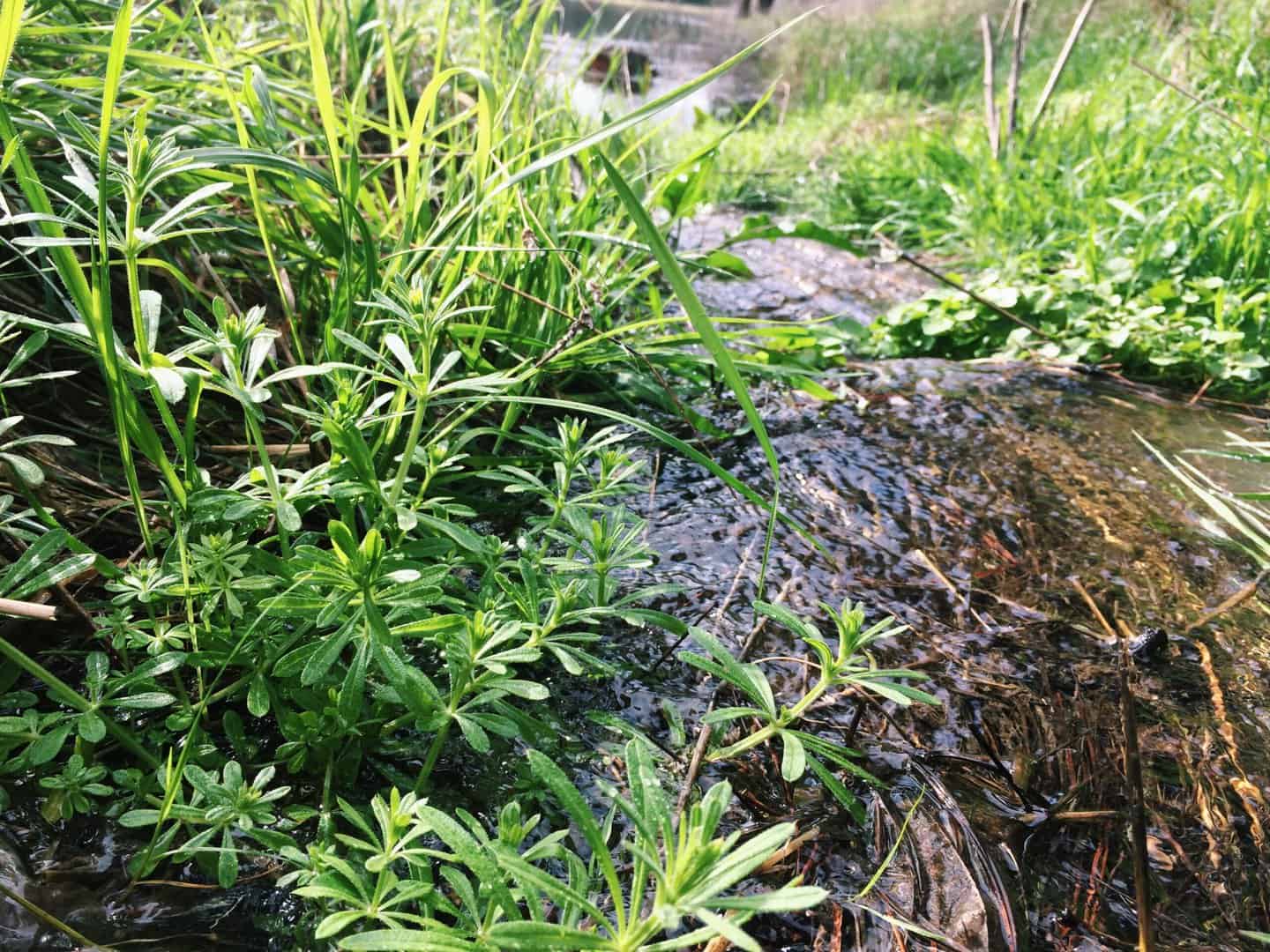
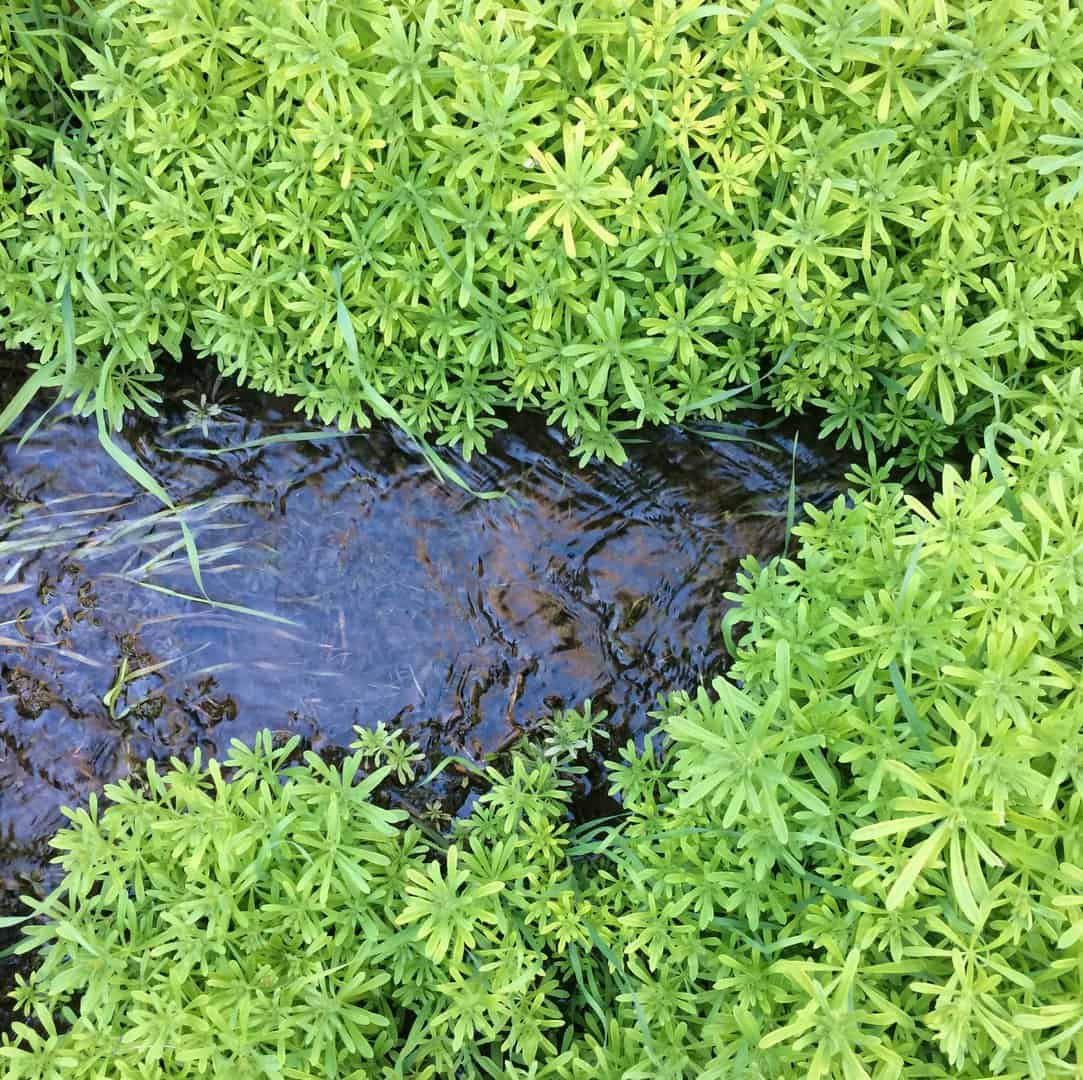
Cleavers loves to grow in woodland environments where it’s moist and shady. I think this herb favors these environments and also contributes to the lushness of these landscapes. These are also signatures of the Water Element and Venus correspondences.
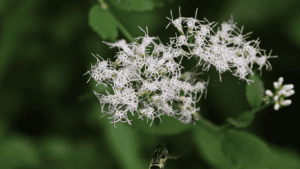
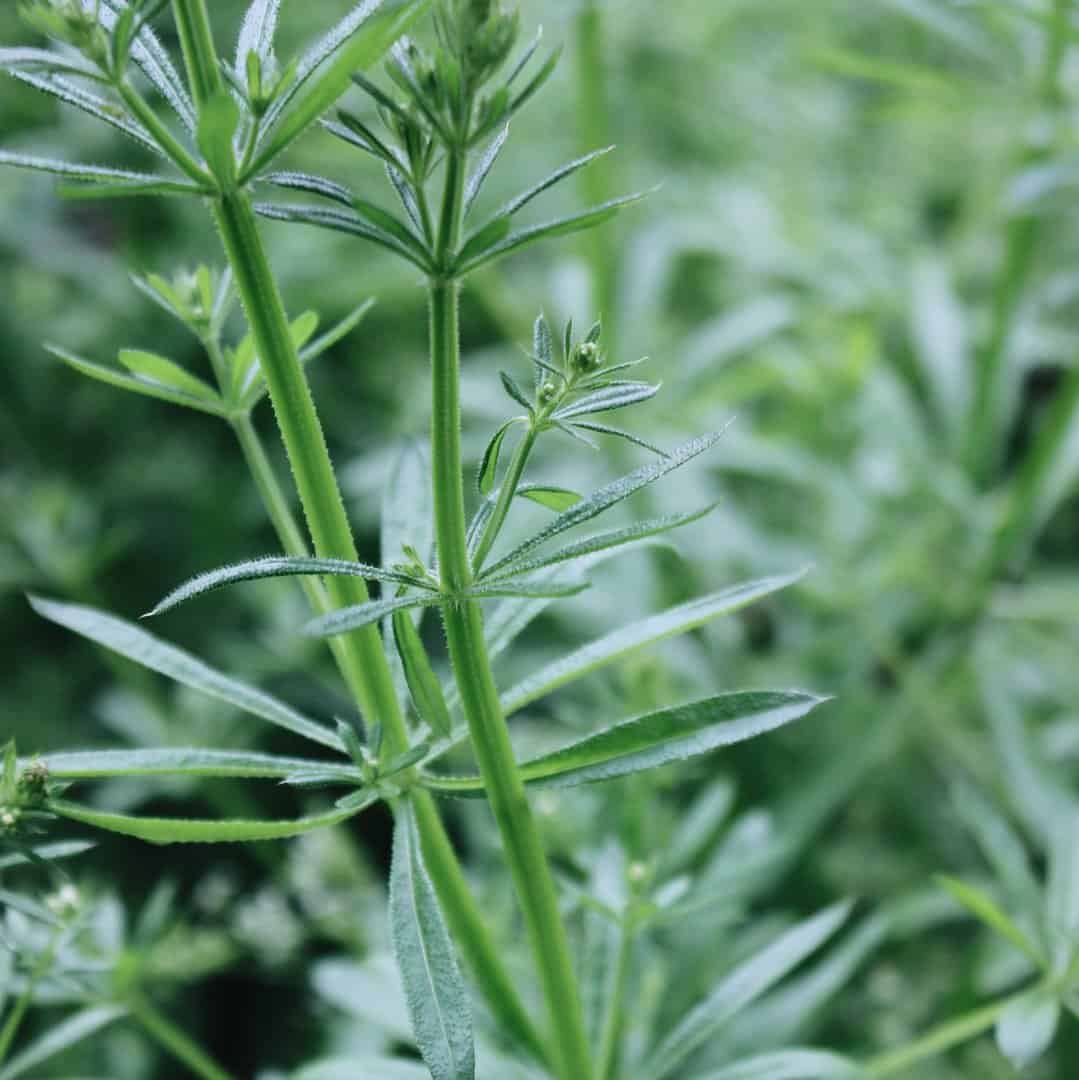
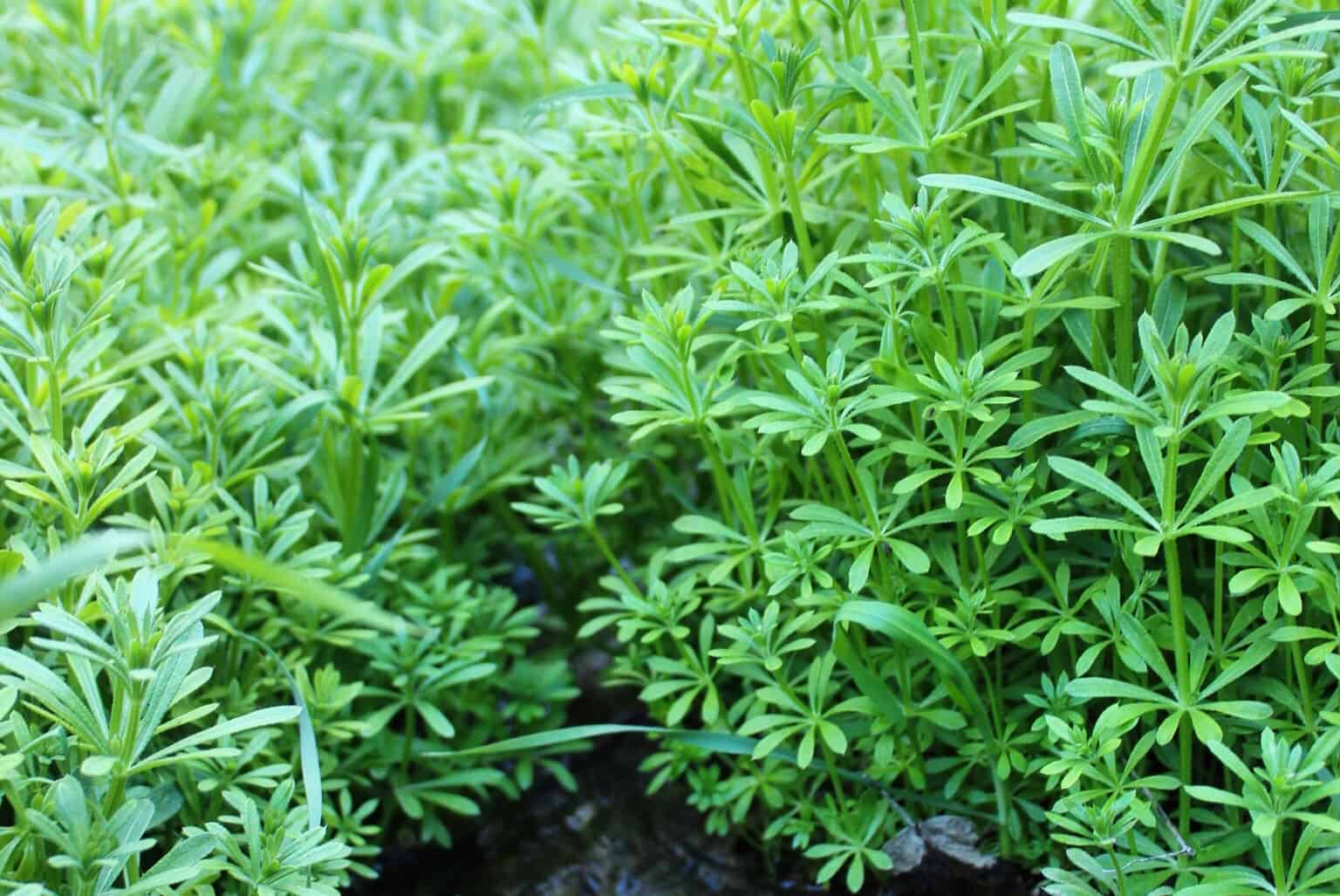
This herb has tall and slender stems with leaf whorls that go around it. If you touch the leaves, you’ll notice they’re sticky and cling to your finger like Velcro. Cleavers grow by sticking and climbing onto the other herbs near them and can get really tall, depending on the height of the nearby plants.
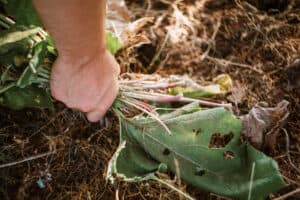
It can be tricky to harvest Cleavers because you tend to gather all of the other plants they stick to. You might end up with a big, tangled mess. So it’s important to take your time harvesting this herb carefully to make the garbling process easier later on. Typically, I’ll make sure I’m only grabbing the Cleavers and gently pull the whole thing up. If some grass or other herbs come with it, I’ll remove them right then and there, as the more of this plant you collect, the more tangled it gets.
Preparation of Cleavers
It’s best to use Cleavers fresh. And although I almost always prefer fresh plant preparations over dry, I’d go as far as to say that Cleavers become basically useless when dried. Because you need to use fresh Cleavers for its medicinal properties, the best time to collect it is in the spring before it sets flower and goes to seed.
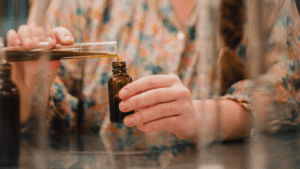
You can prepare Cleavers in two main ways: as a tincture and as a succus. It is very water-rich, so you have to make sure you use a high-proof alcohol to preserve it optimally. Yet, you don’t want to go too high, because the constituents aren’t very soluble in super high proof alcohol.
I prefer to prepare Cleavers fresh at a 1:2 ratio with a mid-range alcohol, around 50%. This typically dilutes down to about 30% when the Cleavers are added, which is ideal.
Alternatively, you can prepare a succus, which means “juice” in Latin. To prepare a Cleavers succus, run the herb through a juicer and add enough alcohol to bring it up to around 30% to effectively preserve it. Anything much lower than 30% will ultimately spoil. If you prefer an alcohol-free succus, you can freeze the juice in an ice cube tray and pop a cube into a cup of hot water whenever you need it. Cleavers is effective on its own but also combines well with alterative and urinary tract formulas.
Lymphagogue Compound Recipe
This broad-spectrum lymphatic formula combines the benefits of Cleavers with two other cooling herbs that work not just on the lymphatics but on the kidneys, liver, and bowels. You can use this lymphagogue formula to cleanse metabolic waste products and stagnation from lymphatic tissue found throughout the body.
Ingredients:
33% Calendula tincture (Calendula officinalis)
33% Red Clover tincture (Trifolium pratense)
33% Fresh Cleavers tincture (Galium aparine)
Directions:
Step 1: Mix the tinctures in a dropper bottle
Step 2: Add 1 to 3 dropperfuls to water or tea
Step 3: Take the Lymphagogue Compound 2 to 3 times a day
Cleavers is a small herb with big medicine. I love this plant because it taught me that within gentleness lies strength. There’s no herb more perfect than Cleavers to express this sentiment.
FAQ About Cleavers
What are the primary health benefits of Cleavers?
Cleavers is best known for its ability to cleanse the inner waters of the body. At the School of Evolutionary Herbalism, our students learn to use it as a gentle lymphagogue to clear stagnation from the lymphatic system, a cooling diuretic to flush the kidneys and soothe irritated urinary tissues, and an alterative to support the body’s natural elimination pathways. Beyond these physical benefits, Cleavers offers something more subtle and unique: it helps disentangle people from codependent relational patterns and restore a healthy sense of self. It’s a small plant with surprisingly broad reach.
Why use Cleavers for lymphatic drainage?
Cleavers acts on the lymphatic system by gently moving stagnant fluid and clearing metabolic waste, which is why it’s classified as a lymphagogue. It has a particular affinity for the throat, pelvic, and inguinal regions, making it especially useful for swollen lymph nodes, tonsillitis, and lymphatic congestion that often accompanies UTIs. Unlike stronger lymphatic herbs such as Poke (Phytolacca decandra), Cleavers is gentle enough to use without concern for harsh side effects, which makes it a great first choice for most people. This is one of the reasons Cleavers is so beloved in holistic herbalism: it does the work without overwhelming the system.
What are Cleavers used for in herbal medicine?
Cleavers has a wide range of medicinal uses, all stemming from its action on the inner waters of the body. Herbalists reach for it to address hot, irritated urinary tract infections, swollen lymph nodes, tonsillitis and strep throat, cystic acne and other damp skin conditions, uterine fibroids and ovarian cysts, prostate inflammation, and testicular swelling. It’s also a key remedy for emotional enmeshment, codependency, and the kind of toxic relational patterns that often accompany chronic UTIs in women.
Can you make Cleavers tea?
Cleavers loses much of its medicinal potency, so a traditional dried-herb tea isn’t the most effective preparation. The best way to make a Cleavers tea is as a cold infusion using the fresh herb. Simply pack a jar with fresh Cleavers, cover with cool water, and let it steep overnight. For most therapeutic uses, a fresh-plant tincture or a Cleavers succus (juice) will give you stronger and more reliable results.
Is Cleavers safe to use long-term?
For most acute situations like a UTI, swollen lymph nodes, or a flare-up of skin irritation, Cleavers is best used as a short-term remedy. Because it’s a diuretic and alterative, its long-term effect is constitutionally drying, which can potentially deplete fluids over time. Longer courses can be appropriate when treating deeper patterns of dampness and stagnation, such as ovarian cysts or uterine fibroids, but in those cases it’s usually best to work with a qualified herbalist who can tailor the approach to your constitution.
When is the best time to harvest Cleavers?
The best time to harvest Cleavers is in the spring, before the plant flowers and goes to seed. This is when the herb is at its most water-rich, which is exactly when its medicinal properties are strongest. Harvest carefully, since Cleavers tends to cling to whatever is growing nearby and can quickly become a tangled mess. Take your time gathering the plant cleanly so the garbling process is easier later on, and use it fresh whenever possible.