
The Solar Archetype
The Sun is the center of our solar system, and in alchemical and astrological traditions, it represents the center of our psyche. In the alchemical tradition, everything has meaning, from the way a plant grows to the nature of a mineral or a metal. The qualities and characteristics of nature reflect the qualities and characteristics of the human organism here in the terrestrial realm. The same is true of the celestial realm; the structure of the solar system reflects the structure of our own psyche.
The Sun represents the psyche’s gravitational center. It is, in many ways, our essence and the core of our being. It is the little bit of light that exists within us, and accordingly, one way to think about the Sun is as the light of consciousness.
In the West, the tropical system of astrology is Sun-oriented, which is noteworthy because in other traditions the Sun isn’t quite as important. In Jyotish, for example, the Moon is considered somewhat more important than the Sun.
In pop astrology, we see an emphasis on Sun sign dynamics with the daily horoscopes you can easily find on social media, and in blogs, magazines, and newspapers. We place a lot of importance on the Sun, but, of course, we are much more than just our Sun sign.
In medical astrology, the Sun reflects the psychological aspects of us as human beings. The psyche is at our core, and our spirit within the body is its center. Imagine your body as a cross: the horizontal is your arms from fingertip to fingertip, and the vertical is your body from head to toes. They meet in the middle — the heart.
In medical astrology, the heart is predominantly ruled by the Sun. The heart and the cardiovascular system as a whole are associated with Leo, which is the governing sign of the Sun and the fifth sign of the zodiac. Leo is our fixed fire sign, which exists, at least in the northern hemisphere, in the middle of summer when the Sun is at its peak and when it’s at its most fixed and strongest phase.
Thus, the heart and cardiovascular system are central rulerships of the Sun. The Sun also represents your vitality, the core vital force within your system, and how much vitality you’re born with. In some ways, it has to do with your constitutional strength — whether your constitution is more robust or weaker, and how much vitality you have.
There is a dynamic between vitality and heat. If you think of the vital signs in medicine, you have respiration — Air element; having a heartbeat — Fire element; the ability to move — Earth element. That heat reflects the solar aspect of vitality, so you could say that the Sun has to do with the quality of the vital force and the distribution of heat throughout the system. Of course, that is achieved through the movement of blood. Blood flow distributes heat and vitality throughout the system.
Here we see a connection among the yang, dynamic, or masculine-oriented planets: the Sun, Mars, and Jupiter. The Sun is the cardiovascular system as a whole, Jupiter is the arterial circulation, and Mars is the blood flowing through the whole system.
Mars has a relationship with heat. The Sun also has a relationship with heat, but it radiates warm heat, whereas Mars radiates aggressive heat. In many instances, the heat of Mars is pathological heat: inflammation, irritation, and excitation of the tissues. Mars is the carrier of solar heat and vitality throughout the system, through the blood.
So these are some of the major medical associations with the Sun. When we see people with circulatory system issues, heart problems, poor blood distribution, these are commonly associated with the Sun — poor vitality, poor distribution of vitality, and a lack of vital strength — which can manifest as chronic fatigue and deficient immunity. So this is another way the Sun and Mars work together. Mars rules the immune system, and its state depends on vitality. If you are rundown, not sleeping well, and stressed out, your vitality will suffer, and consequently, you will have a lower immune response — you’ll be more prone to getting sick. In contrast, people with strong vitality have stronger immunity. Someone can sneeze in their face, and they won’t be as likely to get sick because they have strong vitality and immunity.
While we don’t necessarily think of the Sun as ruling immunity, there is a connection between solar vitality and the general strength of the immune system. People with a deficiency of the Sun tend to feel fatigue, low energy, and low vitality, and may also have lowered immunity. In medical astrology, the Sun is energetically warm and dry. When the Sun is deficient, a person can feel cold.
To understand medical astrology, you must know the individual signs and their relationships. When the Sun or Leo is deficient, the opposite sign may be in excess because they balance each other like a teeter-totter. When one rises, the other falls. In this case, Aquarius governs peripheral circulation. So when Leo is deficient, and Aquarius rises, a person might have cold hands and feet.
In the northern hemisphere, Aquarius season is in the fixed Air of midwinter. There may be a cold, biting wind that causes you to tense up. Additionally, Aquarius is a lower vitality sign. So, people with a predominance of Aquarius in their constitution (not necessarily with their Sun in Aquarius) tend to have lower vital force.
Next, let’s discuss four solar herbs that correspond to the four main attributes of the Sun as it expresses itself within the human organism: heart, warmth, vitality, and spirit.
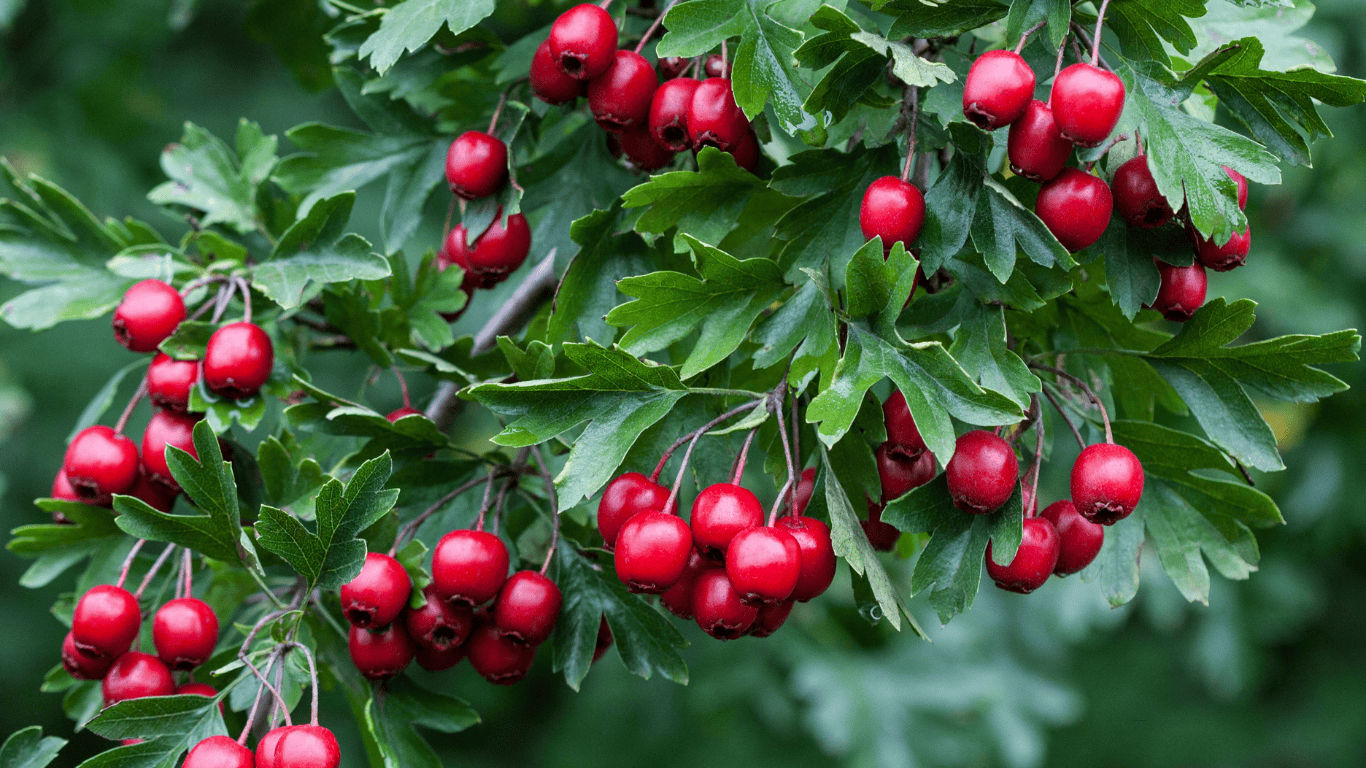
Hawthorn: Ally of the Physical and Spiritual Heart
Let’s start by talking about heart. The Sun is the major ruler of the heart and the cardiovascular system, and what better ruler of these in herbal form than Hawthorn (Crataegus monogyna)? Monogyna is the main species used, but there is also Crataegus douglasii and other Crataegus species.
If you look at old astrology or alchemy books, you’ll find that Mars is said to rule Crataegus, which is interesting because it’s a commonly known heart remedy. Hawthorn is our heart trophorestorative par excellence. Hawthorn is a gentle yet powerful herb for the heart and the entire cardiovascular system. One reason I think the old texts say Hawthorn is ruled by the Sun is its morphology. Hawthorn has bright red berries and thorns, so when people see it, they think of Mars. Yes, Mars is sharp, prickly, intense, and it can cut you and draw blood. And of course, Mars is the red planet. However, I don’t think correlating a plant with a planet based solely on morphological characteristics is sufficient. It doesn’t build a good enough case for why that herb would be associated with that planet.
Nonetheless, Hawthorn is interesting as a Mars eliminator. The berries and the flowers, to some extent, are highly antioxidant. They cool excess heat, inflammation, and irritation in the vasculature. Hawthorn can help with vascular oxidation, weak capillary beds, and cardiovascular inflammatory stress. We could say that’s like Mars attacking the Sun or Mars in a harsh aspect to Leo, causing heat, inflammation, and damage to the vasculature. In my opinion, Hawthorn is a really primo remedy for addressing Mars attacking the Sun or Mars harshly aspecting Leo and causing problems.
Hawthorn berries taste sour. Many of our sour-tasting berries cool heat, inflammation, and irritation. Hawthorn bridges the gap between medicine and food, so you can’t take a dropperful of Hawthorn and have all your heart problems magically go away. This is an herb you need to take several times daily in adequate doses for six months for it to start building up in your system and take effect. This is especially true for people with serious cardiovascular issues or predisposition towards them.
Hawthorn is like a food in that it’s a slow-acting, long-term-use herb that builds the strength of the heart. It is an antioxidant and inflammation-modulating. It is a cardiotonic, and it’s a cardiovascular trophorestorative. It restores the structure and function of the heart and the vasculature. It tonifies the heart muscle, making its contractile power more efficient. It improves the elasticity of the vasculature, allowing it to expand and contract with the beating of the heart.
Where I also see Hawthorn being interesting in its solar association is what we might think of as the Chinese concept of the Heart, or the TCM Heart, which, in many ways, is the mind. According to Chinese medicine, the heart stores shen. Shen is your spirit, and, in this context, your spirit is reflected in the state of your mind. People who are anxious or nervous have trouble sleeping at night. They have what we might think of as a nervous, anxious disposition. They have disturbed Shen, or maybe they have nightmares, don’t sleep well, and wake up a lot. Hawthorn is a nervine, and I think it’s really useful for calming people who are anxious, nervous, or flighty. Perhaps their vital force flutters up and out, and their mind is stressed. To me, the Hawthorn person has their mind overriding the heart. They have a hard time following their hearts, and we hear the saying, “Follow your heart.”
What does that mean? It means quit overthinking everything. It means that the heart is not just a pump; it is actually the seat of consciousness and the spirit. To follow the heart means to follow a deeper sense of what is right action, or to follow a moral compass. What is morality? What is right? What is wrong? What is good? What is evil? What is the proper way to conduct oneself in this life? What does it mean to live a virtuous life, and where does all of that come from? It doesn’t come from the mind or from science. It comes from something greater than the self, I would argue. I would argue that it comes from God, it comes from the creator. It comes from something greater than the self, and we connect to that through our heart, and to me, Hawthorn is a useful way of going about that. The astrological reflection of that would be the Sun, the center of all things—the center of our solar system, the center of the psyche, the spirit.
Of course, spirit is another category we’ll talk about in the context of another herb. But I think because Hawthorn works on the heart, it calms the Shen. This is why very strong, high-quality Hawthorn extracts can be useful for children with cognitive difficulties. Conventionally speaking, they might be diagnosed with ADD or ADHD. I don’t really know if I believe that’s actually a disease, per se. I think that might be. I think some other things are going on there that I wouldn’t necessarily call a disease, but Hawthorn can be really helpful in that way.
Angelica: The Solar Herb of Warmth & Vitality
Now onto our second category of Sun-ruled Herbs and the quality of warmth. You might wonder what the big deal is with warmth. As I said earlier, warmth is very important because it is a vital sign. It’s one of the things that differentiates a living body from a dead body. A living body is warm, while a dead body is cold. That is because of the solar force. The spirit has left the body, and with it the heat departs. Heat is an expression of life and vitality. Of course, we don’t want too much of it, because too much heat, just like too much of anything, can be damaging. But we want warmth.
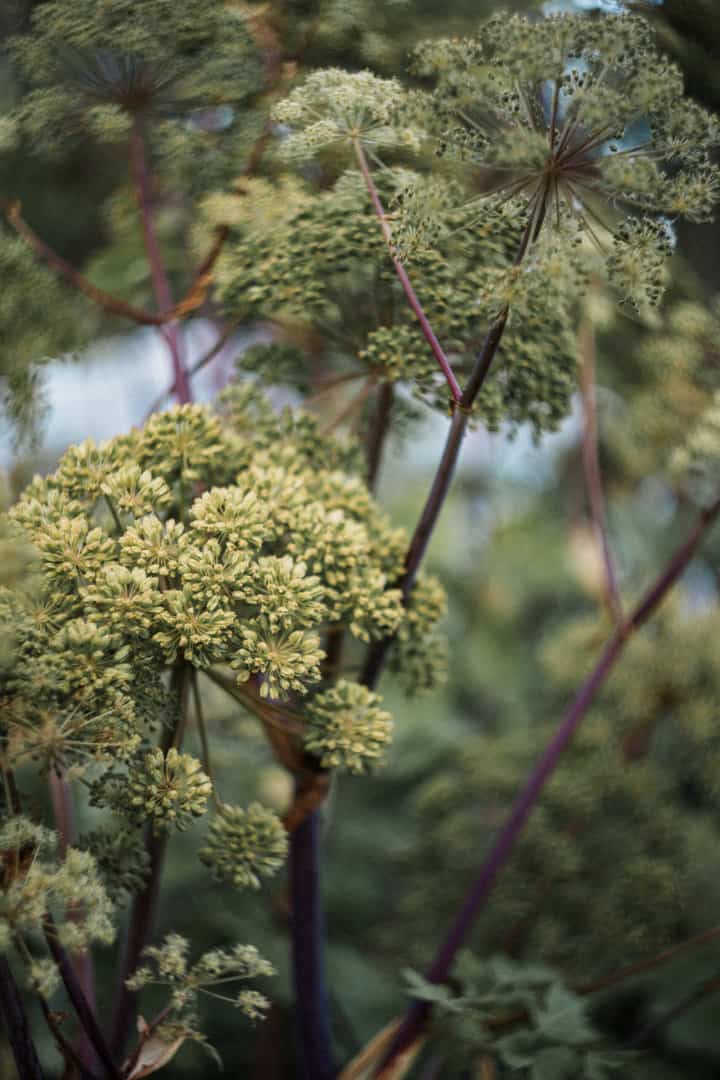
One of my favorite classic Sun-ruled herbs for warmth is Angelica (Angelica archangelica). This is the garden variety European Angelica. It is important to clarify the species we’re discussing, because there are dozens of Angelica species. There are many in Chinese medicine, and several that grow around me here in the Pacific Northwest. We have Angelica arguta, which grows in the Cascades. We also have a coastal variety, Angelica hendersonii (Henderson’s Angelica), and they’re all a little bit different.
Angelica archangelica is a warming, aromatic bitter, with properties reminiscent of Fennel. Angelica has a bit of a moistening effect, so it isn’t quite as dry as many of our other warming herbs, which is one of the reasons why I like it.
When you take Angelica, it works in stages, beginning in your solar plexus. You feel it warm your core and gut, bringing warmth and vitality to your digestive system. Angelica is an effective digestive stimulant as a bitter. As an aromatic carminative, it generates warmth in the digestive system, much like building a fire in the core. That heat radiates outward through the rest of the body, where it acts as a stimulant. Keep in mind I’m not talking about a coffee-type stimulant, but rather a circulatory stimulant. It brings warmth, circulation, and blood throughout the system, including the hands and feet. It also brings blood up into the head, which helps cognitive function, so I think of it as a nootropic.
At Natura Sophia, we make a spagyric essence of Angelica. It’s very volatile, very aromatic, and when I’ve taken it, wow, I feel mentally clear and focused. The senses feel opened up because it moves blood, warming the periphery.
Angleica also affects the respiratory system as a stimulant expectorant. The volatile oils open the lungs and improve breathing. It can be really helpful in cough formulas. Angelica warms the uterus and can support menstrual difficulties. It has a bit of an antispasmodic effect, so it relaxes and warms a cold uterus, which could be due to poor blood flow, amenorrhea, or stagnant, clotty menses.
The overarching theme of Angelica is that it brings warmth, vitality, and blood throughout the system, including the GI, uterus, and lungs, by circulating blood and distributing warmth and vitality.
We don’t think of the Sun as ruling the lungs —that’s Gemini and Mercury. It doesn’t rule the uterus — that’s more the Moon and Cancer. It doesn’t rule the digestive system either — the Moon rules the stomach, Virgo rules the small intestine, and Scorpio rules the colon. So, the Sun doesn’t rule any of those systems, but in the same way that the light of the Sun touches every part of the Earth as the Earth turns, so too it is with the body. The warmth and vitality of the heart and the center shine outward, radiating and touching every part of the body. The Sun impacts the whole being because blood circulation is universal throughout the body. Angelica stimulates blood circulation, thereby distributing warmth and vitality throughout the body. It is excellent for cold, weak, deficient individuals. It’s very helpful for people with poor digestion. If you don’t digest and absorb the nutrients from your food, or if you’re constipated, it affects your vitality. So, Angelica gets digestive secretions going. It stimulates HCL and pancreatic enzymes, and it will move bile too, because it is bitter.
We can think of Angelica as a prokinetic — it helps with the downward bearing energy of digestion, which is the direction you want it to move. Sometimes, for upward-moving GI issues, such as SIBO, Angelica can be very useful. In SIBO, colonic bacteria ascend into the small intestine. Angelica helps to reestablish the downward action. It is not a laxative, per se. It won’t make you run to the toilet like Senna or Cascara. But it can be very useful for people with sluggish transit time.
I love Angelica for the digestive system. I still use Fennel often, but in many instances where I might have used it before, I reach for Angelica more often these days.
Ashwagandha: The Solar Herb for Vitality
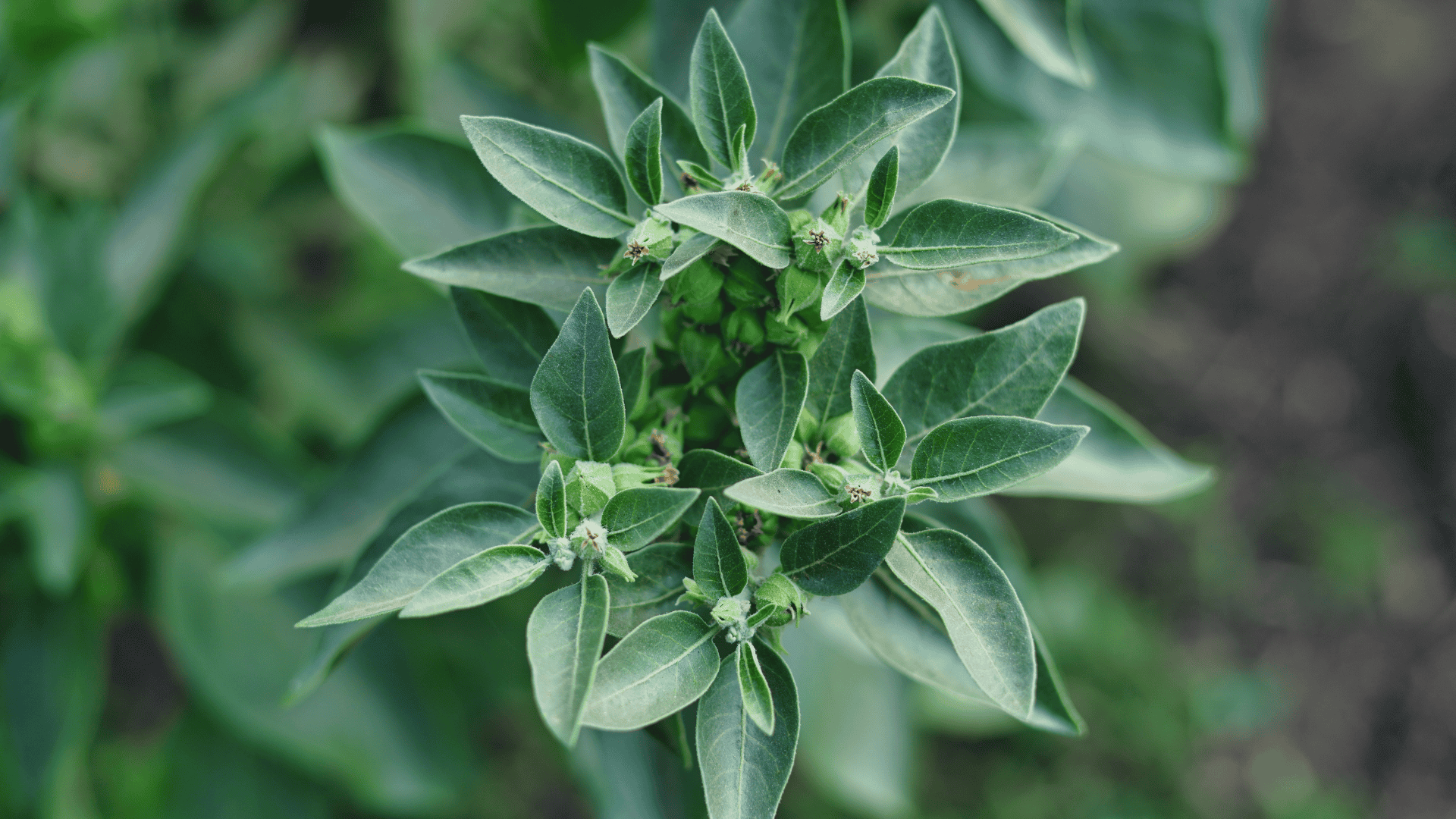
The next herb is for Ashwagandha (Withania somnifera), which builds vitality. You could argue that Mars rules Ashwagandha, for example, Ashwagandha is very rich in iron, and Mars rules iron. If you take enough Ashwagandha over time, it will build your iron levels. Recently, a student told me she had been taking Ashwagandha powder for quite some time. She went to her doctor, got some blood work, and the doctor said, “Whoa, your iron levels are too high. What are you doing? How are you getting your iron levels up?” After talking to her for a while, I realized it was likely due to the Ashwagandha powder. So, don’t take it for long periods unless you really need it, because it will increase your iron levels.
Though there are some good arguments for Ashwagandha’s relationship to Mars, I also see a strong correlation to the Sun.
Ashwagandha is a gently warming herb, but it isn’t too hot. It is an adaptogen, so it helps the body adapt to stressors — physiological and psychological. In Ayurvedic medicine, it is considered to be a rasāyana (rejuvenative tonic). Ashwagandha has a rejuvenative effect on the nerves and the HPA axis (hypothalamic-pituitary-adrenal axis). Which, in some ways, makes a case for its relationship to Mars. Yet, the solar aspect of Ashwagandha is clear, because it builds vitality without being overly stimulating. If you were to take a large quantity of red Asian Ginseng, Rhodiola, Eleutherococcus, or even Shisandra, any of these would be highly stimulating. Ashwagandha, on the other hand, is actually calming. It isn’t sedating by any means, but it does help you stay calm and relaxed. And that really is the state of the Sun — a vital, alert quality, yet calm. We could easily see this as the optimal state.
Ashwaganda works on the solar core vitality, and, through that, it has a trickle-down effect on the Mars aspects of the body. It works on the vitality, and that is reflected in the HPA axis. It is reflected in the way it builds and nourishes the blood. It is an immune tonic or immunoamphoteric, meaning it has the intelligence to adjust the immune response, making it more optimal. Therefore, it can be excellent for people who are really weak and have a deficient immune system. It will help build them up, but it can also be useful for people with immunological excess, hypersensitivities, allergies, and autoimmune patterns. Often, in an autoimmune pattern, there are aspects of both deficient, low immunity, and aspects of excess immunity. People often cycle between the two, or even have both aspects operating simultaneously. Ashwagandha is an immune amphoteric, meaning it regulates immune function, making it excellent for immune dysregulation patterns and conditions. These conditions can be an expression of weakened vitality.
I’ve used Ashwagandha quite a bit myself, so I have a lot of personal experience with this herb as a simple. The way that I experience it is that it slowly nourishes and builds up vital strength, which, to me, is very much reflective of the Sun, so I love Ashwagandha as a representative of the Sun’s vitality.
St. John’s Wort: The Solar Herb of Spirit
Lastly, we have St. John’s Wort (Hypericum perforatum), as a reflection of the spirit of the Sun. When I say spirit, I mean it in the sense of the alchemical understanding of spirit, which is the spirit or the mercury principle in alchemy, composed of Air and Water elements. In the elemental composition of the body, Air reflects the mental state, and Water represents the state of feeling and emotion. Mercury, our spirit, is the psychoemotional layer of being, which is the more fixed reflection of the sulfur part of the self, which is the soul, which is more of the essence or consciousness.
St. John’s Wort has been a remedy for psychological issues going back hundreds of years. Paracelsus talked about it in the early 1500s. Many old herbalists recommended St. John’s Wort for a wide range of psychological struggles.
St. John’s Wort’s claim to fame these days is in the treatment of mild to moderate depression. People think of St. John’s Wort as an herbal antidepressant. However, using the word “antidepressant” in relation to a plant is problematic because it gives the impression that if you’re depressed, you can take an herbal antidepressant and your depression will magically go away. If you’ve ever been depressed and used St. John’s Wort, you know it’s not quite that easy. St. John’s Wort should be part of a broader protocol that includes lifestyle changes, dietary modifications, and other herbs and formulas. Rarely can we use straight St. John’s Wort for depression and have it be effective.
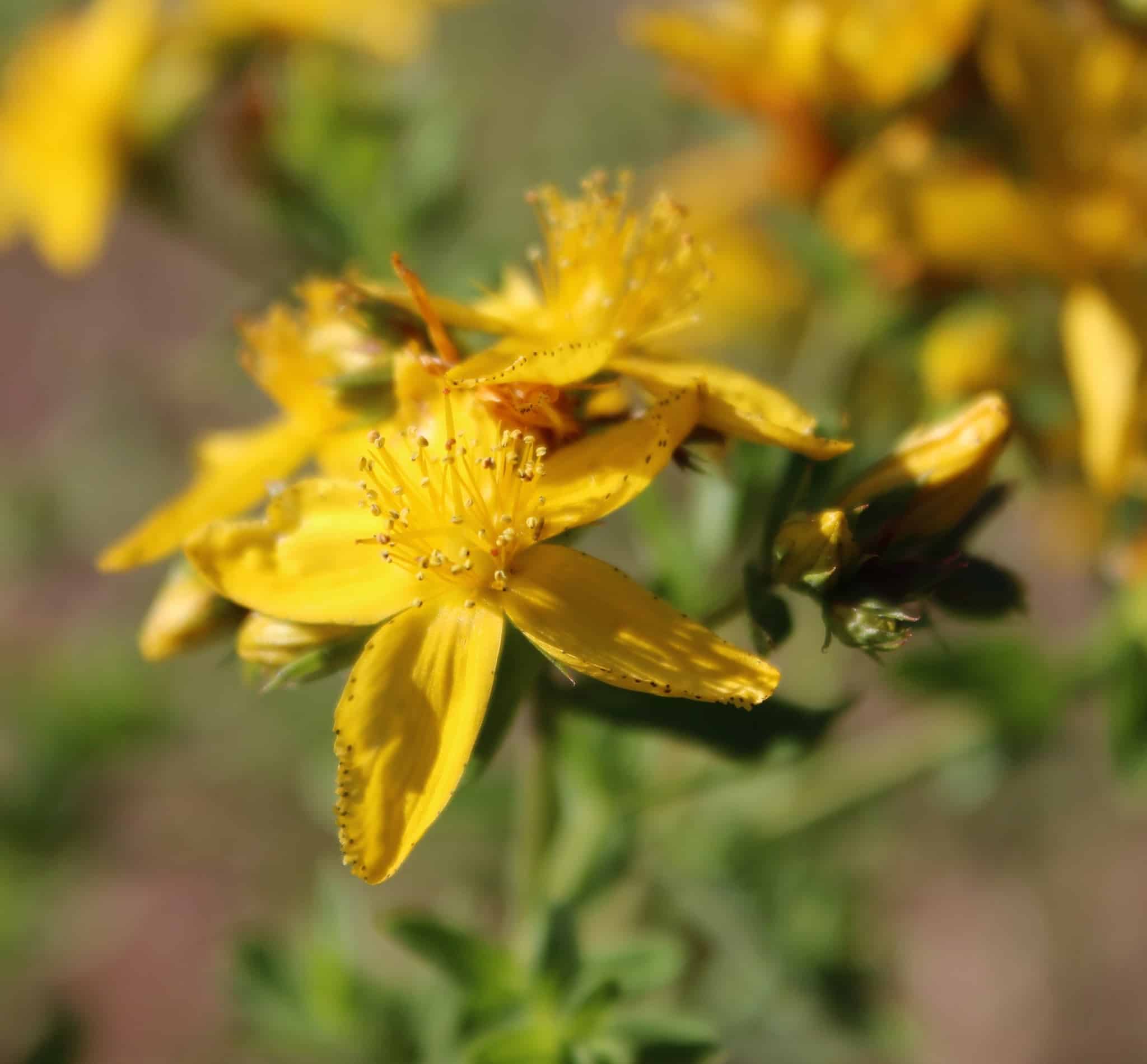
The way I see St. John’s Wort is that its little yellow flowers are like rays of sunshine that bloom around St. John’s Day, which falls near the summer solstice in the Northern Hemisphere. The greatest solar force of the year is at its peak during that time, and St. John’s Wort gathers that solar force. When you take it, it imbues the body, the heart, and the mind with that solar force, uplifting the spirit.
I think of St. John’s Wort as a nervous system and liver remedy. That is one aspect of St. John’s Wort which is commonly overlooked. This herb greatly impacts liver metabolism. That is why it is contraindicated with many pharmaceuticals: St. John’s Wort acts on a liver detoxification pathway called the cytochrome P450 system, which determines the rate at which a drug is metabolized. It can render a drug more or less effective, depending on its metabolism, so you have to use caution with medications.
David Winston offers some differentials for understanding types of depression. For example, he describes hepatic depression, a liver-type depression, which is a higher energy depression state. This is in contrast to a true depression, where you can’t get out of bed, and don’t want to do anything, and you feel heavy and sad. In hepatic depression, you’re depressed, but you’re also pissed off about it. You’re irritable, angry, and frustrated. He notes that St. John’s Wort is very good for this hepatic-based type of depression. It is also useful for GI-based depression, where there are depressive symptoms coupled with digestive symptoms.
It is worth noting that depression can be a primary sign of food intolerance. I’ve seen people whose depression significantly lifts from eliminating gluten, for example. Gluten is the main culprit to look for, but sugar can also be a major contributing factor to depression. I’ve heard of cases where someone was severely depressed, they cut out all sugar, and their depression went away. They got back on sugar, and the depression came back. They removed sugar again, and the depression went away. So it was clear that the sugar was a major contributing factor.
St. John’s Wort is excellent as a solar force to uplift the spirit and attend to the heart. It protects your mind from the inner pessimist that wants to drag you down. If you have ever struggled with depression, you may know that there can be a part of the self that, in a way, wants to be in that state and even revels in it. St. John’s Wort is ike a protective mechanism from the darkness that can infiltrate the mind.
If you read old herbal texts, you’ll see that St. John’s Wort is an herb used to protect against witchcraft, malevolent spirits, hexes, curses, and the evil eye. These are the more esoteric virtues of the herb, but the esoteric virtue translates into its physiological virtue, in terms of how it affects the gut and the liver, how it uplifts the senses, mind, heart, and consciousness, and how it works through the nervous system.
St. John’s Wort is one of our key herbs for nerve pain, in any form. It is one of our main remedies for puncture wounds, including venomous bites, hence the species name perforatum, meaning ‘perforation’. That signature is in the leaf — when you hold up the leaf to the light, you can see the perforations.
Returning to the herb’s esoteric qualities, some believe the puncture marks in the leaves also relate to etheric wounds, for example, in the aura. St. John’s Wort can help heal etheric wounds and offer protection through the light of the Sun and the Holy Spirit.
So those are four of my favorite solar herbs. There is much more to say about these medicinal plants, but I wanted to focus on their connections to the Sun. I hope you found these profiles interesting and helpful in illustrating principles of medical astrology, how plants correspond to planets, and the art of blending clinical herbalism with medical astrology.