
Venus is typically not considered a direct cause of disease. Usually, other planetary qualities in relation to Venus cause problems. Venus is a benefic planet, meaning it has a positive influence and brings good things. Jupiter is the greater benefic, and Venus is the lesser. Still, too much of a good thing can quickly become problematic.
Let’s discuss the main qualities of Venus, the conditions that arise from too much or too little Venusian influence, and a few remedies for those patterns.
Venus’s Influence on the Body
Venus is the main ruler of the kidneys and the female reproductive system. It also governs the venous side of circulation, the blood returning to the heart. There are varying opinions on this in medical astrology, but I find it notable in practice, so I relate Venus to the venous system (and it’s pretty interesting that these words sound the same!).
In terms of the female reproductive system, the Moon is related to the uterus, and Venus is related to the ovaries. But in the grand scheme of things, Venus governs the whole system. Planets can relate to parts of the body, but they also relate to energetics. In medical astrology, the planet represents the quality and characteristic present in a sign or organ system. So, the way I think of that is in terms of tissue states.
The nature of Venus is relaxed and easygoing. Venus is about openness, relating to others, and a calm demeanor. This state lets us appreciate beauty, create art, and be open to love and deep connection. Venus wants to enjoy beautiful food, music, art, and love. These relaxed qualities translate into the tissue state in the body. When Venus is excessive, there is too much laxity in the tissues, meaning tissue that should be tight loses tone. Venus can ultimately generate a damp relaxation tissue state.
Excess laxity often manifests in the kidneys and urinary tract, leading to excess fluid loss through urination. Bowel relaxation can cause diarrhea. In the skin, damp relaxation can lead to excess sweating. Laxity also appears as organ prolapse, when connective tissues become too loose to support organs. This is common after childbirth, when ligaments are already lax and become even more stretched. The lax tissue state is a key condition related to Venus in excess.
In deficiency, we see the opposite tissue state: wind-tension. Instead of being lax, everything is tight and tense, both physically and psychologically. There is tension, nervousness, anxiety, irritability, and stress. Physically, this shows up as muscle tension and spasm.

These are some of the general qualities and characteristics we see with Venus in excess and deficiency. Next, let’s look a little deeper into these patterns in the areas of the body that Venus governs.
Venus in Excess
Excess Venus in the Urinary Tract
With excess Venus in the urinary tract, we see a relaxed tissue state: incontinence, excessive urination, and loss of tone in the bladder, ureters, and urethra. A lax bladder may create pockets that do not fully drain, making infection more likely. There can be copious, clear urination and interrupted sleep. Excessive urination can lead to mineral loss, especially potassium, which is essential for muscle relaxation; a potassium deficiency can make cramping and spasm more likely. This shows how excess Venus, leading to laxity, can shift into Venus deficiency, resulting in tension and inability to relax.
A general principle with tissue states is that excess in one can lead to deficiency in the opposite, which also depletes vitality. In traditional Chinese medicine, a leaky jing gate refers to excess fluid loss, especially through urination or sweating, which drains vital force. The Kidney is seen as the organ that holds primal Fire and Water, not just the physical kidneys. When the Kidneys are depleted, people become fatigued and have low energy. In this way, Venus excess can lead to Mars and Sun deficiency because vitality is depleted.
Herbs for Excess Venus in the Urinary Tract
Some of my favorite Venusian herbs for the overly relaxed state in the urinary tract are: Shepherd’s Purse (Capella bursa-pastoris), an astringent which has a strong affinity for the urinary tract and reproductive system, and Yarrow (Achillea millifolium). These two herbs are some of our best styptics, which staunch bleeding. This is an example of using Venus herbs to treat a Mars pattern. Sumac (Rhus typhina) is an excellent urinary tract astringent. Because Shepherd’s Purse is so astringent, it could also correspond to Saturn. Many Venus plants are tonic astringents, which counter the lax tissue state, as laxity is addressed with tonic astringent remedies.
Excess Venus in the Female Reproductive System
In the female reproductive system, excess Venus can manifest in several ways. There may be laxity of the uterus, especially after childbirth, and uterine prolapse fits this pattern. Menorrhagia can also occur, leading to iron loss and blood deficiency (a Mars deficiency).
Oligomenorrhea, the lack of regular menses, may also occur. The Moon correlates with rhythm, and while the menstrual cycle is governed by the Moon, this can also occur with Venus patterns. Excessive growths such as uterine fibroids and ovarian cysts may appear, influenced by Jupiter, which creates abnormal growths.
These conditions are complex and often have hormonal roots. Some issues are based on estrogen dominance and progesterone deficiency. “Excess” and “deficiency” are not always accurate terms, so I prefer “dominance.” Estrogen dominance doesn’t always mean too much estrogen; it can be an issue with metabolism or receptor sites. Of course, the hormonal dynamics of the female reproductive system are complex. But we can say that estrogen is more closely associated with Venus, while progesterone is linked to the Moon. During pregnancy, progesterone becomes dominant, and everything grows and is nourished. Estrogen dominance creates a Venusian tense state, such as PMS with anxiety, nervousness, and irritability, while progesterone-dominant PMS is more like PMS-D, with depression and melancholy, which is more lunar.
Herbs For Excess Venus in the Female Reproductive System
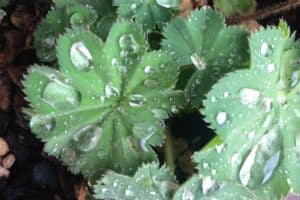
Some classic Venusian uterine tonics are very helpful here. Shepherd’s Purse and Ladies Mantle (Alchemilla vulgaris) are both excellent. Rose (Rosa spp.) is not commonly used for this situation, but I find it useful. Red Raspberry leaf (Rubus idaeus) is a classic remedy with a strong affinity for the uterus. Vitex (Vitex agnus-castus) is not typically a uterine tonic, but it is great for estrogen-dominant patterns, which are common in female hormonal and reproductive complaints. It is important to note, however, that Vitex is contraindicated for progesterone-dominant states because it can aggravate melancholy.
Excess Venus in the Venous Circulation
Another pattern with Venus excess is venous congestion, which presents as varicosities such as varicose veins and hemorrhoids. With varicosities, the veins relax, blood pools, and they become inflamed. Varicose veins are unsightly and painful, and hemorrhoids can be very uncomfortable and disruptive.
Venus in Deficiency
Venus Deficiency in the Female Reproductive System
In the female reproductive system, deficient Venus can manifest as amenorrhea (lack of menses) and dysmenorrhea with severe cramping and pain. PMS can occur with Venus in excess, but with Venus deficiency, PMS appears as a moody, withdrawn, depressed state rather than a tense, irritable one.
This pattern is exemplified hormonally by progesterone dominance and a melancholy state. Infertility is a common issue in this pattern. Of course, infertility is often complex and multifactorial, and there are factors on both the male and female sides of the equation. With Venus deficiency, because of a strong association with the ovaries, there may be issues with ovulation and implantation of the egg.
Herbs for Venus Deficiency in the Female Reproductive System
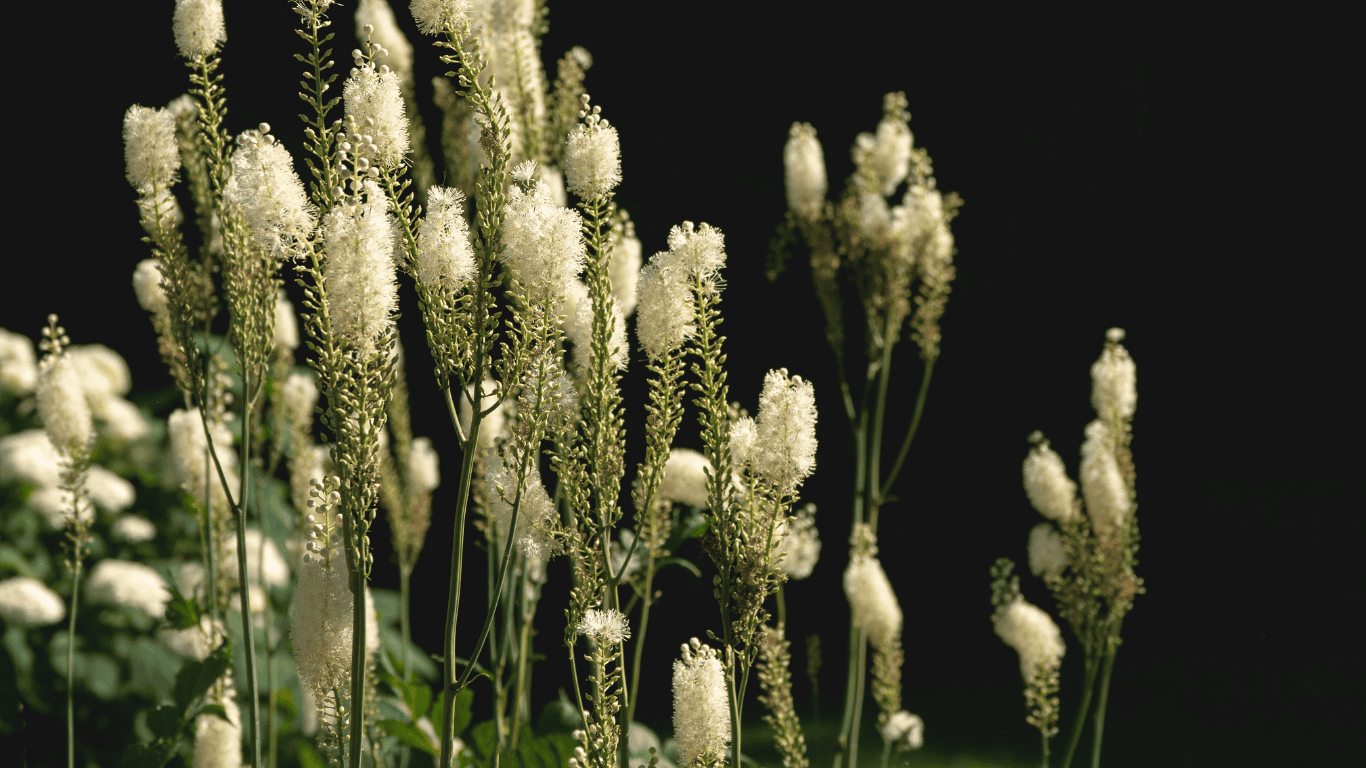
Spasmolytics are excellent here, especially for menstrual cramping and pain. The nature of the spasmolytic action is inherently Venusian because it relaxes tension, and relaxation is a prime characteristic of Venus. Cramp Bark (Viburnum opulus) and its relative, Black Haw (Viburnum prunifolium), are both excellent smooth muscle spasmolytics. I prefer Black Haw because it has a relaxing and tonifying effect. Black Cohosh (Cimicifuga racemosa) is another excellent Venusian remedy.
Venus Deficiency in the Urinary Tract
In the urinary tract, Venus deficiency can lead to generalized kidney deficiency, which manifests as a lack of urination, poor nephron filtration, and can lead to degenerative kidney disease. High blood pressure can occur because if you’re not urinating, fluids accumulate and can strain the heart, which is why people with hypertension are given diuretics to drain excess fluids.
Venus deficiency can cause tension in the bladder and ureters because the tissues cannot relax, making stone formation more likely. When Venus is deficient, Mars can become excessive, making people more prone to infections, heat, inflammation, and irritation in the urinary tract.
Herbs for Venus Deficiency in the Urinary Tract
Tension in the urinary tract is common with kidney stones. Many herbs in this category also serve as effective urinary tract anodynes, relieving pain caused by inflammation, irritation, or infection.
Kava kava (Piper methysticum) is excellent here. Most people think of Kava kava as a relaxing, calming sedative, but it is also a mild stimulant. This may be why it is traditionally used for social situations, helping people feel relaxed and at ease while staying engaged. Many use Kava kava for stress, nervousness, and anxiety, but the Eclectics used it as a urinary tract spasmolytic, and it is perfect for that. I have seen Kava help acute cases of kidney stones.
I also like other smooth muscle spasmolytics, such as Cramp Bark and Hydrangea (Hydrangea arborescens), which is specific to the urinary tract and excellent for deficient Venus. Hydrangea works on the kidneys and urinary tract to relieve pain, especially from heat, inflammation, or irritation, which is an excess Mars pattern and indicates Venus deficiency. Hydrangeas are beautiful, showy plants that are morphologically Venusian.
General diuretics often correlate with Venus because they act on the kidneys. There are Saturnian diuretics, too, many of which are better described as aquaretics that increase urine output through mineral exchange rather than directly stimulating the kidneys. One of my favorite Venusian diuretics is Cleavers (Galium aparine), which I find to be Venusian both physically and psychospiritually.
So, that was a brief overview of Venus in excess and in deficiency, along with some herbal treatment options. Next, let’s look at the nature of oppositions.

Oppositions to Venus
In medical astrology, everything is interconnected. Nothing can be seen in isolation, and one of the best ways to look at things holistically is to consider oppositions. Excess and deficiency are a spectrum of opposites. Everything in astrology is a spectrum of opposites, with one thing on one side of the circle and its opposite on the other.
If we look at the signs of the zodiac, Venus governs two primary signs: Libra and Taurus. The opposing signs are Aries (opposite Libra) and Scorpio (opposite Taurus). Mars traditionally governs Aries and Scorpio, so Mars and Venus are opposing forces, which makes sense on many levels.
When there are issues with Venus, Mars can be a significant contributing factor, and vice versa. On the level of the psyche, Venus represents the aspect of the self that seeks relationship and the other, with the pinnacle being love. Not only the love of intimate partnerships, but also other types of love. English has only one word for love, while other languages have many. We say “I love you” to our mothers and also “I love cake.” Your love for cake, hopefully, is different from the love you have for your mother, yet we use the same word. There are varying degrees and more than one type of love, but at the core, it all comes back to Venus.
Oppositions are about finding balance. The dynamics of Venus–Mars, Aries–Libra, and Taurus–Scorpio offer insights into finding balance within this planet.
The Aries–Libra Axis
When we look at the Aries–Libra axis, we see the dynamic of self and other. Libra is about relationships and how we relate to others. Aries is focused on the self. Relationships can be complicated, and imbalances often show up when one or both people have excess or deficiency in these signs. One person might be self-focused, acting only on their own wants and needs, with little consideration for their partner. On the other hand, someone too focused on the other person might become enmeshed, always wanting to please and do things for them. They forget to take care of themselves. Of course, these situations lead to imbalances in relationships.
We can get relationship clues with the Aries–Libra axis. Health in a relationship means taking care of yourself as well as considering the other person. You have to make sure you don’t lose yourself. At the same time, you have to make sure that you aren’t overly narcissistic and just worried about yourself. This sounds simple on the surface, but as anyone who’s been in a relationship knows, this can be a challenge.
The Taurus–Scorpio Axis
The Taurus-Scorpio brings interesting dynamics to consider around Valentine’s Day in terms of relationships and love. Taurus represents our values — what’s important in our lives, and what must we come to terms with? You have to understand that about yourself. An essential part of self-discovery is knowing what you value and what is important to you, so you can bring that into a relationship.
It is also essential to recognize others and see their value. The Scorpio aspect is the ability to see into the depths of another: what motivates them, what gets them up in the morning, and what is the structure of their nature that makes them act in specific ways. Our value structure determines how we act in the world. Value is at the basis of action.
I was single until my mid to late twenties, so I spent a lot of time observing people in relationships. I’ve noticed that people seeking relationships often look for the perfect partner, but may not have come to terms with themselves or what they value. They may have no idea what they’re bringing to the table. Perhaps a better approach is to become the optimal partner for someone, rather than just looking for one. Focus on yourself, not in a narcissistic way, but heal and transform yourself into the partner you would want. Cultivate those qualities in yourself. Would you want a super-sloppy person who doesn’t clean their house, make their bed, do their dishes, or cook good food? Do you do those things? If you don’t, but want that in another, you need to cultivate those qualities in yourself, because that is something you value.
Here’s the thing about Venus: it is the principle of harmony and congruency. Perhaps it is the “law of attraction.” What we attract is that which is sympathetic to our inner state. If you want to bring someone into your life who has specific values and ways of being, cultivate those in yourself, and you’ll be more likely to draw them toward you. This requires transformation, which is the Scorpio side. You must know your value system, know what you value in another person, and then transform yourself into that. I’m not an expert on the topic, although I have been in a healthy, happy, loving relationship for over 15 years, and I think this is the one thing that many people who aren’t in a relationship and want to be should do.
I hope you’ve found these examples of how to apply the principles of sympathy and antipathy to understand Venus in excess and deficiency at the physical and psychospiritual levels useful. As well as the herbal suggestions — what you might use to balance this planetary archetype.
The power of astrological medicine lies in its ability to reveal the correlation between what is happening in the body and what may be happening psychologically, emotionally, or spiritually. Spiritually, what is life trying to teach you? Which circumstances and experiences help you grow and become a better person? Healing ourselves and becoming better people is a spiritual pursuit.