
Why Your Herbal Library Matters (and Why Many Books Fall Short)
As herbalists, we love our books, don’t we?
Building an herbal library you can trust is essential, as you need excellent, reliable reference materials to learn about medicinal plants and continue practicing and searching for the right formulations for your clients.
Unfortunately, there are a lot of terrible herbal medicine books out there, and you have to be careful because a lot of those available on Amazon are not actually written by humans. Many books available right now are generated by AI, which is a bit frightening when you think about it. It is very important to make sure that your herbal library is written by trustworthy, experienced herbalists.
In last week’s post, I talked about the distinct types of herbal monographs. The most important monographs are clinically oriented, aiming to guide clinicians toward the appropriate use of an herb for a specific person. To achieve that goal, you must have excellent materia medicas at your disposal.
What Is an Herbal Materia Medica?
An herbal materia medica is a collection of clinically relevant herbal monographs. You can study these monographs to learn about the herbs. However, not all herb books have great materia medicas. The information you need in a materia medica is quite specific, and not all materia medicas are created equal. Not all of them will have what you need. I encourage you to develop your own monographs that make sense to you and contain the information you need — information that will help you to learn about medicinal herbs and support your clients. You’ll need materia medicas from herbalists you trust in order to begin building your own monographs.
People often ask me about my herbal library — which books are my favorites and which I reference time and time again. So today, I’m sharing my top five clinical herbal materia medica books with you, deliberately giving you a mix of older and modern ones.
Ellingwood’s The American Materia Medica
Let’s begin with Finley Ellingwood’s American Materia Medica, Therapeutics and Pharmacognosy. The first edition of this book was published in 1898. Finley Ellingwood was a physician in the Eclectic tradition of North America, which was a system of medical practice in the 1800s and early 1900s. The Eclectic Medical School closed in the 1940s.
Ellingwood was a badass doctor, and the way he describes the remedies in his book is super descriptive and useful. The organization of his materia medica is also excellent and easy to use.
For example, here are some listings from the book to give you an idea:
Group I: Agents Acting Upon the Nervous System
Division I—Sedatives and Depressants
Next, he lists the various chapters:
Chapter One—Sedatives Commonly Used in the Control of Fevers
Chapter II—Sedatives Commonly Used in the Control of Pain
Chapter III—Sedatives Used to Induce Sleep
Chapter IV—Sedatives Used for Their Influence on General Nervous Irritability
Chapter V—Minor Nerve Sedatives
Chapter VI—Depressants Used to Induce General and Local Anesthesia
Chapter VII—Sedatives that are Especially Useful in Diseases of Women – Emenagogues, ecbolics, oxytocics.
The divisions in this book are fantastic. This book was written at the advent of modern medicine, and many of its remedies are no longer in common use today. For example, he talks about chloroform, ether, nitrous oxide, cocaine, and ucaine. He lists menthol, which is still used in various ways, and novocaine, which has mostly been replaced by other drugs. This is all interesting because there are remedies beyond herbs here.
Division II—Stimulants and Excitants
Division III—Agents with Stimulant Properties Involved in Active Trophic or Tonic Properties
Group II: Agents Acting Upon the Heart
Group III: Agents Acting Upon the Respiratory Tract
Group IV: Agents Acting Upon the Stomach
Ellingwood organizes this book by organ system and by specific categories such as stimulants, tonics, relaxants, etc. These are very useful divisions for finding what you need. He also has a section on pharmacy in the beginning that’s quite interesting.
Next, Ellingwood gets into the monographs themselves and herbal preparations. He talks about the chemical properties of the herbs, which aren’t always clinically relevant or necessary. But then he goes into the symptomatology, and some of the specific indications you might look for. Finally, he goes into the therapy, explaining what each remedy is used for. Those sections are often very detailed, depending on the remedy.
I reach for Ellingwood often, and I like this book a lot. You can purchase it from Eclectic Medical Publications. It’s a little pricey, but it’s worth every penny. Sometimes you can find these books on the used book market.
King’s American Dispensatory
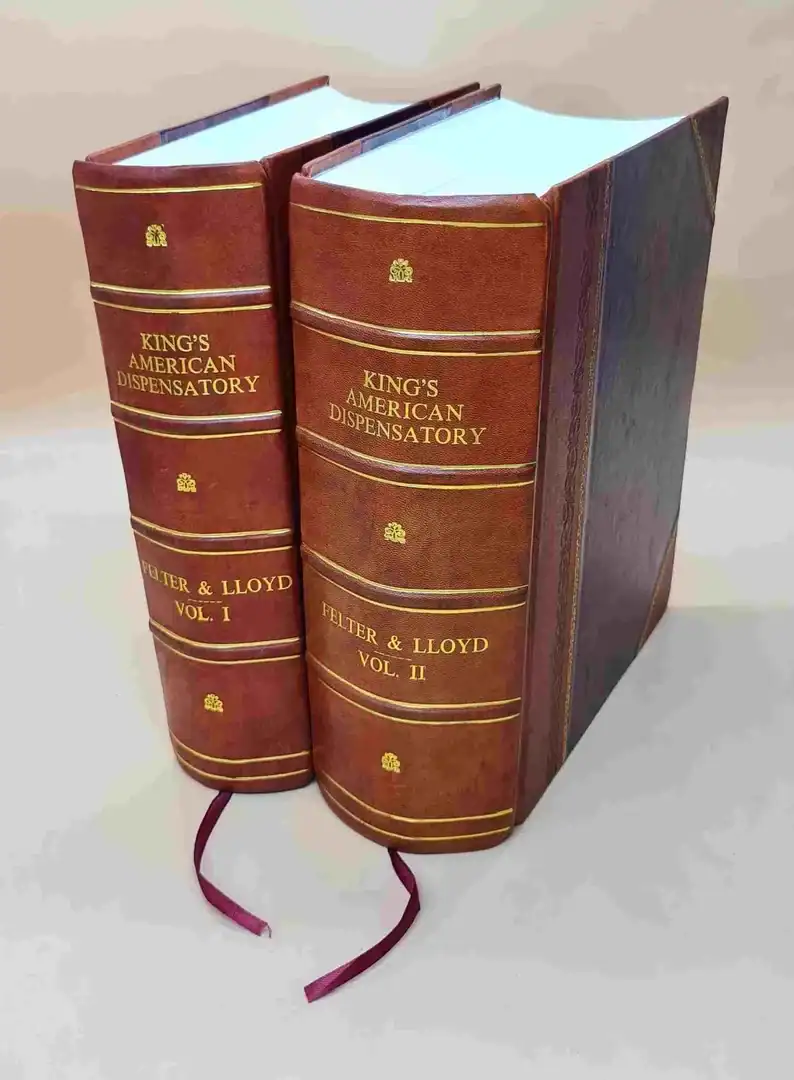
Our next materia medica is King’s American Dispensatory, a two-volume set. My wife Whitney bought this set for me a few years ago as a sweet Christmas gift. The authors are Harvey Wicks Felter and John Uri Lloyd, two prominent Eclectic physicians. Lloyd was more of a pharmacist, and Felter was the practitioner. This book was also published by Eclectic Medical Publications.
Similar to Ellingwood’s book, this book is well organized, with most entries arranged alphabetically. It does not have the same type of delineations as Ellingwood’s text. It is alphabetical but provides a bit more information about the herbs’ botanical sources. This text includes more history and chemical composition. From a clinical perspective, it’s good education to consider how the Eclectics talked about herbs and understand the words they used.
For example, in the monograph for Lemon Balm (Melissa officinalis), they list the actions, medicinal usage, and dosage. It says “[Lemon] Balm is moderately stimulant, diaphoretic and anti-spasmodic.” Some people hear stimulant, and they think, “What? Lemon Balm is not a stimulant. I thought it was calming.” It’s important to understand the Eclectics — when they use the word “stimulant,” they don’t mean a caffeine-type of stimulant or even a nervous system stimulant. They mean that Lemon Balm stimulates blood flow to the periphery and to the skin surface.
They continue, “A warm infusion drank freely has been serviceable as a diaphoretic in febrile diseases and painful menstruation, and to assist the operation of other diaphoretic medicines; in combination with ipecacuanha and potassium nitrate, a valuable diaphoretic is formed. It is also occasionally used to assist menstruation. When given in fevers, it may be rendered more agreeable by the addition of lemon juice. The infusion may be taken ad libitum.” Ad libitum basically means as much as you want.
Of course, this is not all there is to know about Lemon Balm, but it is how the Eclectics used it — they focused predominantly on the diaphoretic property. They didn’t highlight its carminative or nervine properties, though they wrote about its antispasmodic properties and its use for painful menstruation. We know that Lemon Balm is specifically cooling to heat, irritation, and hyperthyroid patterns.
This example of Lemon Balm shows us why it is important to have a broad range of reference materials. We can see the Eclectic point of view and then bolster our knowledge with a more modern perspective to get a complete picture.
I think this materia medica set belongs on every herbalist’s shelf. These are beautiful books and will remain relevant indefinitely.
Matthew Wood’s The Earthwise Herbal
Now let’s take a look at a modern materia medica from a longtime teacher of mine, Matthew Wood’s The Earthwise Herbal, Volumes I and II, published by North Atlantic Books. Volume I focuses on Old World Medicinal Plants, covering the European materia medica, while Volume II focuses on New World Medicinal Plants, herbs of North America.
These books are organized alphabetically by monograph. Wood includes the herb’s taste and associated tissue states. The Wild Yam (Dioscorea villosa) monograph, for example, begins with a brief description of the herb and then explains its therapeutic uses.
Matthew is a scholar and knows his history well, having studied the traditions of Western medicine extensively. So he understands how these herbs have been used over time. Many of these monographs include quotes from old doctors from the Thomsonian, Physiomedicalist, and Eclectic eras. He includes Root doctors, local knowledge from people in North America, and, in Volume I, the European tradition. He quotes Dioscorides, Pliny, Hippocrates, and Paracelsus. In the Wild Yam monograph, Wood quotes Fife, Ellingwood, Felter, and Cook. He also offers his own knowledge and expertise from his clinical work with these plants.
The way Matthew teaches herbs is pattern-oriented, much like me. He weaves together not only what the plant does and not just the types of diseases it treats, but also the patterns it helps treat. By looking at the constellation of symptoms in the person, you can see the deeper interconnections that help you use the herb effectively.
Back to the Wild Yam monograph, he spends two pages giving us the history and his own experience, and uniting the tastes, actions, energetics, tissue states, and patterns.
Wood lists the tastes of Wild Yam as sweet, earthen, acrid, and moist. Tissue states for Wild Yam are atrophy and constriction. Next, he lists the specific indications, which are typically drawn from the homeopathic and Eclectic indications, which tell you what to look for in the herb’s properties — what might you see in a person that would point toward this plant? He answers that in a quick-reference bullet format, which I find very useful. The specific indications are also organized by constitution, complexion, and characteristic symptoms.
For example, for Wild Yam, the constitutional and characteristic symptoms are “thin, undernourished people with spasms in the intestines, poor assimilation through the small intestine, decalcification”. And then he says that the tongue is usually coated. The skin may be yellow and dry, and the conjunctiva may be more or less yellow — those would be liver symptoms.
Then Wood goes through specific indications by organ system. For example,
Respiration: asthma, whooping cough, and bronchitis.
Digestion, Liver, and Gallbladder: Spasmodic hiccough, abdominal distension, and gas; belly muscles tender and contracted; abdominal muscles contracted, constant pain; colic, sharp, cutting pains; in the gallbladder, abdomen, or ovaries….
Notice those super-specific descriptive words, such as “colic, sharp cutting pains; in the gallbladder, abdomen, or ovaries; relieved by pressure, by supporting the abdomen, by drinking, worse from eating.” All of those indications are really helpful because it’s not just abdominal pain; it’s very specific types of abdominal pain.
What is the nature of the pain? In this case, it’s “sharp, cutting pain, relieved by pressure. Bowel spasm; often the pain extends throughout the body. Abdominal cramping, uterine cramping, gallstones, colic, and nausea of pregnancy. Female reproductive dysmenorrhea due to ovarian neuralgia. Severe menstrual colic. Menopausal women with hip joint disease, muscular and skeletal hip joint deterioration. Cannot find a comfortable position to lie in, tossing and turning at night.”
Then he goes into preparations, dosage, and cautions. Then his references, from which he’s pulling the information.
These are super useful monographs. Matthew is a genius in his way, because it’s all cross-referencing systems. Along with The Earthwise Herbal, Matthew has a third book, the Repertory. This repertory is not designed to teach you the herbs; it is a reference guide. The repertory is organized by energetics, constitutions, or tissue states, organ systems, and then by chronic and acute conditions. For example, if we were to go to the six tissue states under Energetics, he provides information about each tissue state, followed by a list of recommended herbs.
For example, with cold, we have a list of helpful herbs:
Angelica archangelica is warming, stimulating, dries water, and generates oil. Artemisia absinthium is warming, simulating, softening, and anthelmintic.
The best way to use Matthew’s system is to think of a person with a specific issue in a particular organ system, and then go to that organ system in the repertory. If you’re having a hard time figuring out, for example, maybe there’s an issue in the nose, sinuses, and respiratory tract. Go to the respiratory tract in the book, and you’ll see specific symptoms: nosebleeds, nasal polyps, allergies, adenitis, an initial twinge of a head cold, rhinitis, sinusitis, head cold.
And then a formulary. So let’s say you’re working with someone with sinusitis, rhinitis, and a head cold. Now, the way this works is, you’ll see a big list of remedies — a simple list with a couple of specific indications in parentheses. The ones he thinks you should pay more attention to are in all caps.
For example:
Achillea: hot tea. Allium sepa: runny nose with excoriated nostrils. Althea: hoarseness, laryngitis with head cold. Anemopsis californica: swelling and congestion of the nose, subacute with thick mucus. Andrographis: nasal congestion, cough, sore throat, muscle stiffness, fever. Asclepius: snuffles in children. Ganoderma: allergic, acute, subacute. Euphrasia: sniffles in children, frontal sinus infection. Mentha peperita: inhalation; hot tea is diaphoretic, relaxing, cooling.
Matthew gives you specific indications, though some entries simply list the herb and others give you specifics. So you look through these and sort out which herbs stand out to you. And then as you go through that repertory, you can look up the specific herbs in Volumes I and II. So those three books work like a cross-referencing database. You use the repertory to compile your list of herbs that you would consider for a specific person. And then you can look them up to get more details in the main materia medicas. So that’s Matthew’s system, The Earthwise Herbal Repertory, and The Earthwise Herbal, Volumes I and II.
Cook’s Physio-Medical Dispensatory
The next clinical materia medica is the Physio-Medical Dispensatory by William Cook. This book is available online for free as a PDF download. Cook’s Dispensatory is direct and to the point; the monographs are concise, and there’s something about the way he writes about the herbs that really packs a punch. He conveys essential information quickly, easily, and straightforwardly. I could probably learn something from him about writing about plants like that, as I tend to be more long-winded.
The Physiomedicalists had a different way of talking about herbs than the Eclectics did. They rely heavily on the stimulant, relaxant, tonic way of thinking, coupled with the herb’s actions. They also formulated and compounded a bit more than the Eclectics. The Eclectics used more simples and smaller formulas. So with Cook, you’ll get more complex formulas, which I appreciate. As a formulator myself, I like the way Cook describes some of the formulas, as well as some of the simple pairs and triplets.
Check out William Cook’s Physio-Medical Dispensatory; you can find free PDF versions online, which is fantastic.
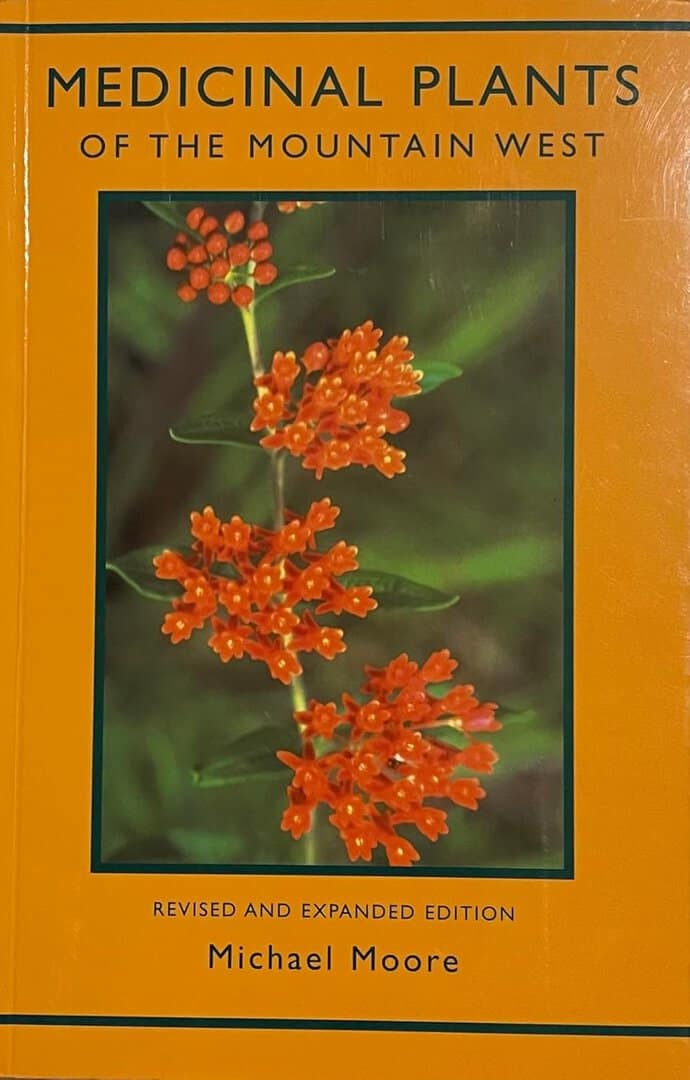
Michael Moore’s Bioregional Materia Medicas
Michael Moore has many materia medicas organized by bioregion. In that way, they are a little less convenient, because they’re built more for the wildcrafter. This also makes them very useful, because they’re part plant ID, part wildcrafting guide, and also therapeutic.
Regarding his therapeutic information, I like how Moore describes the herbs. Of all the herbal authors I’ve read, Michael Moore is the most entertaining. If you’ve ever read Michael Moore’s books, you know that he’s a great writer and he’s hilarious. His examples are funny and enjoyable to read, which is a breath of fresh air.
Medicinal Plants of the Pacific West covers the whole West coast from Alaska down through British Columbia, down through where I live, here in Western Washington and Western Oregon. I believe it also covers coastal Northern California.
Michael also has Medicinal Plants of the Mountain West, which covers the Rockies and westward. Sorry to all the East Coasters, he doesn’t cover East Coast herbs. He has the Pacific West, the Mountain West, and the Southwest, which covers desert plants. These are all excellent, very useful books. Especially for those of you who live west of the Rockies, these books are invaluable. Even if you don’t live west of the Rockies, it’s a good idea to pick up these books, since the information is so valuable. He has herbs in there that you won’t find in most standard materia medica. He has a chapter on Balsam root — Moore is the only herbalist I’ve found with information on Balsam root and Pearly Everlasting.
Michael also has some excellent small booklets available for purchase on his website, The Southwest School of Botanical Medicine. Really nice quick-reference guides for the pharmacy and the clinic. Quick lists of specific indications, quick reference guides, almost like a repertory. I recommend picking up copies of those.
So those are some of my favorite herbal materia medica books. It’s difficult to choose just five! But the ones above are the five I use most consistently. I will also mention that I have been using David Winston’s materia medicas more lately, and they are fantastic. Unfortunately, they are not published in book form, so if you want David’s materia medicas, you have to join his program to access them. For me, it was worth the price of the program just have those materia medicas. As many of the authors I covered today are no longer with us, I want to highly recommend that you study with the teachers who are still here, like Matthew Wood and David Winston.
Materia Medica Monthly
Right now, we are in open enrollment for Materia Medica Monthly!
However, we are at the tail end of our 2026 enrollment period, which closes at midnight Pacific tomorrow (1/30/2026). This is an amazing deal — join Materia Medica Monthly for just $27/month, or pay for a year upfront and get 12 months for the price of 10. This is the only time this year we’ll offer the annual plan, which gets you 12 months for the price of 10.
Also, for those of you who sign up now, you will get access to a special workshop series available only to those who sign up during this window. Students who are already in Materia Medica Monthly won’t get these workshops; they’re exclusively for you.
It’s a great opportunity to have direct contact with me, ask me all your questions about herbs, and get some really amazing live classes with me.
We would love to have you join us for Materia Medica Monthly. This program is our way of providing some excellent educational content for those of you who want to continue your development on the plant path. Maybe you’re on a budget, and you can’t afford to enroll in a $2,000 course. I totally get it, especially given what’s going on in the world right now. Things are tight. So Materia Medica Monthly is a great option for you!
Sign up now to get exclusive access to my top secret Live workshop series and get fresh monographs every other month. Between monographs, you’ll have a live workshop with me, with a Q&A session at the end. This is the best way to get direct contact with me on a consistent and regular basis.