
Recently, I was looking through my library and considering the earliest and most impactful books from when I began studying herbalism. When I was just getting started on this path, medicine-making was especially exciting to me (it still is!), and that seems to be true for many people.
The act of preparing plants, processing them, and transforming them into a form you can use that will positively impact your health, and that of your friends, and your clients is truly empowering.
The Herbal Medicine-Maker’s Handbook was the textbook we used in the herb lab during my studies at Bastyr University. As far as I’m aware, it’s one of the more comprehensive handbooks for herbal pharmacy, and I think it’s the best place to start if you want to dig into this art and craft.

Preparing Herbs
In this book, Green walks you through the process, in order, from raw plant to final product. The book begins with a bit about herbal gardening and wildcrafting practices, the process of harvesting those herbs, and preparing them for use in medicine. Often, the process of medicine-making starts by rendering the herb into a smaller size. This is what I refer to as particle or size reduction. Garbling is the process of cleaning and separating the parts of the plant you use from the parts you don’t.
With roots, for example, you’re cleaning off dirt and any rot. With the aerial parts, you cut the entire above-ground portion of the plant and clean it of dirt. You may be stripping leaves off of stems, for example. This process can be tedious and time-consuming, but it’s an essential part of medicine-making, and a good grating of your herbs is the difference between getting a strong medicine and a weaker one.
Stems are not notably medicinal in many plants and tend to be dense and heavy, so they contribute a significant amount of weight, which matters when you’re determining the weight-to-volume ratio of a tincture. If a lot of that weight is in the stems, it will affect the potency and strength of your final tincture, so the garbling process is critical.
Pharmacy Equipment
Next, Green discusses pharmacy equipment. He covers the basic tools you need for your kitchen pharmacy, and it’s important to note that this book is geared toward the home or small clinic medicine-maker. This is the equipment he recommends for your home kitchen, so if you move into commercial production, you’ll use different equipment because the scale of production is larger. For example, in commercial production, instead of mason jars and a small press, you might use stainless extractors, larger presses, and large distillers. I just want to be clear that the equipment recommendations in this book are more for home and small-scale use.
Menstruums and Solvents
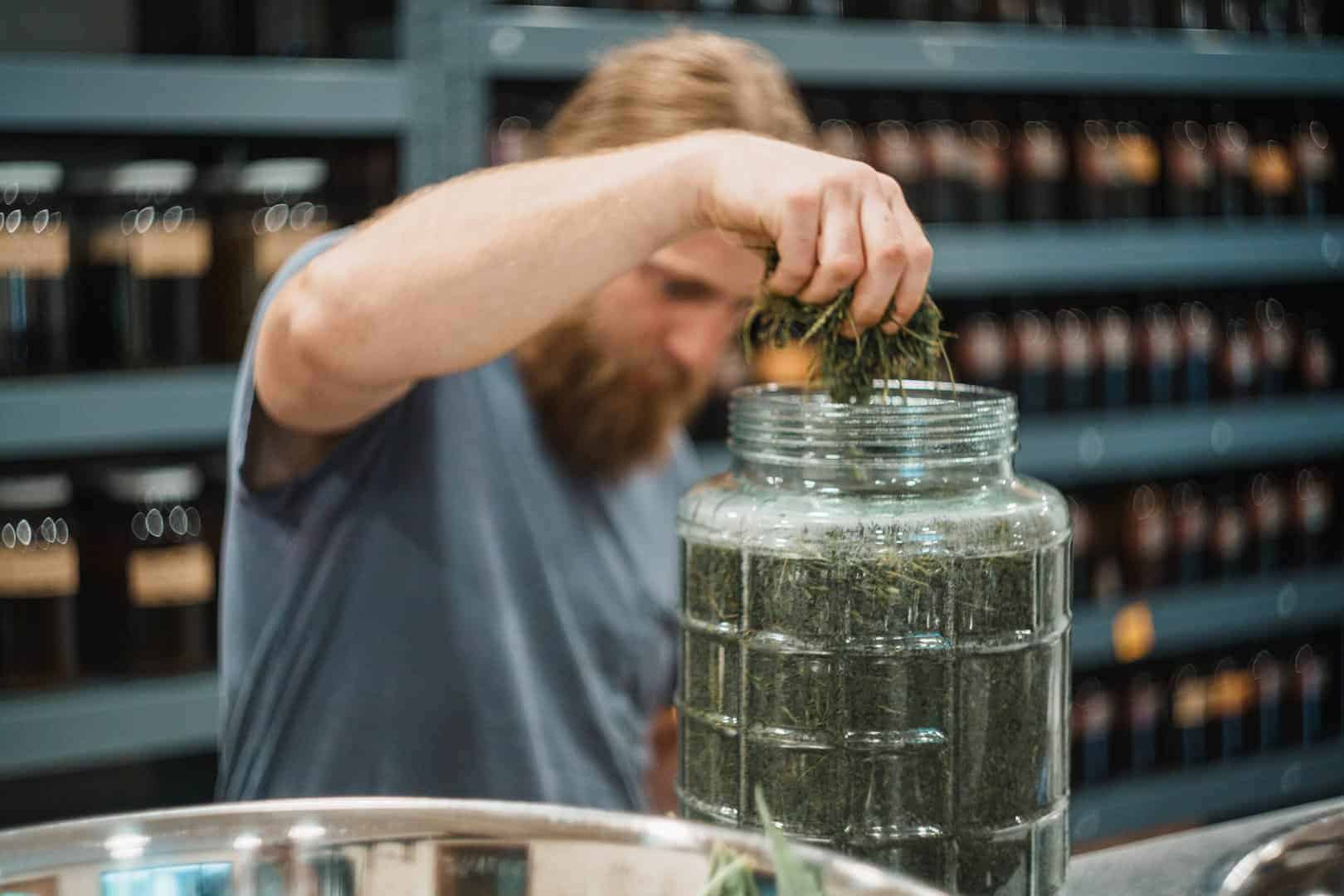
Green then goes through the main solvents you need to know — I love that this is not just a recipe book. He goes into detail, breaking down menstruums (the main liquids you use as solvents to extract herbs) and why you would use each one. He goes through water, alcohol, wine, vinegar, and glycerin. He talks about mixtures of water and alcohol, oil and glycerin, and how various menstruums act on the plants, what they extract biochemically, and why you would prefer one menstruum over another. This is really important because good medicine making ultimately comes down to choosing the right menstruum for each plant.
For example, trying to extract the resins from Frankincense with water, or the mucilaginous polysaccharides from Ulmus Rubra with 95% alcohol, simply won’t work. So this is where understanding the specific nuances of your menstruums, what they extract, when they are appropriate or inappropriate, is very important.
James gets into some excellent tricks. For example, when tincturing an herb rich in alkaloids, he discusses the importance of vinegar. He explains that we often use it because it extracts minerals, but it’s also great for extracting alkaloids. When you add a small amount of vinegar to your water and alcohol menstruum, you’re actually acidifying that menstruum. That acidic menstruum will draw the alkaloids out significantly better. Using vinegar in your Lobelia tincture is usually a good idea. You can even add a little to your Ashwagandha tincture to extract its alkaloids.
I think the chapter on principal constituents of plants and their solvents is the most important section of the book, and if you’re serious about being a good medicine-maker, this is the chapter you need to read. These are the fundamental principles of good medicine-making. Studying pharmacognosy or plant chemistry won’t make you a better clinician or herbal medicine practitioner. It will make you a better pharmacist and medicine-maker. So this chapter is super key, and I love that he breaks it all down for us because people are always asking me, “What percentage alcohol do you use to extract this herb, or that herb?” It really comes down to knowing the chemistry of the herb and the solubility range of those chemicals.
For example, Green says, “For preparation of extracts with the highest levels of alkaloids, water, vinegar, alcohol menstrua having a 35% water to 10% vinegar to 55% alcohol content are recommended.” He goes through the information you need for balsams, bitter compounds, essential oils, camphors, flavonoids, glycosides, gums, gum resins, mucilages, sugars, starches, proteins, resins, oleoresins, saponins, fixed oils, tannins, and so on.
Forms of Herbal Medicine
Next, Green gets into forms of herbal medicine. This is a straightforward section where he breaks down the various types of preparations, including internal, topical, and menstruum-based preparations.
Topical Preparations
Green covers various topical applications for use on the skin, in the eyes, in the ears, and for the mucosa — for example, rectally, intravaginally, and in the throat. These preparations could be liniments, lotions, creams, hydrosols, flower essences, medicated oils and salves, ointments, balms, suppositories, boluses, fomentations, poultices, baths, douches, and more.
Suppositories and Boluses
These are good preparations to know about, specifically for treating intravaginal infections. Suppositories are essentially salves that are poured into bullet-shaped molds, making them easy to insert.
Internal preparations
In this category, there are menstruum-based preparations, such as those made with water, like infusions, decoctions, concentrates, jellos, hydrosols, and flower essences.
Green covers many methods of preparation, even the simple ones, like making tea — what is the difference between an infusion and a decoction? How do you know which method to use for a particular herb? If you’re not familiar, an infusion is how most people think of making tea: you simply pour hot water over the herb, cover it, and let it steep for a while. Decoction is a more active method of boiling, in which you add the herb to water and simmer it on low heat for a while. But how do you make a good decoction? Do you want it boiling? Should you gently simmer? Do you cover it or not? How long do you decoct it? These are all topics covered in this book.
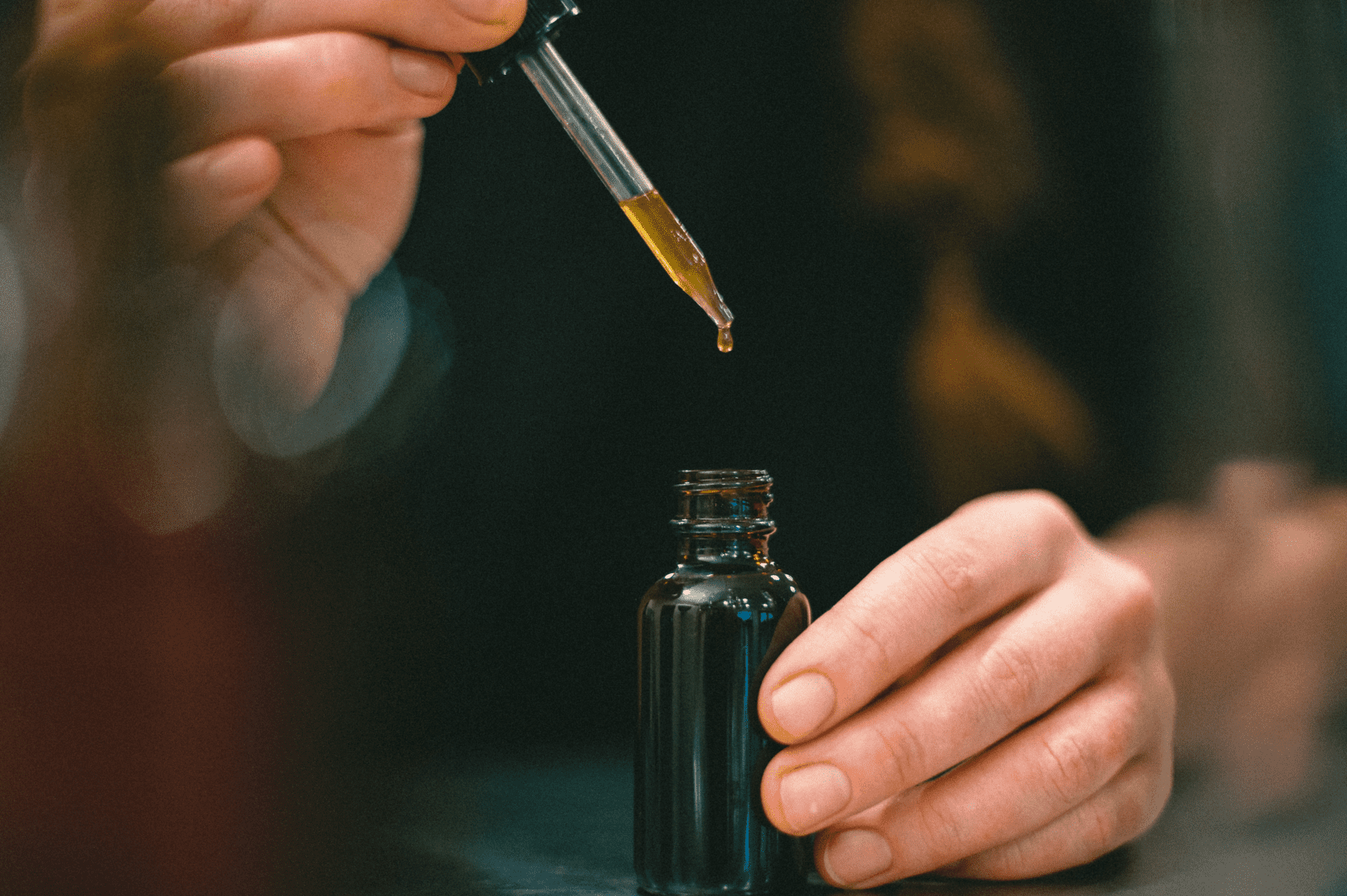
There are those made with alcohol — these are basically tinctures, and there are various methods for making them. Green goes into great detail on tincturing by maceration and by percolation.
He discusses how to make fluid extracts or 1:1 extracts, wine, vinegar, glycerin, and oil. These are all different ways of drawing out the plant constituents based on which menstruum you’re using. There are sugar and honey-based menstruums.
And finally, some preparations don’t use a menstruum, such as a succus (juice of the plant), capsules, pills, powders, lozenges, and various ways of preparing a dried, powdered herb to ingest the whole herb.
Tinctures
As someone who generally tinctures medicinal herbs, I really like the tincturing sections in this book, where Green goes into tincturing by maceration and by percolation. Of course, the herbal tincture is one of the most commonly used forms of herbal medicine today. Why is that?
For one thing, tinctures are well-preserved as long as the alcohol content is over 25%. I prefer mine to be at least 30% alcohol, but once you’re over 25%, your tincture won’t go bad unless you do something drastic with it, like leave it on the dashboard of your car in Phoenix, in August, or something drastic like that.
Second, tinctures are concentrated. With a tincture, you can usually take a small dose. Depending on the herb, between one and five milliliters of a tincture is sufficient. There are some very potent herbs we take only in drop doses. But their concentration makes them convenient for many people. You don’t have to drink a large cup of foul-tasting tea, mix a powdered blend, or swallow huge capsules. It’s just a small amount of liquid tincture, perhaps in a glass of water. You knock it back and you’re good to go. Tinctures are also easy to travel with — you can take them in your purse, to work, wherever you go.
Third, most herbs tincture well. There are a handful of herbs that are best prepared as water extracts or that don’t tincture very well. But most plants do tincture well. There is a spectrum from more watery tinctures at around 30% alcohol, which will draw out water-soluble compounds, to high-alcohol-soluble compounds such as resins, volatile oils, and oleoresins, which will only extract at high alcohol levels.
Green explains the folk method, which is neither my preferred nor recommended method. Perhaps if you are a homesteader and just want a couple of herbs on hand that you grow in your garden, and keep your medicine-making very simple, then the folk method could be fine. However, suppose you want to consider yourself a professional herbalist and take medicine-making seriously. In that case, I think it’s essential to learn the basic math needed to calculate the weight-to-volume ratio of the herbs.
For those of you who aren’t familiar with the weight-to-volume ratio and what it means, this is a way to calculate how many grams of herb are present per milliliter of tincture. This is denoted as grams per milliliter. For example, you’ll see 1:5, which means you have one gram of herb per five milliliters of tincture. One to one would be 1 gram of herb per 1 milliliter of tincture, expressed as 1:1. A one to two tincture of a dried herb extract would be, for example, 1000 grams of herb, and a total of 2000 milliliters of menstruum, which is whichever strength of alcohol needed to extract that specific herb.
Another reason to use this more precise method — suppose you’re working with a client and administering a remedy, and you run out and need to make another batch. In that case, it’s essential to ensure the new batch is of the same quality, concentration, and consistency as the previous batch, so you can give it to them with confidence and know it will work.
I tincture herbs and make spagyrics commercially, so this is something I have to do to ensure our offerings are precise, but I also think it’s the responsible thing to do. This is especially true when working with more potent herbs such as Poke root (Phytolacca americana), Pulsatilla (Pulsatilla spp.), Lobelia (Lobelia inflata), and Cayenne (Capsicum annuum). You need to know your ratios so you don’t give someone too much of a particular herb.
Tincturing Fresh Herbs
In the section on tincturing fresh herbs, Green discusses using 95% alcohol with all fresh herbs at a 1:2 ratio. I can agree on the 1:2 weight-to-volume ratio. What I don’t agree on is using 95% alcohol on everything fresh. I think more precision is needed, because every herb has its own unique water content—a specific percentage of water. This water content varies widely among herbs. When you pour 95% alcohol over a fresh herb, the water in the herb naturally dilutes the alcohol down from the 95% you began with to a different strength, which entirely depends on how much water is latent within that herb.
Additionally, as I mentioned earlier, each herb has a specific percentage of alcohol that optimally extracts its unique chemistry. So the plant has its unique chemistry, and that chemistry has a particular alcohol strength that best extracts it. Then each herb has its own unique percentage of water latent within it. When you pour 95% alcohol onto a fresh herb, the water in the herb naturally dilutes the alcohol, resulting in less than 95%, depending on how much water is naturally present in that particular plant. It seems unlikely that adding 95% alcohol to any given fresh herb will automatically dilute it to the exact percentage of alcohol needed to optimally extract the herb’s chemistry.
I know this because we calculate these variables in our lab. We weigh each fresh herb, dehydrate it completely, and then we reweigh it. We do some simple math to calculate the percentage of water in the herb. We calculate how many milliliters of water correlate to the weight of water. Based on the size of the batch — for example, 25 pounds of herb — we can determine how much of that 25 pounds is water weight, which equates to the volume in so many milliliters of water. Then we know how much water is in the herb alone, and we take the information we have about the strength of alcohol that best extracts that particular herb. Then we calculate how many milliliters of menstruum are needed at that alcohol percentage, account for all the water already in the herb, and subtract that amount from the menstruum and the water ratio. It very rarely turns out to be a situation where we can simply dump 95% alcohol over the herb. There is always some amount of water added to the menstruum to extract the fresh herb, after accounting for the water already in the herb. We have to understand how much the latent water in an herb will dilute the menstruum, so that once it is diluted, we have the optimal percentage range for extracting that specific plant.
I find this very common in how fresh herbs are discussed. There are many herbalists I respect who are very knowledgeable. But for some reason, with fresh herbs, they seem to take the simple but imprecise route and just use 95% alcohol. I think it’s essential to treat each herb individually, understand each plant’s nuances and unique needs, and prepare it accordingly. So that’s just a little bit of my criticism of that approach. Otherwise, all the tincturing information in this book is excellent.
Infusions
Green discusses many forms of infusion in this book, including wine, vinegar, glycerin, and oil. The oil infusion is significant because the oil base serves as the foundation for many other preparations. The preparation of the oil infusion is the beginning of many of those topical preparations, including ointments, salves, and balms, which, in many ways, are similar, just different consistencies. Ointments are a little softer than salves. Salves tend to be a little firmer, and balms are often a bit more aromatic.
Lotions and creams are emulsified oil-and-water preparations that begin with an infused oil. They can also be made with hydrosols as the watery component of the preparation. So rather than using straight water for the cream, you can make an herbal tea or a hydrosol to further medicate your baseline.
Other Internal Preparations
Other preparations covered in this book are things like herbal jellos, syrups, honeys, oxymels, and electuaries. Syrups are an excellent way of administering herbs. The most common use is for cough syrups, which makes a lot of sense because sugar and honey, by nature, are demulcent, soothing, and mildly expectorant, making them good for sore throats and coughs. The Physiomedicalists and the Eclectics used syrups quite a bit, both for preservation purposes and as an ideal delivery system. A little bit of honey makes medicine go down better, so I really like the syrups section.
Oxymels, in case you’re not familiar, are a combination of vinegar and honey in extract form. Oxymels can be used for salad dressings, for example.

Who This Book is For
As already mentioned, this book is written as a manual for home use — for example, for the herbalist making medicine for themselves and their family and friends or in a small clinic situation. This book is not designed for larger-scale manufacturers in terms of the equipment that Green covers.
I think anybody who wants to learn how to prepare herbs should have a copy of this book on their shelf. Study it, use it, work with it. It is an enjoyable read, and James Green is an excellent author. He wrote another book I use a lot, called The Male Herbal. As a man, I really appreciate it. It is one of just a few herbal books I know of written for men’s health. There are many books on women’s health, but not many on men’s health. Thank you, James, for writing that book. I appreciate it, and I know many other men do too. The Male Herbal explores the nuances of men’s health and how to address various issues through herbal medicine, diet, and lifestyle.
I highly encourage you to pick up a copy of The Herbal Medicine-Maker’s Handbook. I’m not in any way affiliated; I just like to recommend specific books because I get a lot of questions about book recommendations. I also enjoy doing my part to help uplift and spread the word about good herbalists and support their work, and I really appreciate James Green’s books and want to support his good work.