
One of the unique things about being an herbalist or practitioner is that from time to time, you get to be your own guinea pig. When you get sick or experience a particular type of health problem, these can be pivotal moments on your plant path, because you get to experiment with and experience the possible remedies for that situation. You have the opportunity to understand and test your herbs through direct experience. And while, of course, you wouldn’t want to experience every single disease and cure it yourself (that would be awful), you’d be a great herbalist if that did happen to you.
We will all experience health challenges along the way, and we will all get sick. This can test your faith in your protocols, plants, and remedies. Which remedies will you turn to when things get tough?
My Personal Experience with Sinusitis
Recently, I got sick. At first, it seemed like I had a typical cold—cough, stuffy nose, sore throat. I was sick for a few days, I wasn’t feeling great, but I thought, “Eh, it’s not that bad. Maybe I just slept with my mouth open, and I’m stuffed up or something.”
You know when you’re getting sick, but you make an excuse? That was me. I thought I’d be fine, but my throat started hurting, and I started to feel like the congestion was moving into my lungs. So I did the treatments I usually do when I’m not feeling well, and within two or three days, it started to lift a bit. I started feeling better, so I stopped treating myself and felt fine for a few days. Then, all of a sudden, my nose became very congested, but I didn’t have any other symptoms. I was really congested and had a lot of mucus, and I realized the cold was coming back. I went back to my usual treatment routine, but the intense nasal congestion persisted. It got to a point where I wasn’t sleeping at night because I couldn’t breathe. When I would fall asleep, my mouth and throat would get really dry, and then I would wake up—it was horrible. I was confused as to why the usual treatments I do for myself weren’t working.
During that time, I had an appointment with my naturopath, with whom I work for my back injury. He noticed I was sick, and I said, “Yeah, I’ve got this stubborn cold. It just won’t go away.” He asked how long I’d had the cold, and I realized it had been about a week and a half. I told him what I was doing to treat it. He told me it didn’t sound like a cold and that it was probably a bacterial sinus infection, which needed to be treated right away.
My experience is that we’re often our own worst doctors. If you try to diagnose yourself, you probably won’t do a great job. It’s tough to be objective with yourself. You can study health, pathology, pathophysiology, etc., and you might feel like you have a good sense of what’s going on with the body. However, when you’re experiencing it firsthand, sometimes everything you’ve learned goes out the window, and you forget it all. That is why we’re often our own worst herbalist or physician, because we lack the detachment to observe ourselves from a distance and the ability to analyze ourselves.
When it comes to myself, I often try to tough it out. But my naturopath said, “No, don’t do that.” He wanted me to take antibiotics because it had been going on for so long, and he was concerned that it would just get worse. My face was puffy, red, and tender around my sinuses. I couldn’t sleep because when I would lie down, everything would stagnate, and the pressure would increase. My face hurt like nothing I had ever experienced before. I couldn’t breathe, and it really sucked.
So, I started doing something that I’d like to share with you here: using medicated neti pots. The medicated neti pots I administered to myself knocked the sinusitis out in a matter of two or three days—it was surprisingly quick.
I would like to discuss the medicated neti pot as a method for topical application of herbs to treat the upper respiratory tract. But before I do, for those of you who may not be familiar with sinusitis or rhinosinusitis, I’ll provide a brief overview of this condition.

A Brief Overview of Sinusitis
Whenever you hear a word with “itis” at the end, it indicates that inflammation is a primary feature. Sometimes it’s associated with infection, but not always. Sinusitis refers to an inflammation or infection in the sinuses, which are four paired cavities located in the face—four on each side. The purpose of the sinuses is to secrete mucus to protect the respiratory tract from the outside world. That’s what the mucosa does—we’re breathing in through our noses all the time, and all sorts of things can come into the nasal passages. The sinuses are designed to trap foreign material so it can’t get deeper into the respiratory tract. Whether it be particulates or pathogens, that is their function. In a way, getting a sinus infection means the sinuses are functioning properly.
In terms of the respiratory tract, having a sinus infection is preferable to pneumonia, because the lower down in the respiratory tract the infection goes, the more dangerous it becomes. This is why pneumonia is typically the most severe type of respiratory infection, because it’s deep within the lungs and can cause significant breathing impairment.
With the urinary tract, the reverse is true. The urinary tract is like your respiratory tract flipped upside down. In the respiratory tract, you have the trachea, which branches into the bronchi and then into the bronchioles, ultimately leading to the lungs. If you imagine taking that whole system and flipping it upside down, in the urinary tract, you have two kidneys with two ureters, which connect to the bladder, and then you have the urethra as the exit point to the outside of the body. They’re mirror images of one another. In the urinary tract, the higher an infection moves, the more serious it becomes. Urethritis and cystitis are not nearly as serious as a kidney infection. A sinus infection is not generally as severe as pneumonia. However, longstanding sinus infections can spread and develop into a serious situation. So, it’s essential to treat them.
One useful delineation of the severity of sinusitis is simply how long the infection has been present. First, there is the acute stage, followed by the subacute stage, and finally, the chronic stage of infection. Acute is defined as being under four weeks, subacute is roughly four to 12 weeks, and chronic is 12 weeks or more.
Multiple types of pathogens can cause sinusitis, not only viral infections, such as the common cold or influenza. But typically, the more acute forms of sinusitis are associated with viral infections. That was the case for me, where I initially thought it was just a common cold and not a big deal. With the subacute stage, there is a transition from a viral to a bacterial infection. This is where it’s common to see symptoms subside for a little while, as the viral infection clears up. Then, the symptoms reemerge, but they tend to intensify; the infection has gained more vigor. That’s typically when bacterial infection sets in, and that was precisely what I experienced. A minor, irritating stuffy nose turned into a puffy, swollen, painful face, and I was unable to breathe—I was a total mucus factory.
The transition from subacute to chronic is where fungal infection can become a factor. Chronic sinusitis is often a combination of both fungal and bacterial infection in the sinuses—not a good situation. The fungal infection can be a significant component of that problem. This is why, if you ever encounter someone with chronic sinusitis, you should consider an antifungal approach in conjunction with an antibacterial approach.
Many people think that if the mucus is green, it must be bacterial. However, if it’s clear, it’s viral. I’m not sure how much validity there is to that idea. I think a better way to think about it is that anytime you see mucus that is yellow to green in color, it usually indicates greater levels of heat, from a traditional perspective. Mucus is supposed to be thin, flowing, and clear. If there’s a lot of heat, you’re cooking fluids off; basically, that mucus becomes more concentrated and thickened and has more color. So, it’s more a sign of heat than a means of differentiating between bacterial and viral infections.
The Symptoms of Sinusitis
The common symptoms of sinusitis are nasal congestion, difficulty breathing, and sometimes the nose is both stuffy and runny at the same time. A person might feel all stuffed up and unable to breathe, yet their nose is dripping. With a runny nose, they might also experience leakage into the back of the throat, which is referred to as postnasal drip. This can irritate the throat and cause a sore throat. People are often clearing their throats, and there’s a constant irritation in the back of the throat.
There can be pain in the face, headache, redness, and pressure. For me, whenever I pressed on my face, it was pretty painful, and when I looked in the mirror, I could see how puffy and red it was around the sinus area.
Yellow or green mucus typically indicates the presence of heat, as already mentioned. Fatigue is typical. Fever is common, and difficulty sleeping can occur due to breathing issues. If left untreated, bacterial forms of sinusitis can spread to the eye, the brain, or to nearby bones. I encourage you not to make the same mistake I did and disregard it, thinking it’s not a big deal.
For many people, a stuffy nose is annoying, but it’s not the kind of thing that would keep them in bed all day. Once there’s a bad cough and fever, however, that’s when people usually realize they need to take a day off, rest, and stay in bed. But I’m here to say, don’t leave that stuffy nose or sinusitis left untreated; keep an eye on it!
Common Approaches to Cold and Flu
When fever is a symptom, it is common to use diaphoretics to reduce it, such as Yarrow (Achillea millefolium), Elderflower (Sambucus nigra), and Peppermint tea (Mentha x piperita), for example. Some people take large doses of Echinacea (Echinacea purpurea or angustifolia). They might take two dropperfuls of Echinacea every few hours and tablespoons of Elderberry syrup. They might take a couple of thousand milligrams of vitamin C, 25 milligrams of zinc, and so on. They’re doing all the things, and this is good general immune and fever support.
But here’s the problem with that approach: herbs don’t reach the sinuses very well when taken orally. If you think about it, your sinuses are up in your head. If you put an herb in your mouth and swallow it, or you drink tea or take a tincture, those herbs have to go through your GI tract. Then, they may travel to the liver, where they must enter the circulation, circulate through the blood, and reach the sinuses.
Any medicine you take orally must pass through the circulation to eventually reach the head. Getting that medicine up to the sinuses is difficult. The face has complex bone structures and is not well vascularized. The point is, it’s challenging to deliver herbs to your sinuses through ingestion. Often, the only benefit you’ll receive from taking herbs orally is that when you take very pungent herbs, they can help to clear the sinuses.
If you’ve ever had sushi with good Wasabi, and maybe you use a bit too much, it can be intense. It feels like an altered state of consciousness for a moment. That Wasabi helps clear the sinuses. This can also occur with Cayenne pepper or Horseradish. The really hot things can’t get up there otherwise. Drinking herbal teas and taking tinctures can help, but they don’t reach the sinuses very well. So this is where the herbal neti pot comes in.
The Practice of Neti
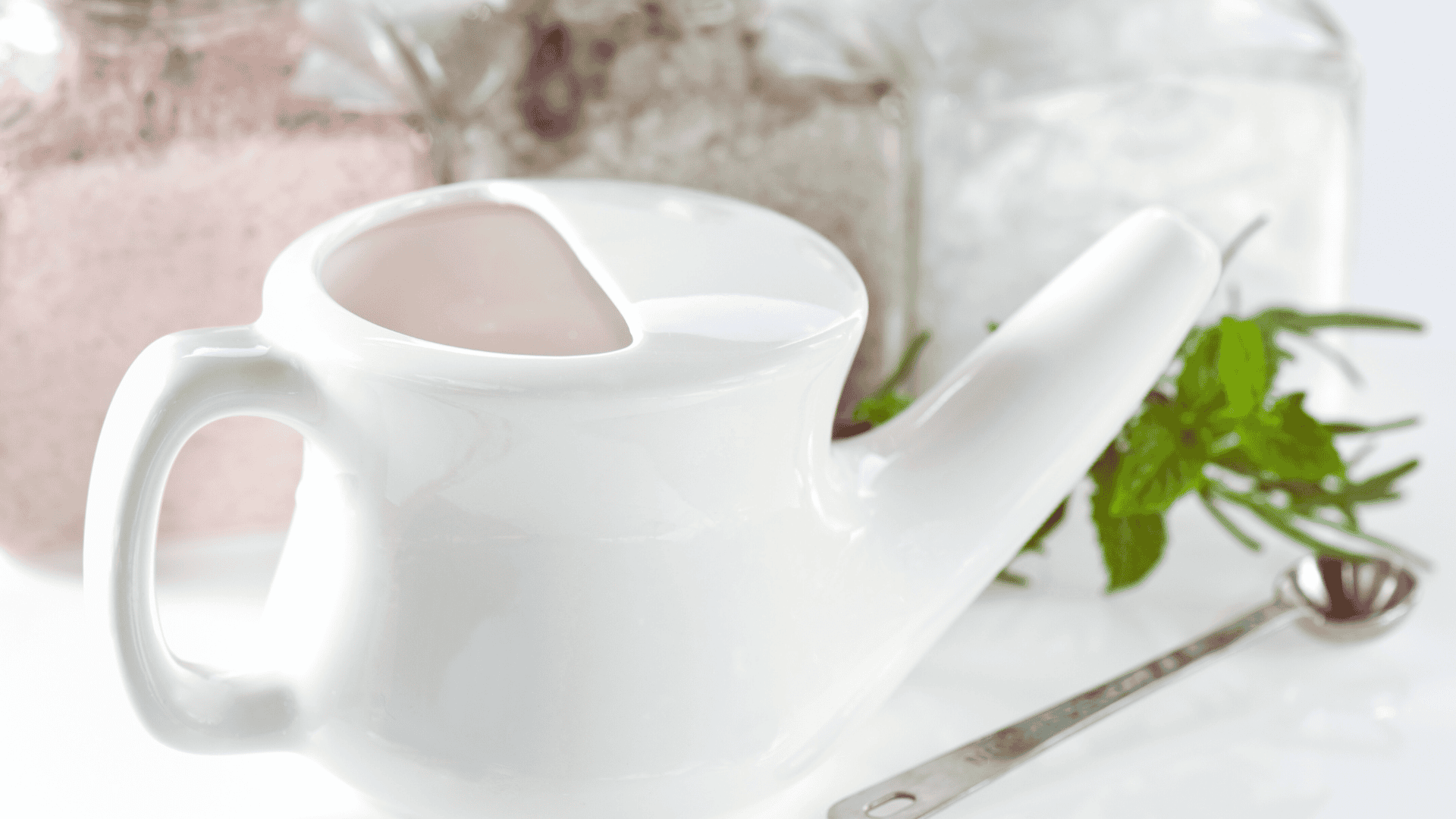
Neti is a practice of irrigating the sinuses that comes to us from Ayurvedic medicine. A neti pot is a special kind of pot that resembles a tiny teapot with an angled spout to allow for insertion into your nose. To get the water through, you have to tilt your head to irrigate up through the sinuses and out the other nostril. With neti, it’s important to use a saline solution. If you were to use plain water, it would irritate the mucus membranes. You can make a saline solution by mixing salt and water, but you can also use herbal tea in place of the water.
It is important to consider that we’re talking about treating an infection. Being holistic and vitalist in our approach to herbal medicine means considering the whole person. Especially when working with people long-term, it’s essential to consider their diet, lifestyle, environmental factors, social factors, and any other contributing factors to their problems.
On the one hand, we can alleviate suffering and improve their lives while simultaneously addressing the underlying root cause. It’s important not to mask or suppress symptoms. There are times when a little symptomatic suppression is necessary, but more often than not, we want to alleviate symptoms while addressing root causes, so that people can ultimately heal. That means we must get to the underlying root cause of the issue. We need to alter the physiological processes and the ecological state of the tissues.
When it comes to infection, we’ve got the germ theory versus the environment. Why do we get sick? Is it because a germ comes in and invades the system, and that’s what makes us sick? Or is it that when we live out of balance, the environment of the body becomes such that a pathogen can come in and set up shop and start reproducing and make us sick? In a way, it’s like the chicken or the egg. I’m not sure if there is a correct answer. I think it’s a little bit of both. Of course, there are susceptibility factors and vitality factors, which are related to the health of your immune system.
What we see is that on the allopathic medicine side, the approach is to kill the bug. Give an antibiotic to kill the bacteria, an antiviral to kill the virus, and an antifungal to kill the fungus. On the other end of that spectrum, you have people who are deeply entrenched in the vitalist model and might reject that approach, saying, ‘No, don’t even think about trying to kill the bug. Just change the environment of the tissue, and then it becomes less hospitable to that pathogen. You won’t have an infection anymore because pathogens can’t reproduce, survive, or thrive.’
I believe we can do both. I think we should consider the state of the tissues and match our herbs to the energetics of the tissue state. If the tissue is hot and damp, we give cooling, drying herbs. If it’s dry and cold, we warm it up and moisten it. The goal is to alter the ecological status of the tissue to restore it to a temperate state. We want the tissue to be neither too hot, nor too cold, nor too wet, nor too dry, nor too tense, nor too relaxed. But if we know there’s a bacterial infection and we have herbs that contain compounds demonstrated to kill those bacteria, why not use them?
That’s the point I came to, and now I’ll return to my story. My naturopath told me I should take an antibiotic for my sinus infection. I told him I don’t like antibiotics—I’ve taken a lot of antibiotics in my life that have wreaked havoc on my system. Almost every year throughout my childhood, I got a case of strep throat, and I was given antibiotics. I’ve spent many years trying to heal myself from problems that antibiotics have caused in my life, so I’d prefer not to backtrack.
So he said, “Alright, I know you’re an herbalist, do your thing. But take the antibiotics within three to four days if it doesn’t get better or resolve in that time, with whatever you’re doing.” So, I had the thought, ‘Okay, let’s think through the state of the tissue here. Additionally, let’s consider something that will have an anti-effect.’ Admittedly, I was on the other end of the spectrum for a very long time, and I didn’t think of herbs in terms of their antibacterial, antifungal, or antimicrobial effects. However, I think my mind is changing on that point, and I’m starting to embrace a more allopathic approach. My pendulum is now swinging more towards the middle on this issue.
I also decided to add antibacterial and antifungal herbs to my neti, just in case there was a fungal component. Again, taking antifungal, antibacterial, and antiviral herbs orally usually will not address a sinus infection very well. Taking herbs orally for general immune support, sore throat, fever, and cough is totally valid and often very helpful. But that approach generally won’t address the sinuses.
This is where the topical application comes in to address the infected tissue. This is similar to how we would think of applying herbs topically to a local skin infection. If you have an infection on your skin, would you simply drink some antimicrobial herbs for that infection, one that you could reach out and touch? That doesn’t make any sense.
The same is true for the sinuses, or any infected tissue, where you can apply an herb directly. This is where the neti comes in. Oftentimes, neti is thought of as just a saltwater rinse to irrigate the sinuses, but it’s a great way to deliver some herbs!
Preparing an Herbal Neti Pot
Let’s talk about preparing a neti pot. First and foremost, you want to ensure you’re using very clean water. If you have well water, filter it. I’m on a well, so when it comes to neti, I either boil the water first, filter it, or I do both. You need clean, sterile water. The same applies to city water. Filter it, boil it, sterilize it. We must be cautious, as there may be other substances in the water that will irritate the sinus mucosa. You can use distilled water if you don’t have access to filtered water or the ability to boil it.
Next, use pure, non-iodized sodium chloride. I avoid using broad-spectrum mineral salts, such as Himalayan or Celtic, for this purpose. I use the neti-specific salts because they’re just clean, pure sodium chloride. They’re also very fine, which helps to get a good dissolution of the salt—you don’t want salt chunks in your neti pot. Typically, a quarter to a half teaspoon of salt in eight ounces of warm water is a good solution. Use warm, body-temperature water. Cold water can be uncomfortable for a neti, and the salt may not dissolve well. Ensure the water is warm, but not too hot. Some people add a quarter teaspoon of baking soda to the solution. It buffers it a bit and makes it a little easier on the sinuses. That’s optional. You don’t have to use the baking soda.
Now the magic comes in, where rather than simply using boiled and cooled water with salt, you can use an herbal infusion or decoction to bring a greater medicinal virtue to that neti pot. Consider which herbs will have a topical antimicrobial, antibacterial, or antifungal effect that you could decoct or infuse and add to your neti pot.
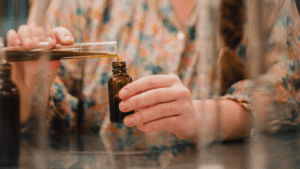
Because I had to travel while I had a sinus infection, I did this another way. I had to get creative, so I used tinctures, approximately 45 drops, which is roughly 1.5 ml. Sometimes I added up to 60 drops if I really wanted a strong effect, but I feel like 45 drops is a sweet spot, at least for my size neti pot. I found that at around 60 drops in the solution, it started to feel uncomfortable, so I recommend 45 drops in the solution.
For the tincture method, prepare the neti solution with the salt and then add up to 45 drops of the tincture. To be clear, I don’t mean 45 drops per herb. Add 45 drops of tincture total to a full neti pot of saline solution. That might not seem like very much, but when you select the right remedies and irrigate your sinuses with them, it works very well.
If you use more than one to two ml, you run the risk of burning and irritating your sinuses. If they are already acutely inflamed, puffy, swollen, and painful, using more tincture will not bring relief; it will only exacerbate the situation.
Selecting Herbs for the Medicated Neti Pot
For the purpose of treating sinusitis, we need remedies that have the broadest spectrum of medicinal actions, which would most benefit the symptomatic patterns we’re dealing with. More often than not, we need to treat the combination of heat, dampness, and laxity.
In the case of sinusitis, everything is puffy, swollen, boggy, dripping, and you’re blowing your nose. There’s a constant excessive production of mucus due to dampness. The heat is often present, especially if you notice a yellow-greenish color in the mucus. Oftentimes, if the tissues are inflamed, breathing in through your nose can cause pain in the sinuses, which is a sign of heat. If you see redness in the cheeks, and if there’s a fever and other signs of heat, that’s a pretty clear sign of inflammation and heat.
With relaxation or laxity of the tissue, you get postnasal drip and a runny nose. Basically, the mucosa is leaking excessive amounts of fluid. Those fluids tend to be clear. Often, I find that laxity tends to be more pronounced in the early stages, and then everything becomes puffy, swollen, and boggy, with the fluid stagnating as the situation progresses.
The herbal properties to prioritize are cooling, drying, and tonic or astringent. This will tighten the mucosal membrane, dry the local dampness, cool the heat and irritation, and tighten and tonify the leaky, boggy mucosa.
If there’s an infection, adding some form of antimicrobial is a good idea. Typically, if it’s a home treatment and you haven’t consulted a doctor, you won’t know whether it’s viral, bacterial, or fungal. That’s okay, but many herbs will address all of it, regardless. Many herbs are potently antibacterial and possess antifungal properties, and may also influence viruses, such as the common cold or influenza. The best herbs to select are those that have both antibacterial and antifungal properties.
Again, especially if it’s progressing to a mid to later stage, subacute to chronic, and has been ongoing for about a month or so, I suggest switching to something that specifically has antibacterial and antifungal properties.
Infection usually brings with it a degree of inflammation, so selecting herbs with inflammation-modulating properties would be beneficial. You want the energetics to be cooling and drying. It’s also essential to avoid anything that’s excessively pungent or hot, as that will irritate the mucosa. Don’t put Cayenne or Ginger in your sinuses. Even some aromatic mints, such as Thyme and Oregano, can be too intense to put into a neti pot.
I prefer to use bitter, antiseptic, and antimicrobial herbs that are cold and dry in nature. I especially appreciate berberine-containing herbs. Of all possible options, I recommend choosing a berberine-containing herb.
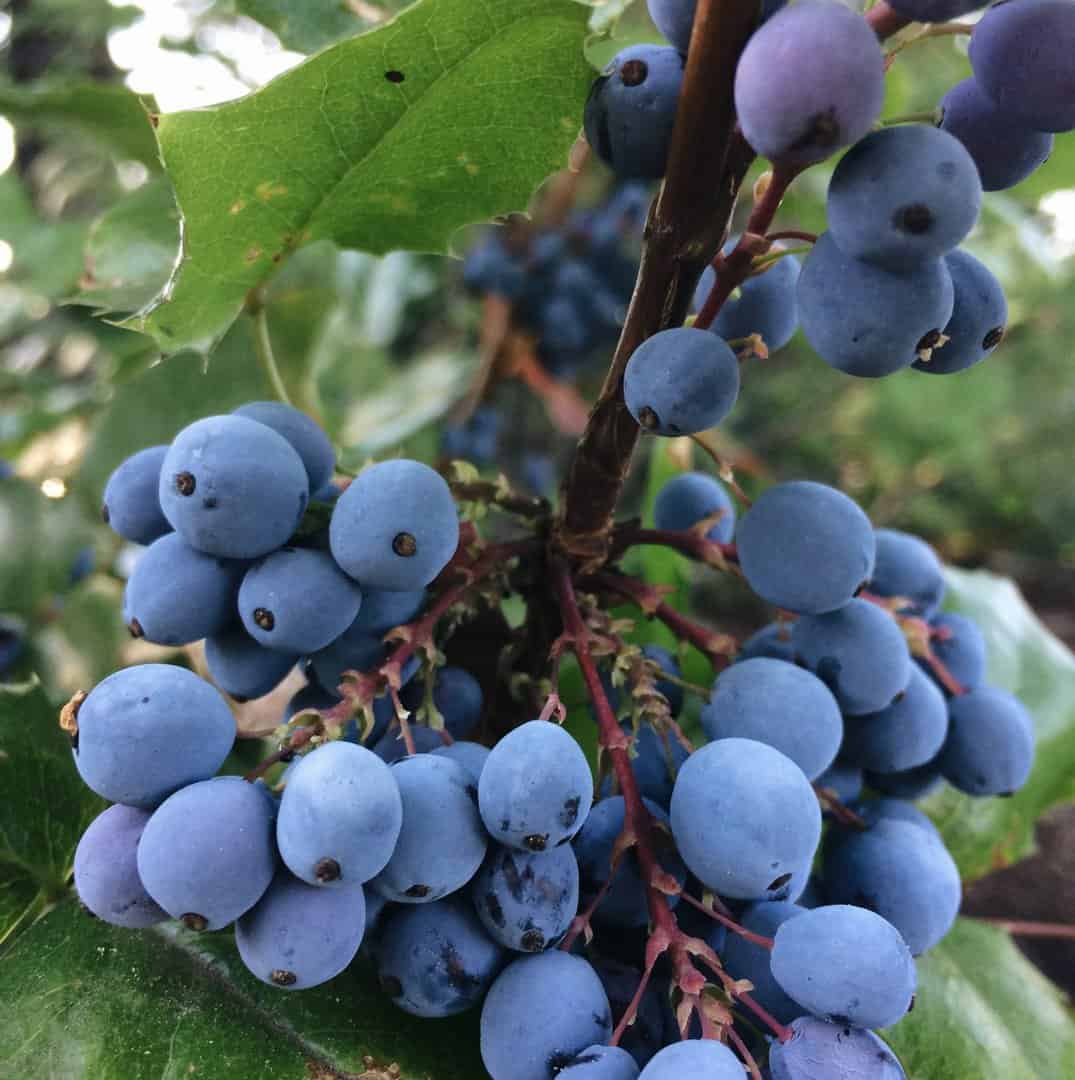
That could be Goldenseal (Hydrastis canadensis), Oregon Grape root (Berberis aquifolium), Barberry root (Berberis vulgaris), or Chinese Coptis (Coptis chinensis). These are all berberine-containing herbs, and that alkaloid is a powerful, broad-spectrum antimicrobial. Bitters in general tend to have a tonifying effect on mucosal membranes, which is especially true of Goldenseal.
Goldenseal is ecologically at risk, and it’s expensive, but it’s indispensable in this case. I think it’s the best of the berberine-containing herbs, and I think it really shines here, especially when you have a boggy, damp, leaky, infected mucosal membrane. At one time, Goldenseal was touted as a natural antibiotic. Indeed, it does have some antibacterial properties, but it’s more complex than that, and it won’t treat all bacterial infections. However, this is a situation where Goldenseal is particularly effective. There are five great herbs that I love, which match the pattern of treating sinusitis in this way, and I’ll cover those in a separate article.
Neti for Prevention
If you ever find yourself around people who are sick—perhaps they have a stuffy nose, cough, cold, or flu—and you really don’t want to get sick, I highly recommend doing neti for prevention. The sinuses are your first line of defense. If you irrigate them and flush them out, even plain salt water is effective for flushing out viral or bacterial particulate matter. This is one effective preventative measure I suggest. So anytime you’re exposed, just go home and use your neti pot.
I don’t recommend doing neti too often. Some people do neti every day, but in my opinion, that’s not a good idea because it can dry out your mucosa and irritate your sinuses over time. I recommend reserving neti for acute use, or for prevention if you find yourself around people who are sick.
I hope you learned something new and that you’re inspired in a new way to consider the topical usage of plants. Hopefully, this approach proves helpful to you in addressing sinusitis for yourself or your clients. I know it works because it has worked for me and for my clients.
If you want to learn more about the herbs I specifically used in my neti pot for sinusitis, be sure to check out my article on my top five favorite herbs for sinusitis.