
The Stimulant-Relaxant-Tonic Triad
Before exploring these herbs individually and as a pair, let’s clarify what “stimulant” and “relaxant” mean in herbal medicine. While these terms aren’t as common in modern herbalism, they represent foundational concepts in traditional North American herbal practice.
Stimulant, relaxant, and tonic are the core triad of actions in North American herbalism. These archetypes correspond to elemental and constitutional triads across other systems: vāta–pitta–kapha in Āyurveda, Sulfur–Mercury–Salt in alchemical medicine, and cardinal–mutable–fixed in astrology. These triads represent universal dynamics and appear in human constitutions and plant energetics.
At first glance, “stimulant” and “relaxant” might seem like opposites—akin to the contrast between morning coffee and an evening glass of wine. But in herbalism, these terms don’t refer merely to effects on the nervous system.
Stimulants act on the circulation and activate the vital force, whether that occurs constitutionally or in a specific organ system. In Western herbalism, vitality and circulation are deeply linked; the vital force flows through the blood. This mirrors the principle in Chinese medicine that Qi and Blood are intricately connected to one another.
Relaxants, however, ease tension, especially at the neuromuscular junction. They help resolve constriction, spasm, or hypertonicity—tissue that is overly taut or wound up too tightly.
In the stimulant–relaxant–tonic triad, relaxants and tonics stand as functional opposites. Relaxants relax tissue tone while tonics restore or increase tone, as we see in the case of astringents. As a guitar player, I like to think of this polarity as the difference between winding the string up tighter (tonifying) or unwinding it looser (relaxant). This is how we adjust the tone of a stringed instrument.
Cayenne could be seen as the archetypal stimulant, and Lobelia as the archetypal relaxant. When you combine them, interesting things happen. While we won’t do an in-depth analysis of these herbs in this post, the following provides a high-level overview of each and a discussion of what happens when we put them together.
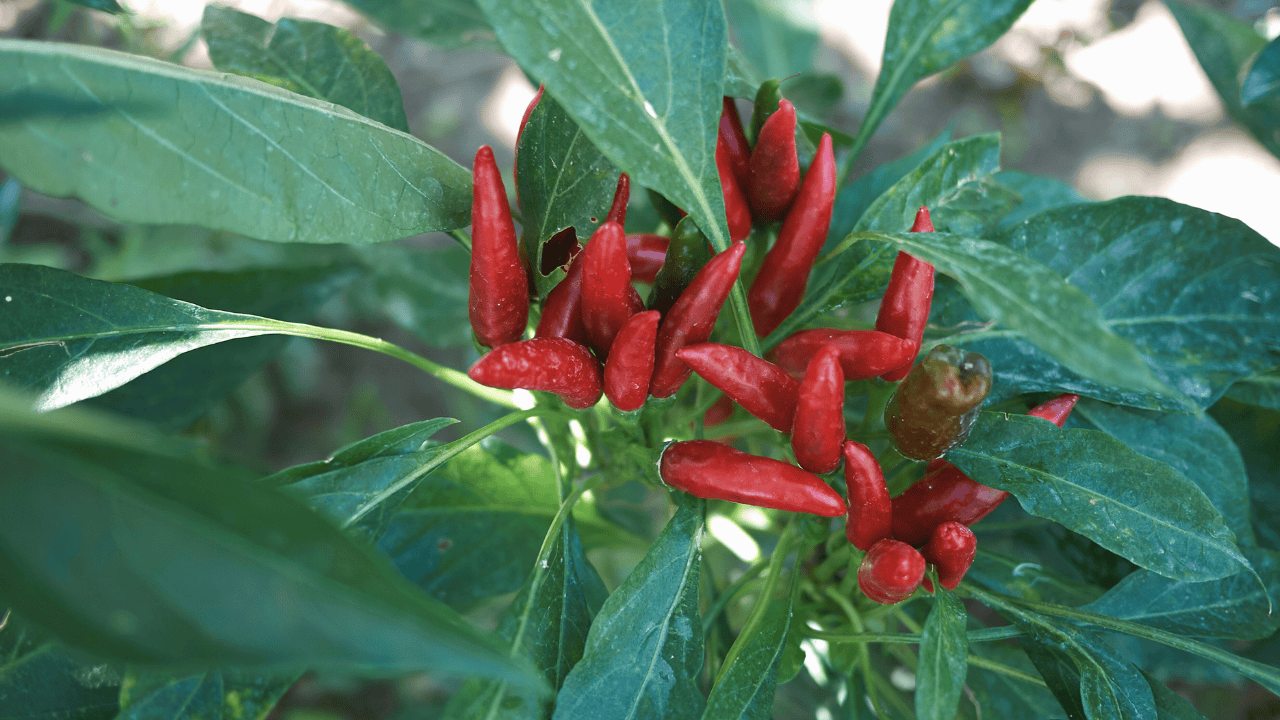
Cayenne (Capsicum annuum): The Archetypal Stimulant
Taste: pungent
Affinities: circulatory system, heart, digestion
Actions: circulatory stimulant, diaphoretic, carminative, expectorant
Energetics: hot, dry, stimulant
Cayenne’s pungent taste and immediate effects are unmistakable. In terms of affinities, it mainly acts on the heart, circulatory, and digestive systems. Cayenne is a potent circulatory stimulant that drives blood flow throughout the body, but especially towards the surface (skin) and the periphery (hands and feet). It also acts as a diaphoretic, increasing surface circulation and promoting sweating. Because of its intense effect on the mucosa, Cayenne is also carminative and expectorant—it can loosen mucus and trigger coughing to clear the lungs, much like spicy food does.
Energetically, Cayenne is heating, drying, and stimulant, especially in the short term. However, its diaphoretic action also leads to a secondary cooling effect—a classic example of how an herb’s short and long-term energetics can differ.

Lobelia (Lobelia inflata): The Archetypal Relaxant
Taste: acrid
Affinities: musculoskeletal system, nervous system, respiratory system
Actions: relaxant, spasmolytic, expectorant, diaphoretic
Energetics: cool, dry, relaxant
Lobelia is profoundly different from Cayenne, making this a synergistic pair rather than an additive one. Its acrid taste is distinctive and a potent clue pointing to its relaxant/spasmolytic nature. Its affinities are the musculoskeletal, nervous, and respiratory systems.
Lobelia is known for its spasmolytic and relaxant actions, which relieve tension in smooth and skeletal muscles, supporting breathing through proper bronchiole tone, and calming neuromuscular constriction. Like Cayenne, Lobelia is expectorant and diaphoretic, but with a cooling and relaxing character.
Differences, Overlap, and Synergy
Cayenne and Lobelia contrast strongly in taste, energetics, and primary affinities, yet they overlap in a few actions—both are diaphoretic and expectorant.
The Key Differences
This pair is an excellent example of synergy in formulation because it combines two drastically different herbs that produce some interesting effects.
In terms of taste, Lobelia has a strong acrid taste, and Cayenne is very pungent. This combination has an intense flavor profile.
Energetically, Cayenne is hot while Lobelia is cool. Cayenne is stimulant, and Lobelia is relaxant. Together, they have a beneficial humoral balancing effect. While Lobelia is cool, it isn’t quite cooling enough to balance the warming effect of Cayenne. Depending on the ratios of the two herbs in the formulation, this pair will likely have a net warming and drying effect.
The combination of stimulation and relaxation is the main thing to focus on here, and the primary differences between these herbs are their affinities. Cayenne has a strong focus on the mucosa of the digestive and respiratory systems, as well as blood circulation. It’s a cardiovascular herb, whereas Lobelia works on the neuromuscular junction—it dilates the vasculature and relaxes the entire system. Meanwhile, Cayenne drives the blood through the system. This effect on the vasculature and circulation is really where the magic occurs with this pair. Together, they equalize both the distribution of the blood and the charge of the nerves.
The circulatory and nervous systems are both systemic systems that influence the entire body. Unlike the liver or stomach, which are vital organs with singular locations, the cardiovascular system functions throughout the body. Likewise, the nervous system and muscles are dispersed throughout the entire body. So, these herbs have a broad-reaching effect, and in that way, they are constitutional in their effects. There are stark differences in their primary affinities, but it’s very cool how they can overlap and influence one another.
The Key Overlap
Now let’s talk about the overlap between these herbs. Because these herbs are both diaphoretic, their effect is cumulative—the diaphoretic action is increased. However, they also have a synergistic effect, because they’re different types of diaphoretic, and this is where the terms stimulant and relaxant come in, because they help to clarify the nature of an herbal action further.
The stimulant diaphoretic, in this case, Cayenne, drives the blood to the surface. It is heating, stimulating, and it moves the blood. The relaxant diaphoretic, in this instance, Lobelia, relaxes tension in the pores and capillary beds at the surface, allowing blood to reach the surface more easily.
Let’s use an analogy: visualize a kink in a garden hose. When the capillary beds become kinked like that garden hose, they’re constricted. The blood can’t reach the surface because its movement is cut off. A relaxant diaphoretic un-kinks the hose, dilates the circulation, and opens everything up so that the stimulant diaphoretic can bring it up to the surface. The stimulant and relaxant diaphoretic combination is often a great strategy in the treatment of fever.
Cayenne and Lobelia are also a powerful expectorant pair. Again, this is an additive effect, as both are expectorant. They also have a synergistic effect in that they have two different kinds of expectorant actions. Cayenne is a stimulant expectorant, and Lobelia is a relaxant expectorant. This pair is helpful for what we might think of as cold, damp, phlegmatic, yet spasmodic coughs. A cold, damp type of asthma, for example, would be a good situation for a pairing of Cayenne and Lobelia.

Constitutional and Astrological Insights
We also see that this combination, from a constitutional perspective, is ideal for vāta patterns. Vāta tends to be cold, dry, and tense. Both of these herbs are drying. This is a common issue that comes while addressing vāta patterns—Cayenne will warm up the coldness of vāta, Lobelia will relax the constriction of vāta. However, because vāta tends to be quite sensitive, and these are strong herbs, it’s important to use small amounts. I like to use milder herbs for vāta, because vāta types can be very sensitive and mutable—this is a consideration from a constitutional perspective.
From an astrological medicine perspective, this is a useful pairing for addressing Mercury patterns. Mercury rules the respiratory system, governs the wind-tension tissue state, and can be cold, tense, and relate to aspects of the nervous system, which Lobelia addresses nicely.
Some consider Lobelia a nervine. I don’t think of it so much as a nervine, but it is specific for the neuromuscular junction. It’s not so much an herb to calm you down when you’re stressed out, although it can do that if you take a lot of it. It calms the neuromuscular junction, so it works on the ECR cycle— excitation, constriction, relaxation— where the EC part of the cycle (excitation and constriction) is excessive, and you can’t get to the R (relaxation). The nerve and muscle fibers become excited and then contract, and can’t switch into the relaxation phase. Lobelia is excellent for helping to initiate a transition into relaxation. Magnesium is also very useful there.
So, the way to think of this pair is that Lobelia dilates and relaxes everything, especially the vasculature. It dilates, opens, and relaxes the neuromuscular junction, especially around blood vessels. Once everything is open, Cayenne drives the blood through that system. So we would consider the Lobelia aspect Mercurial, and the Cayenne aspect Mars. It specifically operates on the Leo-Aquarius axis.
One way to think of it is to draw on some of the older understandings of these herbs. In that understanding, one herb equalizes the circulation and the distribution of blood throughout the body, while the other herb equalizes the nerves and the charge on the nerves. This may not be a scientifically valid way to describe it, but it’s a useful way of describing the resultant effect. You might have some areas that are tense or constricted, and other areas that are overly lax, and these herbs can adjust that tension.
Traditional Applications
Let’s look at some symptoms and conditions for which this pairing has traditionally been used in North American herbalism.
Pneumonia
T.M. Lyle notes that the pair of Capsicum and Lobelia is useful for pneumonia. This is likely because both are expectorant, but in different ways. Pneumonia is damp and phlegmatic. Cayenne will stimulate the cough reflex, dry up excess mucus secretions, and aid in the removal of phlegm. If there’s spasm, constriction, tension, or coughing fits, Lobelia will be very helpful because, again, it dilates and relaxes.
Rheumatic Pain
For rheumatic pain, Lobelia can relax the tension in the musculature. Cayenne will warm the joints, encourage blood flow, bring in fresh oxygen, and relieve blood stagnation. From a Chinese perspective, pain can be due to stagnation of Blood and Qi. Lobelia can help to relieve Qi stagnation by releasing constriction. If there’s constriction, the blood can’t flow, and often where there’s Qi stagnation, there’s blood stagnation. It’s a similar concept in the Western approach with a stimulant and a relaxant. If you un-kink the hose and then increase the water pressure, so to speak, with Cayenne. That can be very useful for rheumatic pains.
Uterine and Ovarian Congestion
Priest and Priest used this pair for uterine and ovarian congestion, which can manifest as a wide variety of female reproductive issues. Uterine and ovarian congestion or stagnation may lead us to consider a damp-stagnation type tissue state and blood stagnation.
This can lead to conditions such as fibroids and cysts, as well as stagnant and clotty menses, which could result in excessive uterine spasm during menses. In those instances, Cayenne will again help move stagnant blood and congestion. Lobelia will relax some of the tension and spasm in the smooth muscles of the uterus, but also open up the circulation to get the blood there. This is really the theme of this pair; Lobelia will open everything up, and then Cayenne will drive the blood there!
This is universally applicable in many areas of the body; blood is supremely important everywhere. Blood delivers nutrients, oxygen, and carries away waste products. If an area of the body is lacking vitality and stimulation, it is cold or depressed in its tissue state, and we need to bring blood to that area. Sometimes, the highway to get the blood to that area needs to be relieved of tension, which is exactly what Lobelia does.
Triplet with Blue Cohosh
William Cook used this pair along with Blue Cohosh (Caulophyllum thalictroides) as a triplet for convulsions. Convulsions are something that we might classify as Liver Wind in Traditional Chinese Medicine, or a vāta pattern in Ayurvedic terminology. These are neurological symptoms that can cause musculoskeletal symptoms, such as twitches, ticks, spasms, and convulsions. Neurological issues that affect the muscles are a key indication for Lobelia. Adding Blue Cohosh gives us an additive or synergistic effect with Lobelia, and together they’re a distinct spasmolytic pair. Each of these herbs has its own unique constituents, and they’re quite different in the way they act on the body, but they have a similar net spasmolytic effect. So, Lobelia Blue Cohosh is a cumulative sympathetic pair, and Cayenne is the synergist that drives it and ensures it reaches the right area of the body.
Acute Asthma
A more modern take comes from Bill Mitchell and Dr. John Bastyr, who was the inspiration for the college I attended, Bastyr University. They used a three-to-one ratio of Lobelia and Cayenne for acute asthma. Lobelia is indicated for asthma because of the bronchoconstriction that happens. Lobelia is a smooth muscle antispasmodic, and it has a strong affinity for the lungs, so it will dilate and open them up. Cayenne, as a stimulant expectorant, will bring blood flow to that area, and that will clear metabolic waste. If there is an allergen or irritant, Cayenne can help clear it, drive blood flow to the lungs, and clear the mucous membrane by stimulating expectoration.
Musculoskeletal Pain
This is a very good pair to use topically for musculoskeletal pain. We discussed its use for rheumatism, and it can also be applied topically. I’ve used Lobelia and Cayenne this way many times for chronic low back pain due to musculoskeletal injuries. It’s great for relaxing tense muscles and relieving acute pain.
Cayenne is a topical analgesic and rubefacient, which heats the area and increases local blood flow. Lobelia comes in to help relax the muscles.
I went through a period where I would get a muscle twitch in my shoulder at night when trying to go to sleep. I’d be lying there, and suddenly, it would start fluttering like crazy and keep me awake. I could not sleep at night because of this darn spasm in my shoulder muscles! I had tried many different remedies, and one night, I took a Lobelia tincture and applied it topically. Within three minutes, the whole thing calmed down. It was cool to see that spasmolytic property work so well.
Topically, Cayenne and Lobelia are best used as a liniment. I recommend a tincture topically or an isopropyl alcohol extract. Cayenne can be extracted into oil pretty well, but Lobelia cannot. Used as a liniment, this formula is very potent.
Dosage Considerations
Lobelia is considered a low-dose botanical, mainly because it’s emetic, so exercise caution. Some people are very sensitive to it, which is an important consideration. A good starting point for dosing Lobelia is five to seven drops. You can titrate the dosage upwards by one drop per dose until the person starts to feel slightly nauseous, then decrease it by two to three drops from there, which would be a suitable dose for that person.
I can take two dropperfuls without a problem. However, I’ve seen people take five drops of Lobelia and vomit. It certainly won’t kill you, but it might make you nauseous or stimulate vomiting, so keep that in mind. For those without experience with Lobelia, it is a fantastic herb, but understanding your own and your clients’ tolerance to it is important.
I use both of these herbs in fairly small amounts in formulas. I generally allocate 5% of a formula to Lobelia or Cayenne. Usually, even less for Cayenne because even that much can dominate the formula, depending on how concentrated the extract is. You could do 1 to 10%, which would be fine. Bill Mitchell used a three-to-one ratio—75% Lobelia to 25% Cayenne. You can also make a 50/50 pre-formulated pair of Lobelia and Cayenne. You could then add that pair at 5% to a formula. You would then have 2.5% of each herb in that formula, which is often sufficient.
Suppose you take a 5 mL dose of a formula, and Lobelia is 10% of the formula. You would have about ½ mL of Lobelia in that case (approximately 15 drops). If you cut that in half, and Lobelia is at 5%, you would have ¼ ml. That’s a low dose and a good place to start. I think a 50/50 mix of Lobelia and Cayenne is a good starting point. 70/30 and 75/25 are also good ratios.

Final Thoughts
So that is the anatomy of the dynamic duo, Lobelia and Cayenne. If you have not experienced either of these herbs, I encourage you to play around with them. This is a truly universal herbal pairing. It is, in a way, the quintessential archetypal driver component. Lobelia opens everything up, and Cayenne pushes it through. If you add a small amount of this combination to another formula, it’s like a delivery mechanism where you’re driving all those other herbs to their targeted tissue sites more effectively and efficiently.
Hopefully, you learned something new about these herbs, some formulation principles, and a therapeutic strategy and approach you can incorporate into your practice.