

There’s nothing quite like walking through the forest during winter. If you’re lucky, you can traverse the dirt path of fallen leaves and deeply inhale the scent of winter — the evergreens.
When you think about evergreens, you might have one or two specific trees come to mind. However, “evergreens” refers to a broad range of medicinal trees, including Pines, Spruces, Firs, Cedars, and more. There are many types of evergreen trees all around the world, and you can likely find at least one in your region if you look for it.
Although these trees differ in specific indications, many evergreens share similar medicinal virtues. In today’s plant profile, you’ll learn the main historical and modern uses and applications for these beloved trees.
Common and Latin names: Pine (Pinus spp.), Spruce (Picea spp.), Hemlock (Tsuga spp.), Fir (Abies spp.), Douglas Fir (Pseudotsuga menziesii) (note: not a true Fir), Cedar (Cedrus spp.), Arborvitae (Thuja spp.) (note: this genus includes Western Red Cedar (Thuja plicata), which is not a true Cedar), Juniper (Juniperus spp.)
Family: Pinaceae, Cupressaceae
Tastes: Pungent, Aromatic, Sour
Affinities: Upper Respiratory Tract (Throat, Bronchioles, Lungs), Kidneys, Urinary Tract, Immune, Digestive, Circulatory
Actions: Antiseptic, Antibacterial, Carminative, Circulatory Stimulant, Stimulant Expectorant, Rubefacient
Energetics: Warming, Drying, Stimulant
Taste
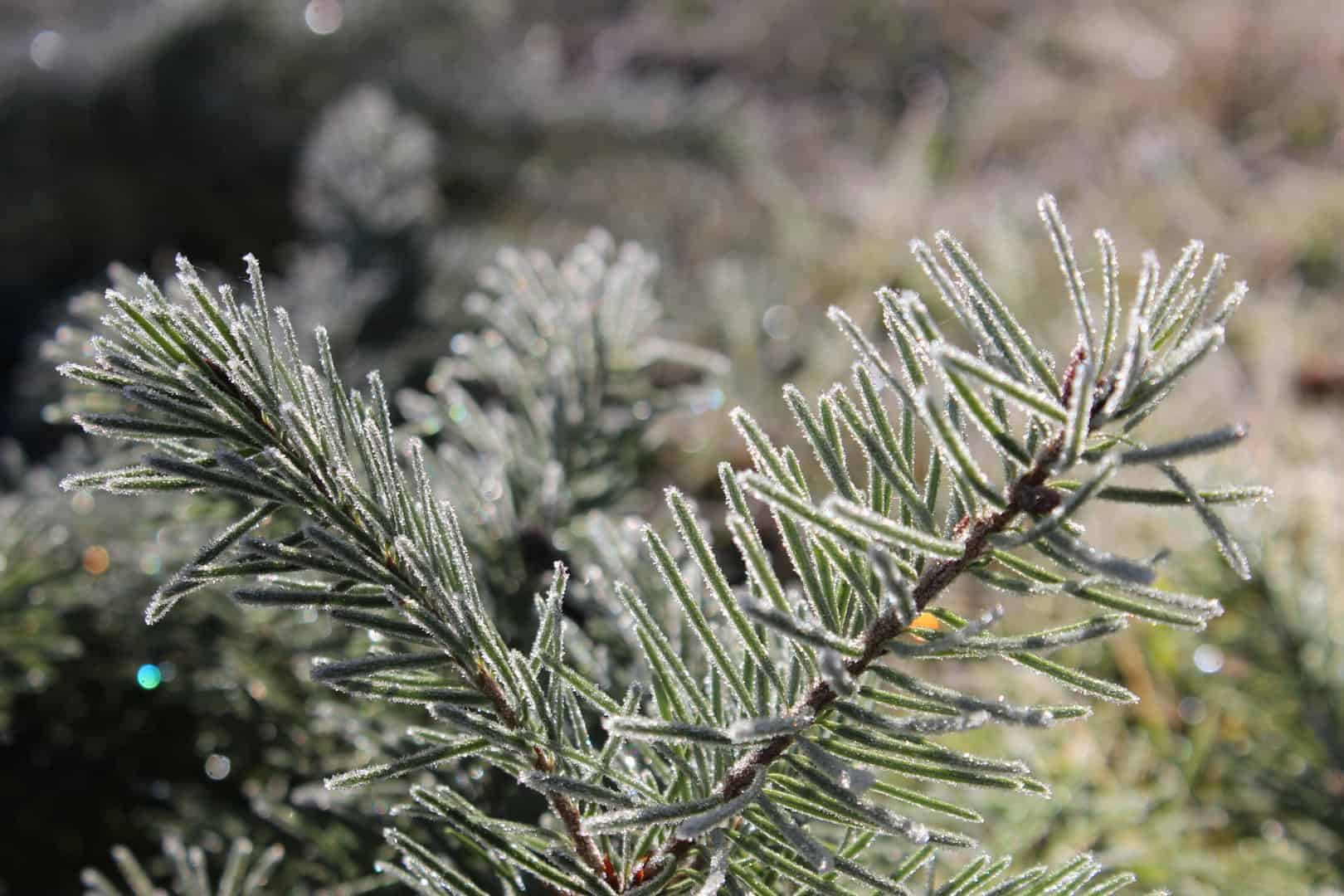
The invigorating scent we tend to associate with evergreens is mainly due to their essential-oil-rich needles, which protect the trees from bacteria, infections, and fungi. These terpene-rich volatile oil compounds give the evergreens a richly aromatic and pungent flavor. Although the aromatic needles are the parts typically used medicinally, you can also consume the young Fir (Abies spp.) tree tips, which have a sour taste due to their high levels of vitamin C.
Affinities
The evergreens’ primary affinity is the upper respiratory system, including the throat, bronchioles, and lungs. With their pungent, warming volatile oils, evergreens yield a stimulant expectorant effect, open the lungs, improve breath capacity, and alleviate coughs.
With their antiseptic, broad-spectrum volatile oils and immune-stimulating qualities, evergreens have a secondary affinity for the immune system. The fresh Fir tips, in particular, are high in vitamin C and have a more substantial effect on the immune system than the needles, which act more on respiration.
Some trees, such as Juniper (Juniperus spp.), have additional organ affinities, such as the kidneys and urinary tract. However, you could say that all evergreen trees impact the respiratory, immune, circulatory, and digestive systems through their volatile oil content, which stimulates and drives blood flow.
Actions
Evergreens are used most often for their stimulant expectorant property. When you enjoy evergreen medicine as a tea or tincture and take a breath, you
Evergreens have a warming, drying, and stimulating effect on the body. Although there is variation among types of evergreen trees, these energetics are common among them. Ayurvedically, Evergreens decrease vata and kapha by warming the body and stimulating the tissues. For the same reasons, they increase and aggravate pitta.
These trees have a balancing effect on the cold/depression and damp/stagnation tissue states. They benefit people with cold/depression by warming the tissues, driving circulation, and improving organ function. Lastly, they balance damp/stagnation by warming and drying excess moisture and fluids, which may have become congealed and thick due to poor circulation and fluid mobilization.
Energetics
Evergreens have a warming, drying, and stimulating effect on the body. Although there is variation among types of evergreen trees, these energetics are common among them. Ayurvedically, Evergreens decrease vata and kapha by warming the body and stimulating the tissues. For the same reasons, they increase and aggravate pitta.
These trees have a balancing effect on the cold/depression and damp/stagnation tissue states. They benefit people with cold/depression by warming the tissues, driving circulation, and improving organ function. Lastly, they balance damp/stagnation by warming and drying excess moisture and fluids, which may have become congealed and thick due to poor circulation and fluid mobilization.
Psychological and Emotional Aspects
Evergreens have become powerful symbols of everlasting life in many cultures worldwide. Although wintertime is typically thought of as the season of metaphorical and literal darkness, evergreens remain vibrant green and continue to grow despite the cold and darkness.
These trees are highly revered and brought into the home during winter because they represent rejuvenation, hope, and the promise that there will be light once again. They remind you on a personal level that no matter how dark the world feels, the light always returns. If you’re interested in learning more about the rich history and symbolism behind the evergreens, you can read that post here.
Preparation
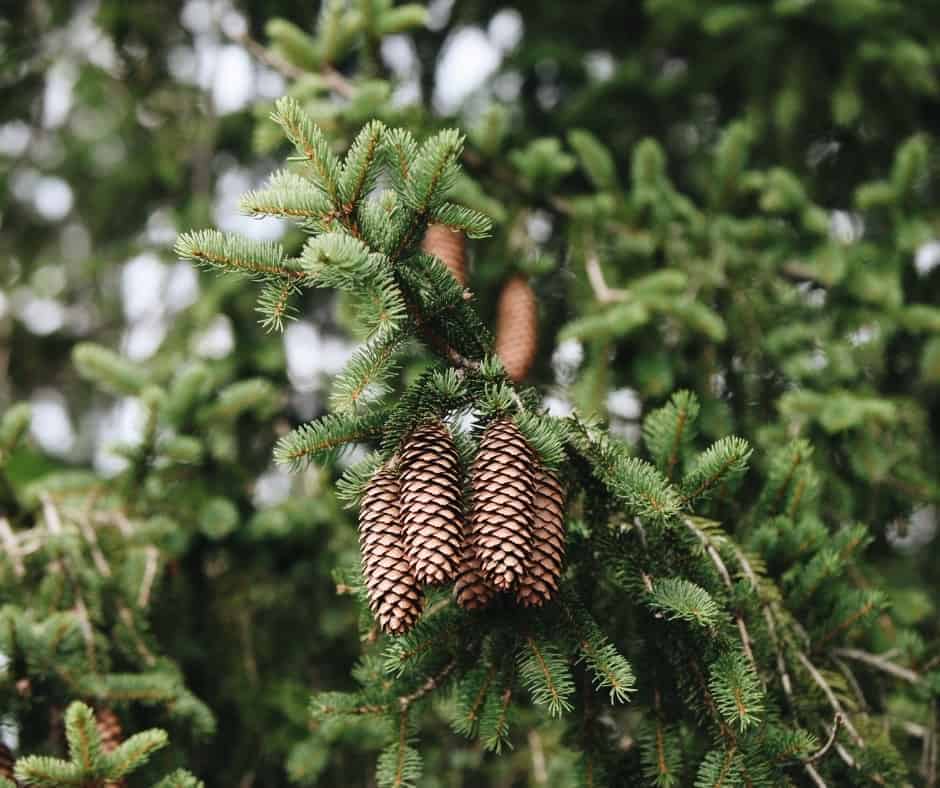
You can harness the medicinal benefits of evergreens through internal and external applications. For internal use, evergreens yield a strong, aromatic tincture that stimulates the immune system and circulation, and helps expectoration in the case of damp, cold coughs. Red Cedar (Thuja spp.) in particular is an excellent remedy for people exposed to black mold, fungi, or yeast in the home and who have respiratory infections that are unresponsive to standard treatments.
I prefer fresh needles over dry ones since they produce a much more aromatic extraction. Because the fresh needles are terpene-rich, I use a higher percentage of alcohol, 70-80% to extract these volatile compounds and produce a potent medicine.
Evergreens have a rich tradition of topical usage and can be used in many different ways. In Finnish traditions, evergreens are placed in the sauna to diffuse their medicinal and aromatic compounds. There is also the traditional practice of slapping the green aromatic parts against the skin to stimulate blood flow to the periphery, similar to how Nettles (Urtica dioica) are used.
Another method for working with evergreens is through diffusion. You can accomplish this in a few different ways. First, add a few drops of essential oil to a diffuser. Second, you can place the fresh needles in a big pot of hot water and drape a towel over the back of your head for direct steam inhalation. Third, you can practice the folk method of preparing a simmer pot. For this, all you need to do is fill a pot with water, place it on your stove, add the fresh plant parts, and bring the water to a simmer. As the water rolls, your home will be filled with the scent of evergreens. Although this isn’t the most medicinal approach, it adds moisture to the dry winter air and diffuses the fragrant aroma, making your home smell lovely.
Lastly, you can prepare an evergreen herb-infused oil, which you can use as the base for anti-inflammatory and pain-relieving salves. This is an effective remedy for joint pain because of its rubefacient and analgesic (pain-relieving) properties. Poplar buds (Populus balsamifera) are a great option because of their high levels of salicylates and combine well with Fir (Abies spp.), Spruce (Picea spp.), and Cedar (Cedrus spp.) oils.
The evergreen trees, with their verdant boughs and healing properties, stand tall and strong. Their needles, bark, and sap have been used for centuries to treat a multitude of ailments. From boosting the immune system to reducing inflammation and improving respiratory health, the medicinal benefits of these majestic trees are vast and make them a perfect winter medicine for the dark, cold months.
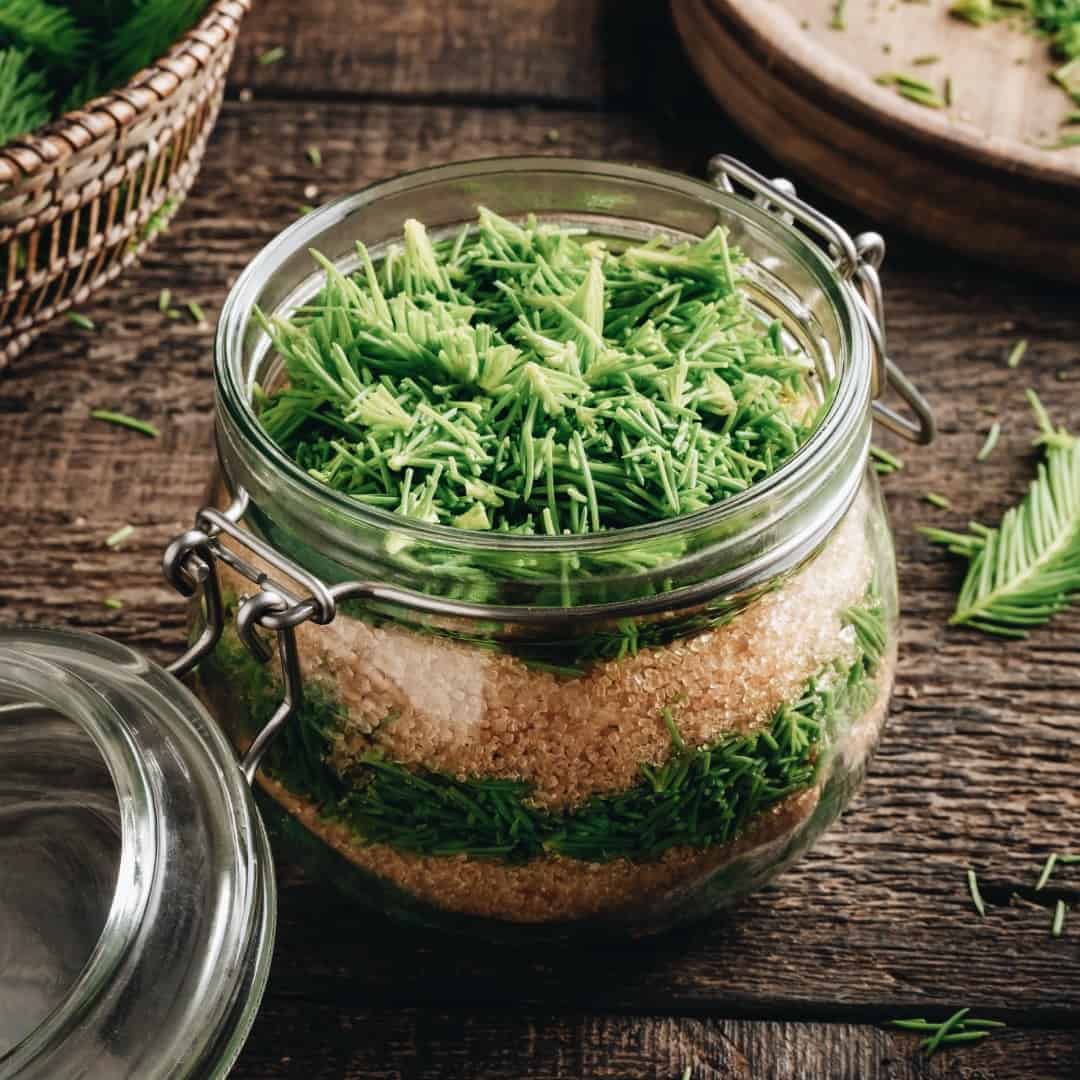
Classic Spruce Tip Syrup
This recipe comes from Alan Bergo of Forager Chef, and you can watch the full video on his website here.
Ingredients:
- 8 oz Spruce tips (Picea spp.)
- 16 oz organic brown sugar
Instructions:
- Combine the spruce tips and sugar and pack the mixture into a quart mason jar. Leave the jar at room temperature or in a cool and dark place. As time goes by, the spruce tips will release their liquid and will be absorbed into the sugar, forming a slurry. Allow the mixture to macerate for one month.
- After a month has passed, pour the contents of the jar into a pot and bring to a boil to dissolve the sugar. Strain, discard the spent tips, and store the syrup in a glass bottle.
- Store the finished syrup in the fridge and take a spoonful for a cough straight or in tea or simply enjoy on toast with cheese, baked goods, yogurt, and whatever else you can think of!