
Burdock, which I call the ‘all-purpose alterative,’ stands out as an exceptional herb because of its comprehensive approach to alterative therapy. While I avoid making statements about an herb being helpful for everyone, Burdock is unique since it balances many different types of people needing alterative therapy.
Before we dive in, let’s quickly define “alterative.” This is what I call an “umbrella action,” meaning that it’s non-specific and requires further subclassification to understand how an herb functions as an alterative.
The general definition of an alterative is a remedy that helps open up the body’s channels of elimination, such as the bowel, liver, kidneys, skin, and lungs. Many alteratives also work on the blood, extracellular fluid, and lymphatics. With so many channels of elimination, the alterative category is vast, and is best clarified by defining which channels an herb will operate on, and what other specific actions it has.
Examples are lymphagogue alteratives, diuretic alteratives, laxative alteratives, bitter tonic alteratives, and antidyscratic alteratives. These help us to refine our understanding of what type of alterative an herb is, and thus how it will be applied therapeutically. More often than not, alteratives are used to treat the underlying pattern of “bad blood syndrome,” or damp-heat conditions.
One of Burdock’s key strengths lies in its gentleness, distinguishing it from more intense alterative herbs, such as Pokeroot (Phytolacca decandra). Its relatively neutral energetics (neither overly warming nor cooling, nor moistening nor drying) make it suitable for a wide range of people, regardless of their constitution, making it a safe choice for many.
This herb has a rich history spanning both Eastern and Western herbal traditions. In Chinese medicine, the seed is primarily utilized, whereas Western herbalism focuses on the root. However, both parts have historical usage in various traditions. Here we’ll be focusing on Burdock root.
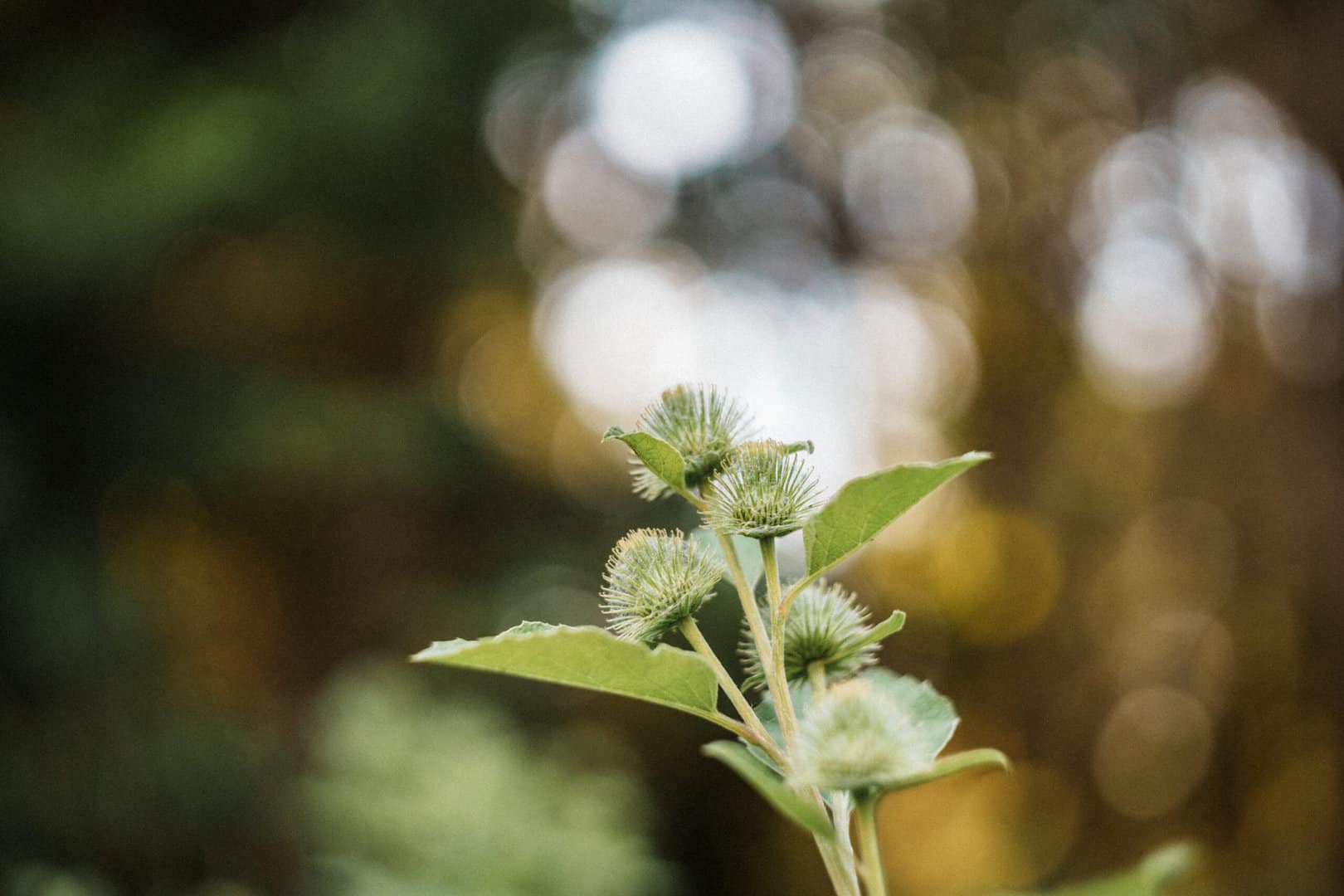
Burdock’s Latin name, Arctium lappa, derives its etymology from the Greek word arktos, which is associated with the bear. We can see other associations with the bear in Burdock, with its furry, stiff, and bristly seed heads and brown, furry roots, which are similar to the root crowns of Osha, another bear medicine.
Common name: Burdock
Latin name: Arctium lappa
Family: Asteraceae
Part Used: Seed, Root
Tastes: Oily, Mildly Bitter, Sweet, Salty (mineral salt)
Affinities: Liver, Digestive System, Blood, Extracellular Fluids, Lymphatics, Skin, Kidneys
Actions: Diaphoretic (seed), Alterative, Bitter Tonic (mild), Diuretic, Lymphagogue
Energetics: Neutral to slightly cooling, neutral moisture

Taste
Burdock has an interesting and complex flavor profile. Its roots contain fixed oils, giving it an oily taste while also offering a subtle blend of bitterness and sweetness. Underneath these tastes lies a particular mineral salt flavor that tends to be covered up by the other flavors. This unique combination of tastes contributes to its distinct organ affinities and actions, which are also somewhat complex.
Affinities
Burdock’s bitterness targets the liver, aiding in the digestion of fats and oils. The oiliness of the roots also gives it a slight hepatic affinity. The degree of stimulation depends on the bitterness of the plant, with stronger bitters leading to a more potent effect. Although Burdock is only mildly bitter, its oiliness amplifies its impact on this system, particularly the gallbladder. The gallbladder is acutely sensitive to oils, as its primary function is to secrete bile for the emulsification, absorption, and elimination of fats. Because of this, Burdock has a wide-ranging effect on digestion as a whole.
The presence of inulin in Burdock—a prebiotic starch—nourishes beneficial gut flora and helps to restore digestive function over time. I think of it in terms of the metabolic functions of the liver, specifically in relation to detoxification, and less so for digestion, though it certainly does both.
This herb’s influence on the liver extends to a secondary affinity for the blood. In traditional herbalism, the term “blood” encompasses not only the liquid running through your veins but also your extracellular fluids. These fluids surround the cells and can be packed either with nutrients or metabolic waste products. As a blood purifier, Burdock helps maintain healthy extracellular fluid and lymph, contributing to overall metabolic balance. Burdock’s affinity for the lymphatics aids in blood purification.
Due to its connection with the liver, digestive system, blood, extracellular fluids, and lymphatics, Burdock exhibits an affinity for the skin, particularly in chronic skin conditions. When taken internally, Burdock strengthens the organs of elimination that manage waste. When these organs aren’t working optimally, your body expels metabolic waste products through the skin, leading to acne, eczema, and other chronic skin conditions. By supporting these deeper eliminatory organ systems, it lessens the load on the skin and heals this pattern from the inside out. Burdock seed may have a stronger affinity for the skin than the root since it’s more pungent, diffusive, and diaphoretic. That said, you can use either with good results.
Burdock’s affinity for the skin seems to be more direct than that of other herbs used as alteratives. While it certainly supports the skin through its deeper actions on the liver, blood, lymphatics, and digestive system, I consider it to be an amphoteric for the sebaceous glands, which regulate the oil secretions of the skin. This is why we use Burdock for dry, itchy, scaly skin conditions, as it helps increase oil secretions, while also working for damp-heat type skin conditions, which it helps tone down. While I don’t necessarily have a scientific study to prove this, it’s a theory based on my own and other herbalists’ clinical observations.
Lastly, Burdock has an affinity for the kidneys, with the seeds being a specific indication in this regard.
Actions
Burdock is the quintessential alterative. In my opinion, it is one of the most profound alteratives in the Western materia medica. As already mentioned, alteratives are herbs that open the channels of elimination and support your body’s innate detoxification processes. They primarily work on the skin, liver, kidneys, bowel, and lungs.
As noted earlier, there’s a lot of variance within the alterative materia medica depending on organ affinities. Some herbs work more on the bowel (Yellow dock root, Rumex crispus), while others work more in the liver (Oregon grape, Mahonia aquifolium). Some herbs are more kidney-focused, such as Cleavers (Galium aparine). In my experience, Burdock works on all of the channels of elimination, which is why I call it the all-purpose alterative! It is almost universally applicable because it’s gentle in its actions and versatile in its formulation capabilities.
Connected to its alterative action is its property as a bitter tonic. This is about as mild a bitter as you can get, but it does help support digestion to an extent. To maximize these benefits, I typically combine it with other digestive remedies that are more targeted. My favorite application of Burdock for the GI is as a prebiotic, as it’s incredibly rich in the prebiotic sugar inulin. It combines well in a decoction with Dandelion root (Taraxacum officinale) for this purpose, as inulin is a strictly water-soluble compound.
This is what makes Burdock so unique. On the one hand, it’s a cleansing, detoxifying alterative, and yet at the same time it’s also highly nutritive, nourishing, and restorative to digestion, which will in turn support absorption and assimilation of nutrients. This enables it to function on both sides of metabolism: the catabolic/elimination side, as well as the anabolic/nutritive side.
Energetics
Although most alterative herbs are cooling and drying (they are primarily used to treat damp-heat), Burdock’s energetics are balanced by its combination of sweet, oily, slightly bitter, and mineral-salt tastes. These tastes are associated with hydration and strengthening of tissues, as well as draining, drying, and clearing. This combination of tastes renders Burdock close to energetically neutral in terms of temperature, making it suitable for a wide range of individuals and imbalances. That said, because it is used to treat heat patterns, I consider it neutral to slightly cooling, while the seed is slightly warmer but still close to neutral. This neutrality allows Burdock to address various imbalances without exacerbating existing conditions. Because of its neutral to cooling temperature, Burdock is suitable for heat patterns, especially with hot, red, and inflamed skin conditions.
In terms of its moisture energetics, Burdock is also close to neutral. Although it increases fluid secretions and opens channels of elimination, it doesn’t excessively dry out the body. This is due to its oiliness and sweet taste. I consider it beneficial for both damp and dry tissue states, particularly those of the skin. As a sebaceous gland regulator, Burdock balances oil secretions, beneficial for eczema that’s dry and flaky or damp and weepy. Another way it balances skin hydration is through its bitterness, which aids in the digestion of fat and oil, and keeps the skin hydrated all around.
As we can see with the skin, Burdock balances the dry/atrophy and damp/stagnation tissue states. You can also see its affinity for these patterns in the digestive system. In digestion, Burdock also addresses both dry and damp patterns. For people with insufficient bile flow and poor fat absorption, Burdock improves gut health with its inulin content, enhances digestive secretions as a bitter tonic, and clears tissue stagnation as an alterative. Conversely, for those with sluggish metabolism and poor waste elimination, Burdock facilitates waste removal, promotes liver function, and alleviates skin conditions resulting from toxin buildup.
Although you might think of the toxic pattern in relation to dampness, it can also occur in excess dryness, as there are insufficient fluids needed to carry away metabolic waste products through the lymph. Luckily, Burdock works on this toxic pattern in damp and dry states.
Burdock’s balancing qualities on moisture and neutral temperature lead me to classify it—dare I say— as a tridoshic herb, balancing all three doshas—vata, pitta, and kapha. It cools the excessive heat and oiliness of pitta, nourishes and strengthens the deficiencies and dryness of vata, and detoxifies the heaviness, dampness, and stagnation of kapha, making it suitable for all constitutions. Its balancing effect on all doshas makes it a versatile, safe, and effective herbal remedy for most. This is true not only because of its relatively mild and neutral energetics, but also because its effects are relatively mild and work better when taken for more extended periods of time. Burdock is so mild that it can be eaten as a food.
Psychological and Emotional Aspects
“On a psychological level, Burdock helps us deal with our worries about the unknown… which lurk in the dark woods beyond our control. It seizes upon deep, complex issues, penetrates to the core, and brings up old memories and new answers. It gives us faith to move ahead on our path, despite the unknown problems that might snare us on our way. It helps the person who is afraid become more hardy, while it brings the hardy wanderer back to his original path. It restores vigor and momentum.” ~ Mathew Wood
Burdock is believed to help you shed false perceptions of yourself, revealing the truth that resides within. By removing toxic influences, whether they stem from family, peers, or culture, Burdock facilitates the cleansing of psychological and emotional patterns that obscure your authentic self. This purification process creates space for your true essence to emerge, allowing all the different parts of your soul to reintegrate and lead you toward wholeness.
The connection between the Earth Element and Burdock speaks to its practical teachings in caring for your body, home, and land. Matthew Wood associates Burdock with the fear of the unknown. Burdock encourages you to ground yourself in the present moment and plant firm roots that anchor you. By reconnecting you with your bodily wisdom, primal instincts, and the Earth’s innate wisdom, Burdock fosters trust in yourself and your ability to navigate life’s journey.
Alchemical Correspondences
Burdock’s association with Jupiter offers insights into its medicinal properties and therapeutic effects. Jupiter, known as the gas planet, embodies qualities of expansion and growth (in a way moving into the unknown), as well as the development of faith and belief, both in oneself and something greater than the self. Jupiter’s medical influence governs metabolism, the process of tissue building and breakdown, and the regulation of fats and oils—key functions mirrored in Burdock’s actions.
The liver, Jupiter’s main organ correspondence, aligns with Burdock’s affinity for this vital organ. Both entities share a role in regulating oils and fat tissue, as well as influencing anabolic metabolism. The oiliness of Burdock’s roots further drives its connection to Jupiter’s domain, symbolizing the intelligence behind fat and oil metabolism and regulation.
Interestingly, individuals with an excess of Jupiter may struggle with gluttony and lack boundaries, akin to the boundaryless nature of the gas planet. This excess can manifest in overconsumption of food, drink, drugs, or gambling, leading to stagnation, weight gain, and internal toxicity. In short, the excesses of Jupiter can put a burden on the liver. Burdock’s therapeutic patterns, particularly its efficacy in addressing damp heat, align with Jupiter’s energetic influence, making it beneficial for both excess and deficiency of Jupiter.
In cases of Jupiter deficiency, characterized by thinness, weakness, and poor absorption of fats and oils, Burdock aids in enhancing fat absorption and utilization, promoting healthy weight gain and warmth. Across various aspects, from metabolic regulation to energetic balance, the correspondence between Burdock and Jupiter underscores its significance as a potent herbal ally associated with growth, nourishment, and vitality.
Burdock corresponds with the Earth Element, evident through various facets of its morphology and medicinal properties. Physically, Burdock is a robust plant with large, broad leaves—a characteristic reminiscent of Earth Element patterns. Additionally, its root, the part primarily used for its medicinal benefits, exhibits a sweet taste, which aligns with the Earth Element property in Ayurveda.
Moreover, the oiliness present in Burdock underscores another Earth Element quality, particularly in how it influences metabolism and supports the building and strengthening of bodily tissues. This oiliness contributes to its role in nourishing and fortifying the body as a whole, resonating with the grounding and stabilizing attributes associated with the Earth Element.
Preparation
As with most roots, Burdock is best prepared as a long-simmered decoction. To make a Burdock decoction:
- Combine 1 Tablespoon of dried Burdock root in a small saucepan and cover it with 2 cups of water.
- Allow the mixture to simmer for 15 minutes gently.
- Turn off the heat and let the decoction steep for an additional 40 minutes before drinking.
- To prepare a more concentrated, inulin-rich preparation, gently decoct Burdock root until the water has reduced by half.
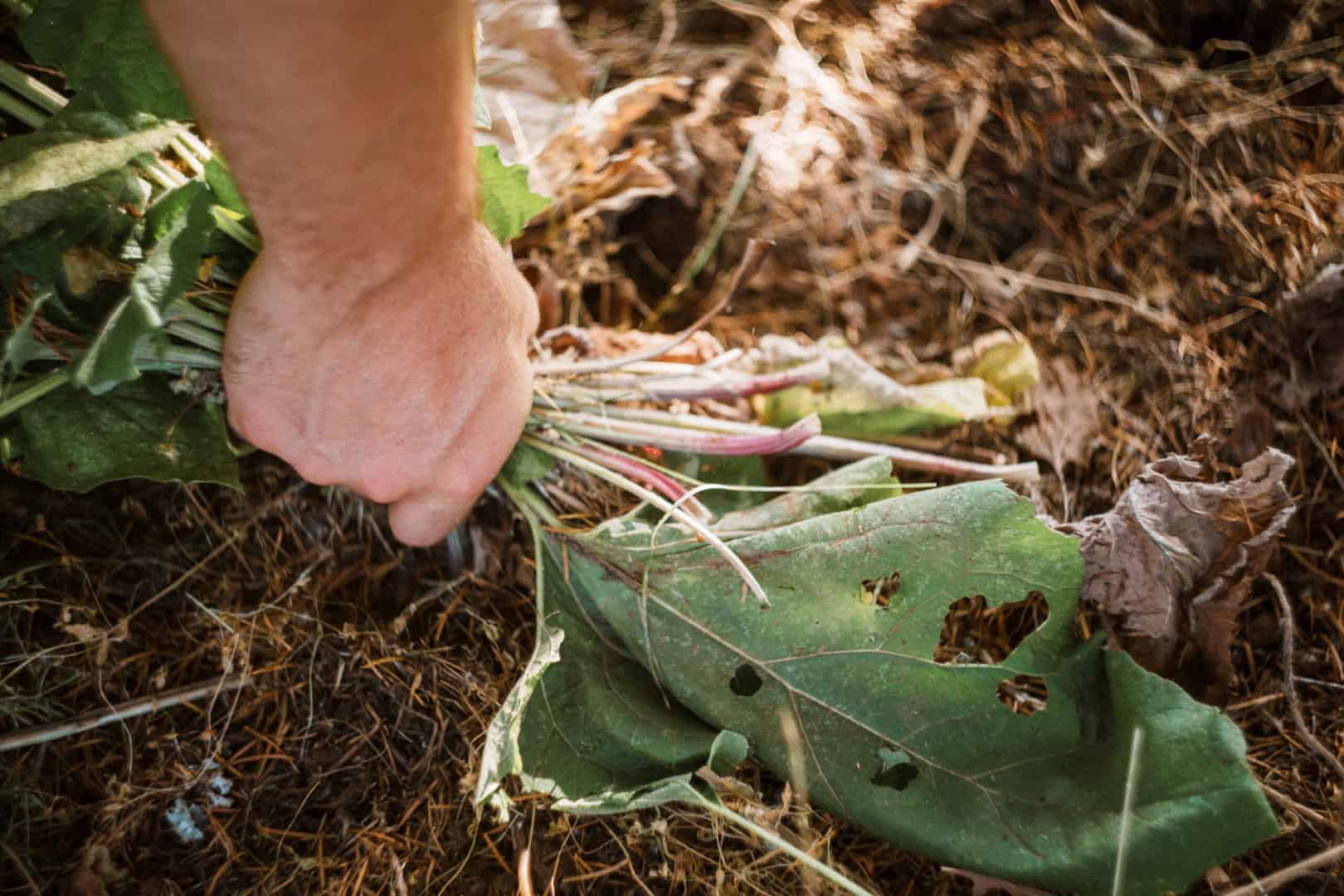
Another way you can prepare Burdock is by using the fresh root in soups and broths. Simply slice it and add it, similar to daikon and carrots. You can often find Burdock sold under the name Gobo in many Asian produce markets. If you prefer to make a Burdock tincture, prepare it at a lower alcohol percentage (~30%) since most of its active constituents are water-soluble. This ensures you extract the therapeutic properties of the plant and can utilize them in a concentrated form.
Burdock stands as a versatile herb, adept at restoring balance within the body with gentleness and strength. Because of its applications for numerous organ systems and processes in the body, combined with its safety, Burdock is a fantastic herb for beginner and seasoned herbalists alike.
Despite its simplicity, Burdock holds a wealth of knowledge and therapeutic potential waiting to be explored. By revisiting and deepening your understanding of this humble herb, you can continue to uncover its hidden depths and nuances. In the ever-expanding world of herbal medicine, it’s essential to maintain a sense of humility and curiosity, recognizing that there is always more to learn. Burdock serves as a potent reminder of the profound wisdom contained within even the simplest of plants. By returning to these foundational herbs repeatedly, we can deepen our connection to the natural world and expand our understanding of plant medicine.
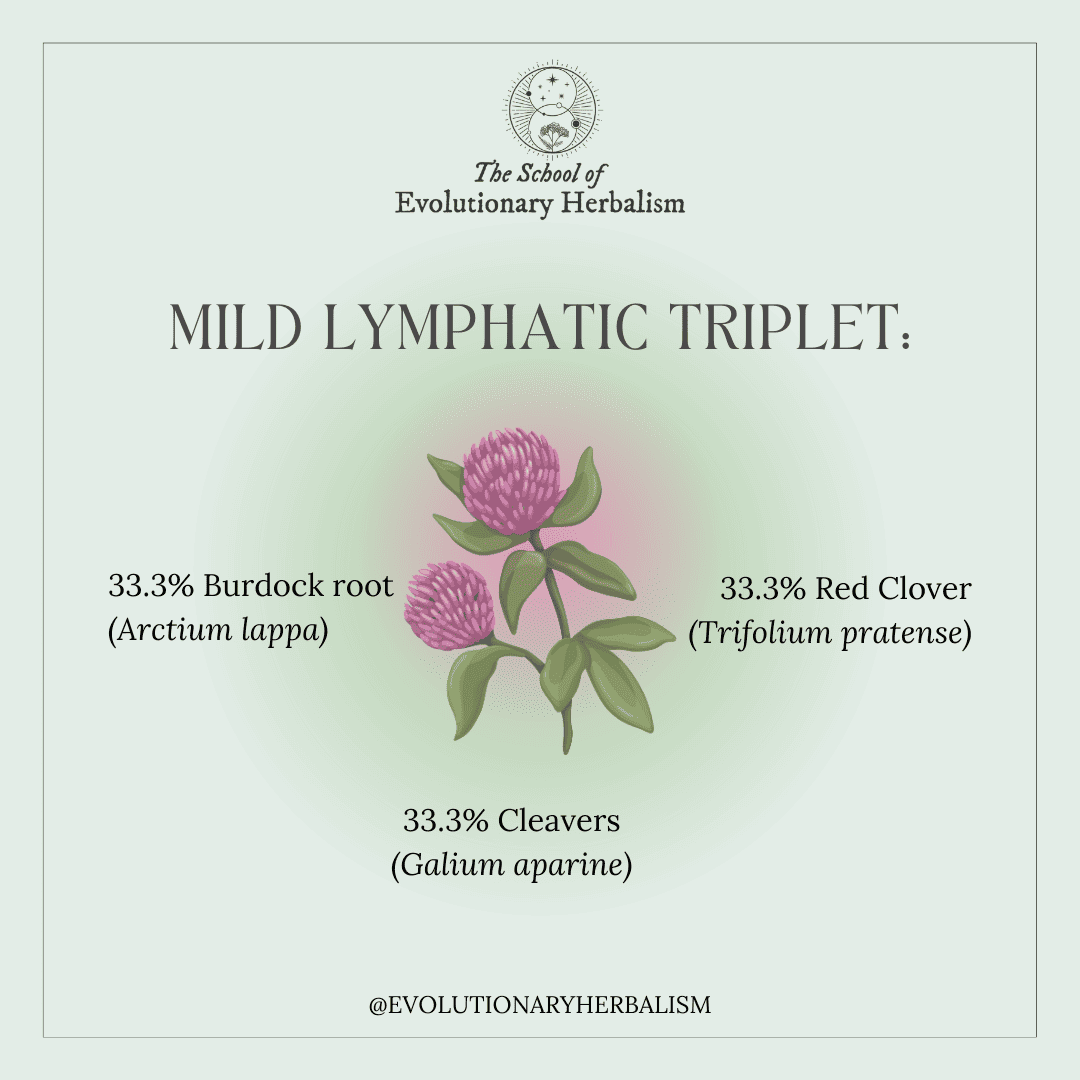
Mild Lymphatic Triplet
33.3% Burdock root (Arctium lappa)
33.3% Cleavers (Galium aparine)
33.3% Red Clover (Trifolium pratense)
This triplet combines three gentle herbs for the lymphatic system. Burdock is a full-spectrum alterative, supporting the lymphatics, liver, GI, kidneys, and blood. Red Clover is also a lymphagogue, providing support for the blood and kidneys, with an additional benefit of a slightly demulcent/moistening action on the respiratory system. Cleavers is a lymphagogue with a specific affinity for the kidneys and urinary tract, serving as a diuretic, as well as helping to clear the lymphatics of the throat. This makes for a versatile and gentle lymphagogue triplet for a wide variety of conditions, from lymphadenopathy, infections that cause lymphatic swelling, cystic breast disease, uterine cysts, as well as chronic skin conditions.