How Do Plants Heal Us?
One of the central pillars of the Evolutionary Herbalism model is transformational medicine, which centers around the idea that healing is intertwined with personal evolution. In my experience, plants don’t just alleviate our symptoms or act as a natural alternative to over-the-counter and prescription drugs to mask our health problems. Plants can, in fact, be used that way, but to me, a plant is so much more.
The healing virtue of medicinal plants goes far beyond their chemistry, herbal actions, or energetics. They have an innate intelligence and a consciousness, which the alchemists referred to as their spirit and soul. The Mercury and the Sulfur of a plant operate on the human spirit and soul. The central medicinal virtue within a plant reflects the triune nature of the human organism, which is that we have a soul, a spirit, and a body, and together, those constitute our whole being. In the alchemical system, they say the plant also has a soul, a spirit, and a body, and a singular medicinal essence that is reflected in these three parts, which in turn heals the whole person. This is one of the key characteristics of spagyric plant preparations: they embody the plant’s wholeness and therefore heal the whole person.
A Turning Point in Transformational Healing
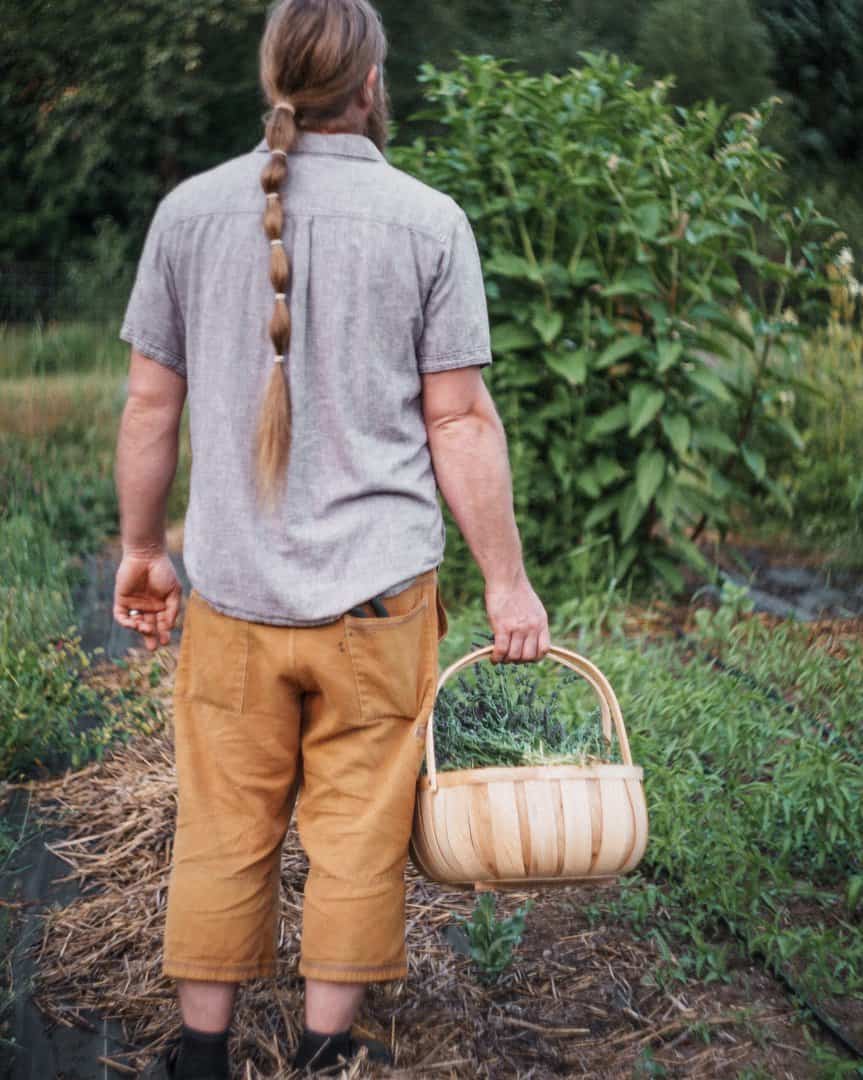
I didn’t know any of this when I began walking my plant path. I became interested in medicinal plants at 18 and officially began my in-depth studies of herbal medicine at 20, when I enrolled in Bastyr University’s Herbal Sciences program. At that time, as is often the case with young people, I struggled on many levels. There were aspects of myself I wasn’t happy with and wanted to change. My personal drive toward healing and herbal medicine was to become a better person and to heal my past. I was an incredibly shy, awkward kid, and I struggled with my self-confidence. I felt very disempowered. I was also spaced out, with my head in the clouds. I was always thinking about the spiritual aspects of my life, at the expense of many critical practical aspects. This was accompanied by nervousness, anxiety, constant worry, stress, and digestive problems. It felt like, at my core, there was an emptiness where I didn’t feel strong in myself, and this felt debilitating.
Now that I’m older, I look back and realize these aren’t uncommon things for young people to deal with as they leave home and go out into the world. When you’re trying to figure out who you are and what your purpose is, it can be tough to get clear on your vision for your life and what you’re meant to do. I got to a point where I realized something needed to change, and I needed help, because it was beginning to affect my life on multiple levels. I couldn’t tough it out or ignore it anymore.
This is a critical turning point for everyone on the path of healing. If you’re an herbalist, you may notice this turning point in others. It starts with an issue or a struggle. Maybe it’s a little annoying. It comes and goes; it bugs you, but then you stop thinking about it, and it goes away, or you tough it out or ignore it, and you keep going. Then you reach a point where you realize you can’t do this anymore and you need help. The turning point in the healing journey is when we reach out to someone and ask for help.
As herbalists, this is the point where we get a phone call or an email from someone asking for help. This is a critical turning point in understanding someone’s healing journey. I had gotten to that point myself, and because at that time my whole world was oriented around this problem, I was a bit narcissistic. I was very focused on improving myself, and I really wanted to know who I was. That can be a good thing, but I think there’s an edge where it can become blatant narcissism, where you’re thinking about yourself all the time.
My healing was enmeshed with a pursuit of truth and that which is good and true and beautiful about myself, life, God, and creation. So I prayed to God to light the path ahead of me and show me the way to anyone or anything that could help me with the struggles I was experiencing. That was when things started to get interesting.
The First Time a Plant Called to Me
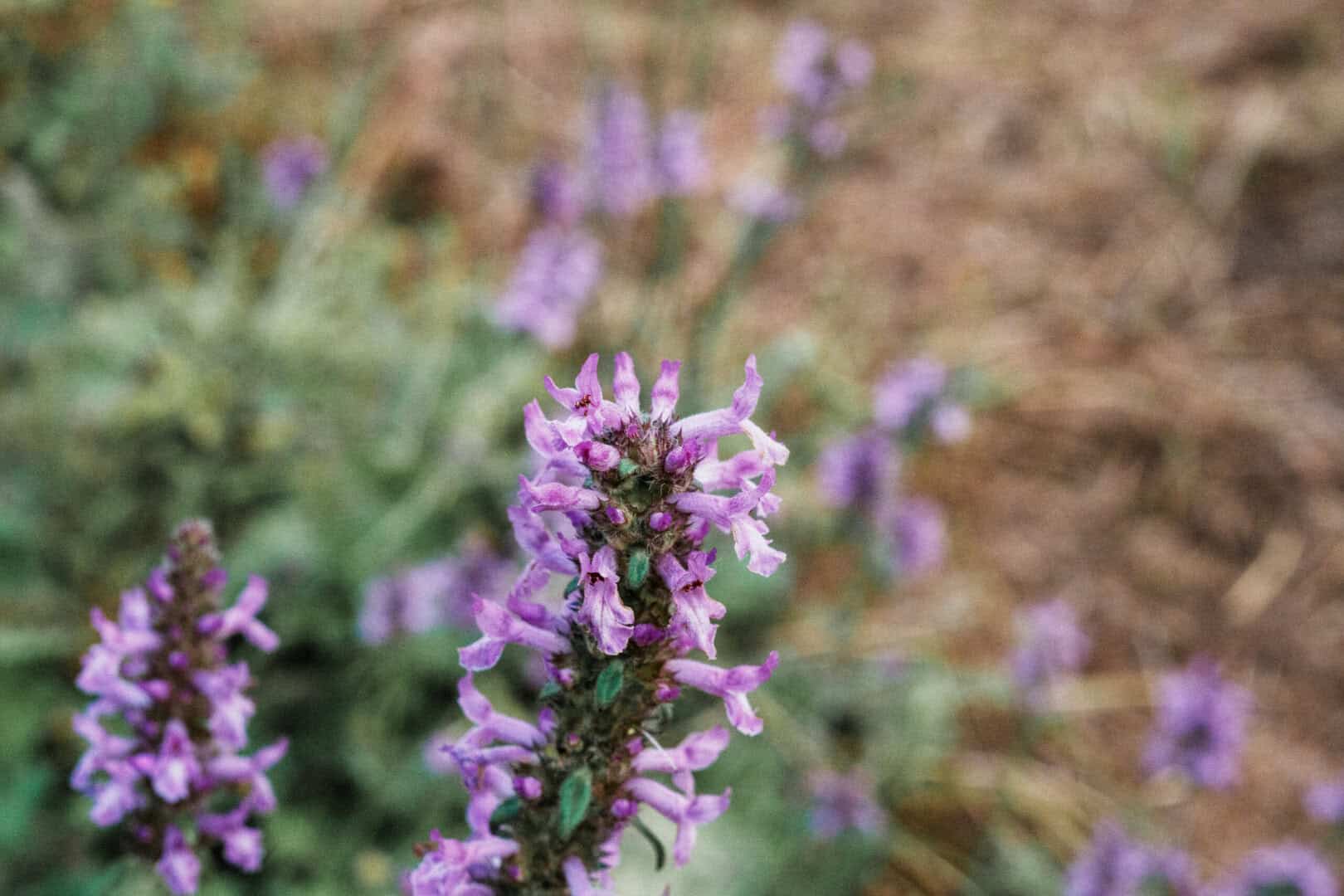
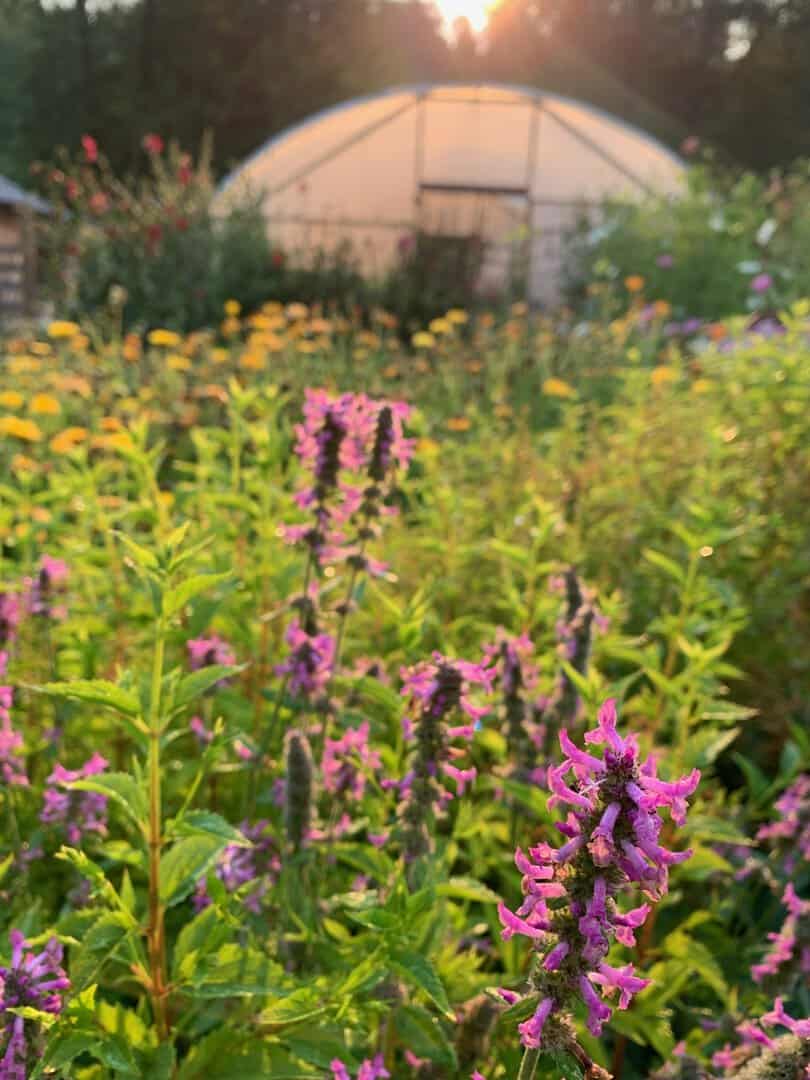
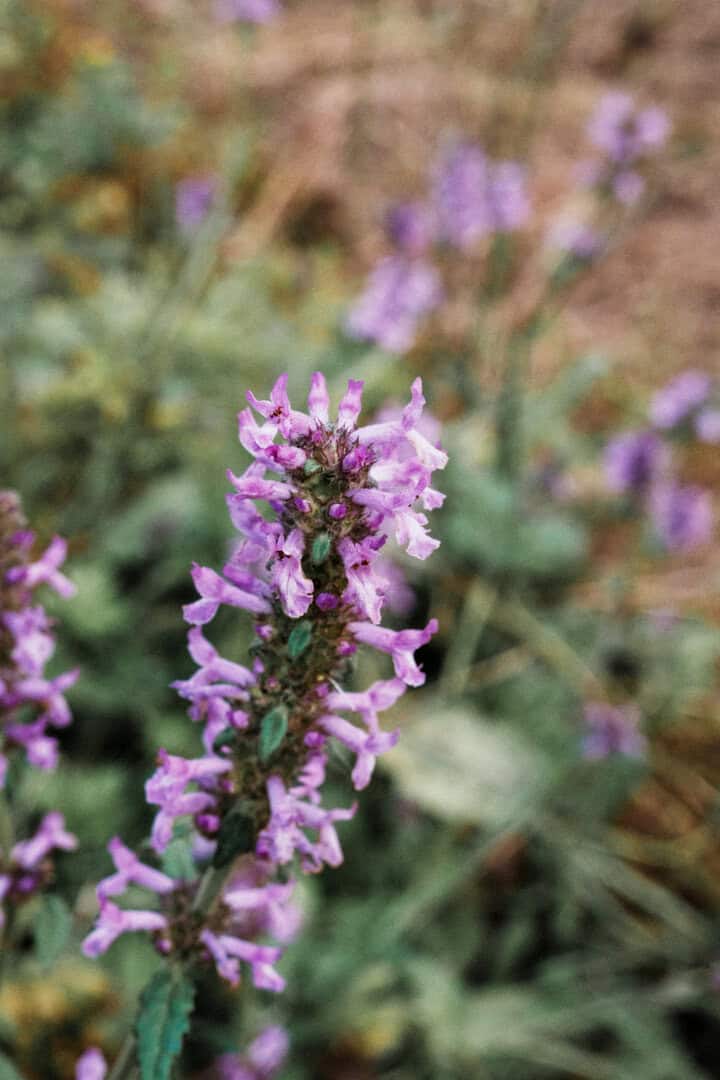
During this time, I was studying at Bastyr, and one day I was in materia medica class learning about plants. If you’ve taken herb classes before, you might know what I’m talking about: you’re hearing about all these plants, and then sometimes a particular plant catches your attention. Someone is teaching on a specific plant, and maybe they’re talking about its medicinal properties or something else, and there’s just something about that plant that makes you say, “Huh, that sounds like a really interesting plant. I’d like to learn more about that one.” It stands out among all the plants you’re learning about. That happened to me that day in materia medica class. The professor was talking about Wood Betony (Stachys officinalis). I remember writing “Wood Betony” in my notebook, putting stars around it, circling it, and making a note to look into it.
Later that day, I was in the medicine-making lab. Of course, that’s every student’s favorite time in the herbal science program. We could go into the lab, learn recipes, medicine-making techniques, and pharmacy. That day, one of my friends in the program had just finished bottling some tinctures she had made, and she was walking around with a basket full of clinking bottles of medicine. She said, “Do you want a bottle of something?” I said, “Of course! Yeah, I’ll take something.” Because I was learning and building out my own apothecary. She said, “What do you want?” And I suggested she just reach in there, grab something at random and hand it to me. So she reached into her basket, clinked around, pulled out a bottle and handed it to me, turned around, and walked out. I looked down, and the label on that dropper bottle said, “Wood Betony tincture.” I realized it was the plant I was learning about earlier that morning!
For the second time, a light bulb dinged in my mind. I thought it was a bit curious that I had just learned a little about Wood Betony in the materia medica class. So, I went on with my day, finished class, and went to work (I was working full-time as a barista back then). When I got off work in the evening, I went home, did my homework, and then I had an evening routine with my favorite book at the time (which is still one of my favorite herb books): The Book of Herbal Wisdom by Matthew Wood. In that book, Matthew talks about the plants through cases, stories, and signatures, and there is psycho-spiritual stuff mixed with the physical stuff. My evening ritual with that book was that I would sit in bed, open it at random, and say, “Okay, this is the plant I’ll read about tonight.”
I got out The Book of Herbal Wisdom, opened it up, and Matthew’s monographs aren’t one-page descriptions; they’re 10 to 15 pages per herb. Because each monograph is so long, I’d usually open in the middle of a plant’s chapter and have to go back to the beginning. But this time, I opened it up right to the first page of … you guessed it … Wood Betony.
I started laughing because I couldn’t believe it. “What? How is this possible?” I had woken up that morning, had never heard of this plant, and three times that day, this plant made its way into my world. Three synchronistic moments with this plant happened in a single day. I felt a chill run through me, and I remembered my prayer to God to bring me a medicine that would help me. I read Matthew’s chapter on Wood Betony, and it was very different from the way the teacher had taught it in perhaps five minutes, that day in class. Matthew went into greater depth, and I felt like he was describing me. The monograph described my current psychological and physical state of being, and that really blew me away.
My Relationship with Wood Betony
From there, I started working with Wood Betony. I took the tincture, drank the tea, and then made a spagyric preparation of it, fully immersing myself in that plant. Over time, things started to change. First, I noticed obvious changes in my physical body, especially in my digestion. Wood Betony is a gentle, mildly bitter tonic, and chemically, it contains iridoid glycosides and sesquiterpene lactones, that make it a tonic for digestive support. That little bit of bitterness and the cooling effect were very comforting to my digestive system. I was more regular, everything was more consistent, and the bloating, gassiness, and discomfort I felt in my GI completely resolved.
From there, I noticed that I wasn’t quite as edgy, and that the nervousness, social awkwardness, and constant mental chatter had improved significantly. I had been hypercritical and hyper self-aware. It had gotten to the point where I would be talking to someone, and a voice in my head would be like, “Why did you say that?” Or, “Why did you do it like that?” Or, “You’re so awkward.” I was beating myself up a lot, and once I started taking Wood Betony, that went away.
It was as if the vital force that was all up in my head came down. The floating feeling and spaciness I had felt came down from my head into my solar plexus. I felt more anchored, and I started to feel more confident in myself. I started to feel significantly stronger. It might sound a bit cheesy, but I felt more confident in myself and more empowered, less awkward, less anxious around other people, clearer in my mind, less hypercritical, more self-accepting. I also found that I suddenly became much more disciplined about attending to the necessities of my life. I planned better, paid my bills on time, and showed up to class and work not just on time, but early. It was as if the floating plane of my consciousness had finally landed, and I started to realize a phrase I had used at the time. I used to say this to myself, “I want to walk a spiritual path but with practical feet, and strive to strike a balance between heaven and earth.”
After a couple of months, I looked back at my journal, and I realized that the things I was struggling with were no longer an issue. I was in a particular psychophysiological state, started to take an herb, and then, over a period of time, was in a completely different psychophysiological state that was healthier and more vital. I overcame many of the internal struggles and challenges I was facing in my life, and I cultivated particular virtues I had wanted to cultivate. What would you call that? I would call that a transformed state of being. So I believe that herbal medicine has the potential to do this on multiple levels.
If you have a debilitating health problem that limits your capacities, your ability to do things that you love doing, or they hurt your quality of life. Then you work with herbs and resolve that issue, and your life is effectively transformed. All of a sudden, those problems you were experiencing are gone, and you have opened up doorways of potential to allow you to do things you couldn’t do before. You can now explore things you couldn’t explore before. Your mind, heart, decisions, actions, relationships, and work have changed. To me, that is transformation. If you have debilitating anxiety or depression and the plants help you overcome it, your life is transformed. On a deeper level, I’ve come to find that plants can be used to help in what I think of as facilitating the development of certain aspects of yourself that you want to improve within your character.
Perhaps you feel closed-hearted because you’ve had some bad relationships that have affected your heart. Perhaps you struggle with your voice, your communication, your ability to express yourself, to translate your inner world to the outer world through language. Maybe you, like me, struggle with your confidence. Whatever it may be, plants can assist in developing these aspects of your character. And I know that might seem woo-woo or out there.
Can Plants Help Us Turn Vice Into Virtue?
You might be wondering, how a plant can help a human develop virtue. I think we can understand this through a few different lenses. The primary one is within the framework of the Western alchemical tradition, which views plants as corresponding to particular archetypal forces of the cosmos that also relate to aspects of our psyche. This is typically done through the astrological model. In alchemy, it is said that the structure of our solar system, or the cosmos within which we reside, reflects the structure of our own psyche, and that plants also relate to those archetypal or planetary forces. As you attend to your unique embodiment of these archetypal forces, you can transform their vices into virtues.
When we look at the planet Jupiter, we see it can be really jovial. That’s where we get the word jovial, meaning happy and uplifted. It can be the benefic leader. Jupiter can be generous, bestow gifts upon people, and uplift those around them. Those are some of the simple virtues of someone with a well-integrated Jupiter. A well-integrated Jupiter has faith in something greater, i.e., God. However, Jupiter also has vices. It can be excessive; it can eat too much, drink too much, smoke too much, and gamble too much. Jupiter can have grand, ungrounded, and impractical visions.
In this way, each archetype has vices and virtues, and these herbs are living embodiments of the virtues of that archetype. They can transform the vices of that archetype into virtues through the way they correlate to those planetary powers. That really is the entire premise of alchemical medicine: you’re working with earthly plants, terrestrial embodiments of celestial forces in a medicinal way, in a way that heals you, not just in your body, but in your psyche as well.
Another way of looking at it is perhaps a bit less esoteric. Let’s say things have happened to you in the past that affect you to this day. We might call it trauma, or simply that you have struggled. We’ve all gone through struggles. Shit has happened to us. Sometimes those things have a negative impact that affects us to this day, leaving unresolved issues from our past. What I have found is that when plants are well-selected, well-prepared, and worked with intentionally, they can help us to work through those things. Not that we get stuck in the past and overanalyze and over-process everything that happened, but that we simply re-envision it. Rather than treating it as a poison, we turn it into medicine, and then we can learn to accept the past, resolve inner conflicts, and forgive ourselves and those who have wronged us, whether knowingly or not. We learn the lessons that those life experiences are there to teach us. Because everything happens for a reason, and the choice is really up to us. We can choose to be a victim and let the past poison our present, or we can choose to learn to look at it through the lens of the medicinal force of life and of nature and to heal it and transform it in a way that we can become better people. We can become more whole, we can become more integrated, and ultimately we can move forward in a good way. Of course, this comes back to that old alchemical concept of transforming poison into medicine or vice into virtue.
I hope this is helpful to you in some way, because I think we all have healing to do. We all have work to do on ourselves to become the best versions of ourselves. Ironically, I think it comes down to simply accepting ourselves with all of our quirks and shortcomings. With all of our failures and our sins and ways we may have strayed from a good path. I think we need to accept it and learn to move forward with strength and positivity. And I think it’s important that we learn to forgive ourselves and others and learn from the lessons that life is striving to teach us.
The premise of Evolutionary Herbalism is that the plants can assist us in the healing journey toward becoming more whole. I firmly believe that, in many ways, we are here on Earth to heal. To me, healing is inextricably interwoven into our spiritual life and path, and our healing and growth towards our creator. Becoming as one with our creator or God requires healing, and those are two sides of the same leaf.
I encourage you to be intentional in your work with plants. When you’re working with a plant, talk to it, pray to it, ask it for help. Pay attention to those herbs that, as Stephen Harrod Buhner so eloquently puts it, stand up in the forest and call your name. Attend to the synchronicities and be aware of how nature is speaking to you because I believe that there is a union between Heaven and Earth. I believe that God speaks to us through nature and wants the best for us, so that we can heal physically, spiritually, psychologically, and emotionally, and wants our soul to be pure so that we can be as one with our Creator.
I believe that setting an intention in your work with plants is crucial. But intention isn’t really the right word because, to me, this is a spiritual thing, so it isn’t merely setting an intention. Intention setting is really internal. Intention is a psychological way that is focused on ourselves. I’m going to manifest this, that, or the other. It’s kind of a narcissistic approach. To me, the magic of the plants, their communications, the synchronicities that we experience with them, all of that opens when we pray to God for the living medicine of the Earth to come to life for us, to bring those right medicines into our lives to help us, our family, and our patients.
For me, the practice of herbal medicine is a very spiritual thing. It is being of service to not just the people, not just the plants, but to the Creator so that we are having a positive impact on those around us, and so that we can become a living embodiment of the medicinal virtue. We bear our soul and spirit to the plants so that they can heal and transform us, and change our lives, so that we can then do that for other people. And that is what I call the fifth pillar of Evolutionary Herbalism: know thyself, heal thyself. But you’re not really healing yourself, the plants are healing you, and ultimately it’s the power of the Spirit moving through the plants that heals you and has the capacity to make you into a living embodiment of the medicinal virtue.
That is what I strive for as an herbalist and as a human, and I believe that’s what we should all strive for, so we can have the greatest positive impact on the people we serve with plants. The plants are doing the influencing, and you’re a bridge for them to cross over from the plant kingdom into the human kingdom, so that they can reach out and provide healing.
FAQ
What does “transformational healing” mean in this article?
It is about more than making a symptom disappear. It is the larger shift that follows when a physical, emotional, or psychological struggle no longer organizes your life, creating more capacity.
Can herbs can replace therapy, medical care, or personal responsibility?
No. Herbs are allies within a broader healing process, but they aren’t a substitute for appropriate medical or mental-health support. A plant can become part of the conditions that make change possible, while the person still has to participate in that change with honesty, reflection, and support.
Why is the Wood Betony story important beyond the specific plant itself?
The story is an example of what it can feel like when a person encounters a plant at the right moment in their life.
What does it mean to turn “poison into medicine”?
The phrase describes a change in relationship to pain rather than a denial of what happened. An experience that once only produced fear, shame, or resentment may, through healing and integration, become a source of wisdom, compassion, boundaries, or strength.
How can a plant be connected to character or virtue?
The alchemical tradition sees plants as expressions of archetypal qualities that also exist in the human psyche. In that view, an herb is not merely used for a symptom; it can support the integration of an imbalance, helping a person move from patterns such as excess, fear, or disconnection toward qualities such as moderation, courage, and groundedness.
What does the Jupiter example reveal about this approach?
It shows that the same human force can have both constructive and destructive expressions. Alchemical herbalism is concerned with helping a person cultivate the virtue without being ruled by the vice.
What does it mean for an herbalist to be a bridge?
The herbalist is not positioned as the ultimate source of healing or authority. Their role is to listen carefully, make wise preparations and recommendations, and help create a relationship through which the plant’s medicinal qualities can reach the person seeking support.
The FREE Evolutionary Herbalism Workshop Series
We have a brand-new course called Evolutionary Herbalism Foundations, and we’re offering a FREE workshop series to kick things off. We’ll be sharing it very soon, but to access the lessons, you’ll need to pre-register. So don’t wait!